I recall visiting the museum many years ago and seeing a demo where they heated a glass rod and pulled a fiber. This was probably when fiber optics was in its infancy. It was definitely a highlight for a young science nerd. I would love to go back some day.
Along those lines I highly recommend the episode of the show “How we Got to Now” about glass [0]. It tells the story of how clear glass was developed, something I always took for granted, but early glass was not clear and took a major effort to create. The show then goes into how Corning took it to a new level for fiber optics. The whole series is excellent and similar to James Burke’s excellent series “Connections”. [1]
Xtol was created in 1996, making it the last really new developer. My understanding is that one of the design goals was to make a developer that was less toxic, and that ascorbic acid was part of it. I wish they still sold it in 1 liter increments. The current package makes 5 liters which means its hard for me to use before it goes bad.
I’ve made the same basic comment before, but we need to ban the residential use of herbicides and pesticides. I spoke to a beekeeper who had two hives wiped out by Mosquito Squad spraying on an adjacent property.
I recently came across a 1997 paper called: "Producing and Consuming Chemicals: The Moral Economy of the American Lawn". They cite a higher per hectare usage for residential over agriculture. We need to get rid of our lawns they are literally destroying the planet and they are greenhouse gas emitters when you factor in gas powered mowers and leaf blowers. Fertilizer emits nitrogen oxides that are potent greenhouse gases.
The paper is interesting as it talks about how lawns are marketed. Unfortunately lawns are a multibillion dollar industry. If we are going to fight climate change and environmental degradation, we need to seriously rethink letting business needs take priority over the environment and not just for lawns.
We need to allow people to have native plant yards. I've seen great results with insects. Unfortunately it's illegal where I live and probably most non-rural places. In order to allow this would mean changing state and local ordinances across the US. I honestly don’t think that will happen until it’s too late. By then lawns will be the last thing we will care about.
My mother has a wild lawn, dominated by ferns, moss, wildflowers and other nifty things. This replaced the previous owner’s typically sterile American lawn. When she first moved in a few decades ago there wasn’t much in the way of wildlife. Now she has deer wandering around, rabbits, turkeys, frogs, snakes, hawks, and more bees than you can shake a stick at.
I really believe that one relatively simple and cosmetic personal choices we make can have a huge impact on our local environment, and by extension the broader one.
Deer and hawks may visit a place because it now is different, but anything people normally call "lawn" is irrelevant in size as the habitat of wild mammals or large birds. I hardly think the impact is "huge" for the environment, though it may be very nice for the person observing nature from his home (yes, I see deer and rabbits very regularly, even if I have just a lawn, but there's some actual forest starting next to my plot. Neighbourhood got scared because someone spotted a wolf.)
Lawns are the dumbest thing Americans obsess over. I've lived in apartments my whole adult life but if I had a lawn I'd be inclined to just let it go wild. Or maybe plant moss or something.
Unfortunately, just like with municipal support of car culture, lawns and their upkeep are often written into municipal bylaws. That's not even getting into HOAs and how restrictive their lawn policies can be - often having requirements down to which species of grass[1] you're allowed to use. Finally there's communal pressure from neighbours, who will give you the stink eye if the weeds from your wild lawn even might encroach onto their manicured grass.
I just bought my first home last spring. No HOA, but I did get the city called on me for being close to the 8 inch limit on grass. We also heard on the grape vine that one neighbor blamed our longer grass for the mosquitoes keeping them from enjoying the outdoors, instead of, you know, the record rainfall and nearby drainage ditch.
Luckily my city's ordinances have a provision for a "natural lawn" made up of native grasses and plants that can be extra tall. I intend to turn my front yard into one to reduce how much mowing I need to do.
I assume simply concreting over it for more parking space would be fine though.
Most UK streets will have a property or two where the garden does whatever it is that gardens do when completely ignored for a decade. Or with meadow or wildlife friendly planting, maybe intentionally including weeds.
I love this. All over HN American folks talk now and then about how govt should keep out of things, and how that works so much better than in that terrible interfering socialist place, Europe. You regulate your front lawns and grass height. There's probably an ANSI standard for them. Sorry. ;)
And then your neighborhood association would fine you or try to make your life a living hell until you fell into line and mowed it like a good boy. For people that love to obsess over their own lawns they REALLY love to obsess over their neighbor's lawns.
In my hippy puget sound part of the world, we just mow to keep the grass short but otherwise let it do whatever, usually turn brown and be filled with moss and clover. We started to aerate because that helps runoff.
That works fine in the Pacific Northwest. In the South, after six months, your entire yard will be an impassable jungle filled with mosquitos, cockroaches, rats, etc.
It's much easier to tame a yard in a climate that's cold half the year and dark 3/4 of it.
I live in the Inland Northwest, and I assure you what you mention is true. We have a forest, but generally the ground is brown and dry in summer, and the winters are long and hard. The Cascades are huge, and create an extensive rain shadow.
Seattle sits right next to the only temperate rainforest in the world, though. The sheer amount of plant life there is something to behold, and it doesn't get cold there all that long.
The rainforest on the Olympic Peninsula is beautiful and rich with plant life, but the South is a different beast. If you take an empty lot in the South and wait a year, it will be packed with growing things, sprawling and reaching toward the sun. The rate of growth is just insane.
In Seattle, I mow the lawn every two weeks for about six months of the year. When I lived in Florida, if I didn't mow at least once a week, almost all year, I would very quickly get a lawn too thick for my lawnmower to get through. The Gulf Coast is always waiting for a moment's inattention to revert back to the jungle that it desperately wants to be.
You'd better make sure you move into a neighborhood that already has wild lawns in it, otherwise you'll be in for some headaches from busy body neighbors.
This seems bogus to me. There are many more acres of agricultural land vs lawns. Without looking it up I would guess agricultural land accounts for over 90% of the herbicide and pesticide use. We are not going to save the environment by having tiny patches of chemical-free land while huge swaths outside the cities are being doused.
>"Homes, golf courses and parks may grow more acres of turf grass than U.S. farmers devote to corn, wheat and fruit trees — combined [..] 2005, researchers estimated there are 40 million acres of turf grass in the U.S., covering 1.9 percent of the land." - https://scienceline.org/2011/07/lawns-vs-crops-in-the-contin...
40 million acres for lawns in the US (2005), 357 million acres of land for crops (2007). However it is very surprising that we use significantly more land for lawns than for corn.
Corn is only one crop, and it has incredibly high caloric yields per acre (Much higher then grains, greens, vegetables). It is second only to potatoes in calories/acre.
> I’ve made the same basic comment before, but we need to ban the residential use of herbicides and pesticides.
This reminds me of a thread in my local suburban community's Facebook group. Someone was complaining about his dog repeatedly eating some small mushrooms growing in the backyard of his newly bought home and getting sick. The backyard was wildish, had flowers and some patches of tall grass, rocks etc... It actually looked pretty good. The whole thread was about herbicide recommendations. He ended up killing most of his vegetation and finally decided on 'installing' a lawn. A sterile all-American golfcourse-like green. All so that his dog can no longer eat mushrooms. Fucking idiots.
I'd support this, though I do consider myself a responsible herbicide user. I use only spot application of glyphosate (on dry, sunny days) to help tackle invasive species, or to prepare lawn for conversion to native prairie instead.
Where I see the big problem is the standard practice of treating entire lawns with fertilizer and pesticide mixes. It's such a strange practice to me.
I don’t know of any places where native lawns are actually against the law, but the parent might mean “against the terms of the HOA”, which is effectively the same thing since HOAs can levy fines and in some cases evict you if you don’t follow the rules. Most HOAs have strict policies stating that you must have the kind of perfect all-American lawn that is at issue here... just one more reason why they should all be destroyed.
There are definitely city ordinances which would prohibit it, but there are often workarounds and loopholes involving landscaping (like adding a retaining wall along the sidewalk, or maintaining a small strip of grass adjascent to city property).
There’s some great comedy by the late Bill Hicks about his drug and alcohol use and that by rock and roll bands like the Rolling Stones and The Beatles and what music would sound like without drugs.
Not to disparage the author but I see he is selling a book called: Real Artists Don’t Starve.
I haven’t read the book, I have to ask myself what if that was the approach taken by Van Gogh? What would his art look like? My guess is probably pre-Impressionist Manet.
Carl Sagan was a famous pot head who said something like re-evaluate the ideas that you come up when you high after you’ve come down.
I find the ideas can flow when I drink. I have heard other people say that that doesn’t happen for them.
There’s a great quote on the floor of the Guggenheim in New York: LET EACH MAN EXERCISE THE ART HE KNOWS
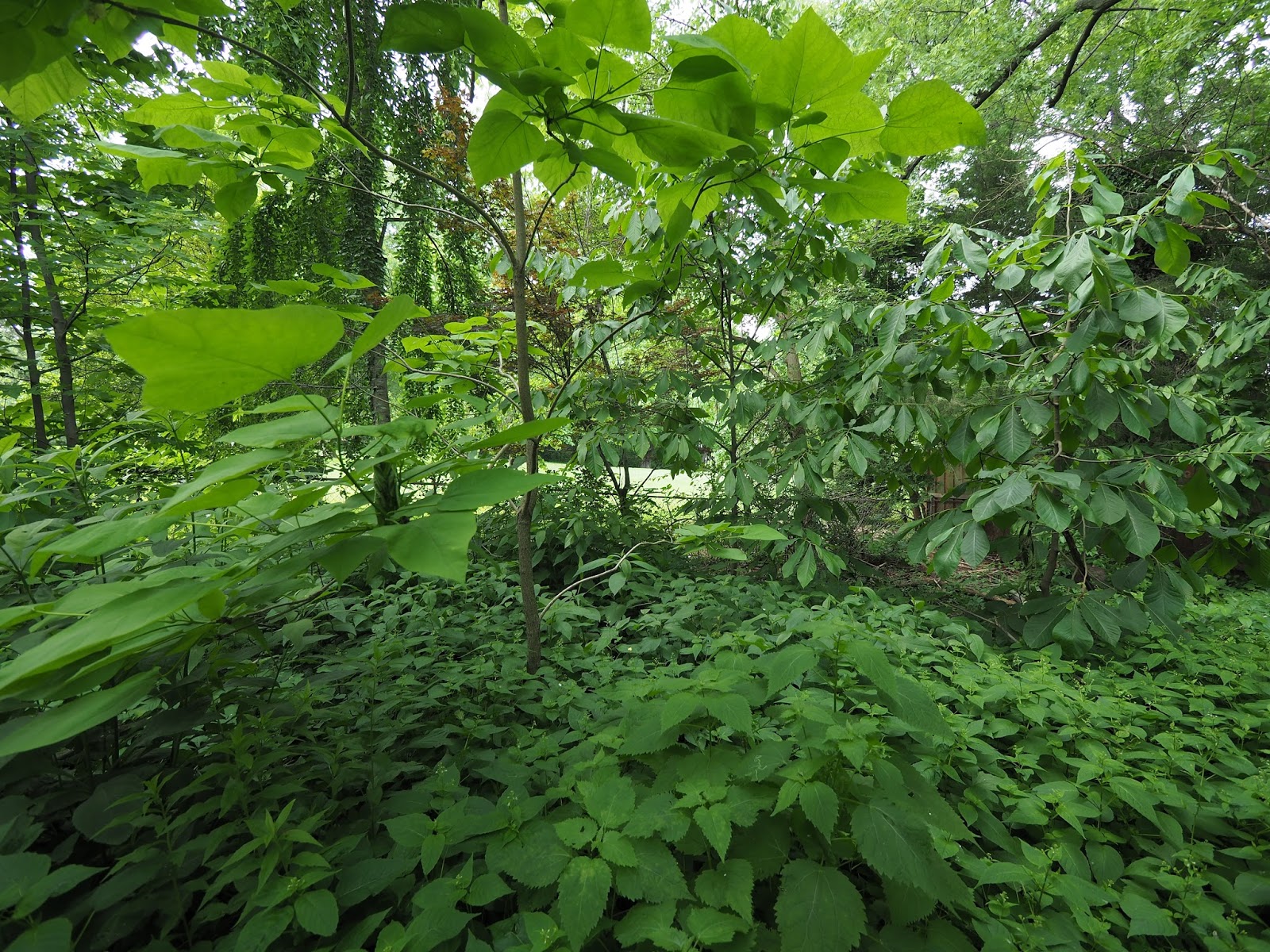
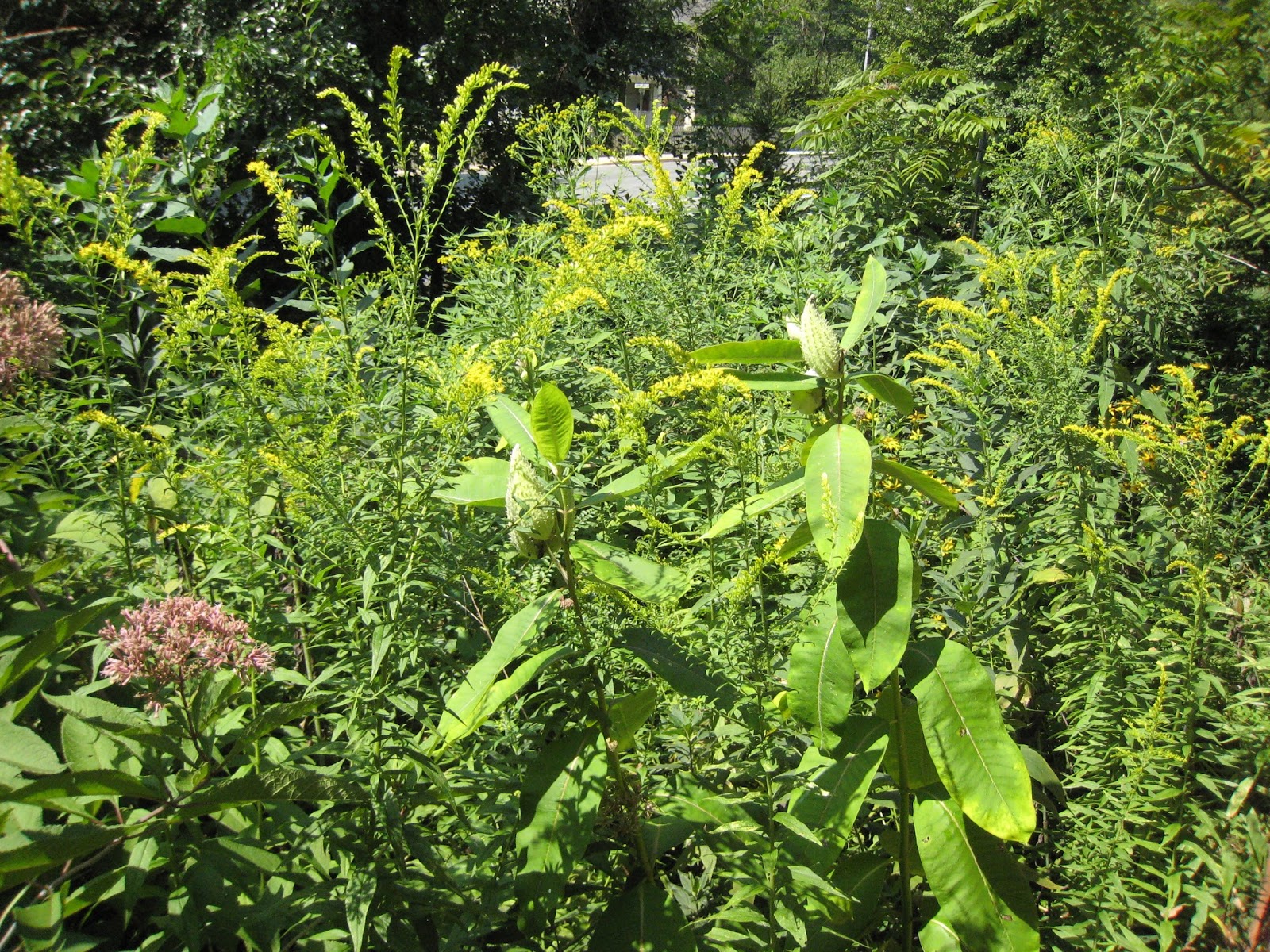
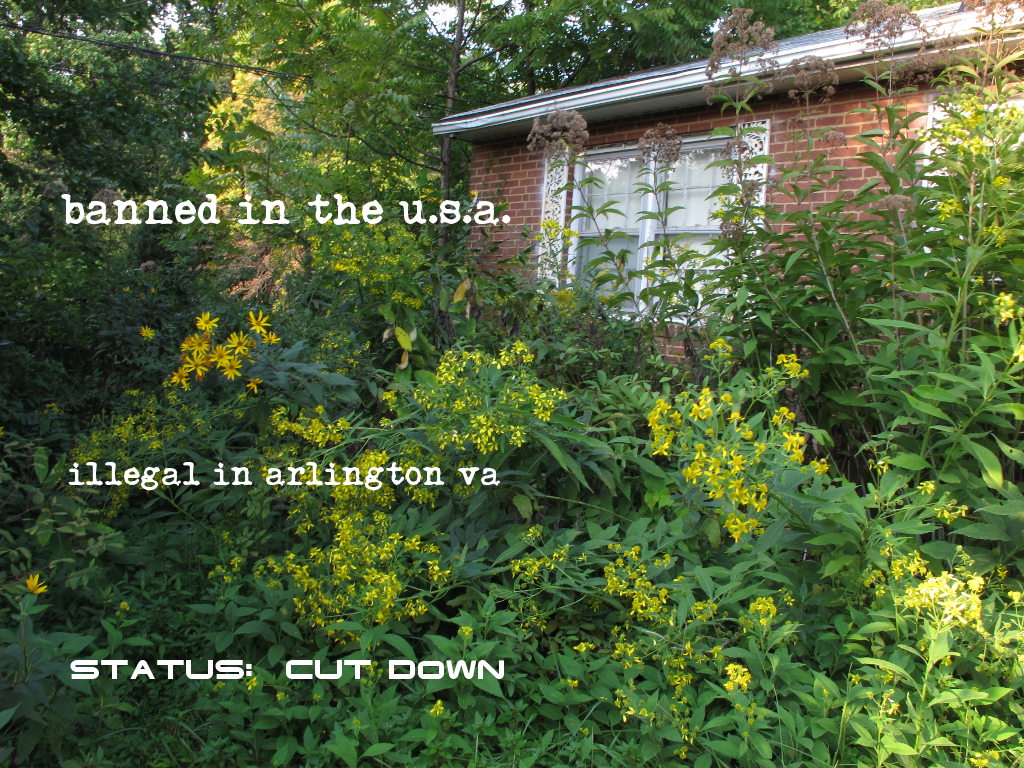
I think the American suburban yard may be equally responsible with agriculture for a lot of this in the US. The use of herbicides and pesticides is completely unregulated. Additionally lawns are an unnecessary waste of time for most people and have a large carbon footprint. I had a small native plant yard that attracted hundreds of pollinators and arachnids. I was treated like and criminal forced to cut most of it down. I still get a fair amount of terrestrial arthropods but not as much.
It sickens me when I see workers with those sprayer packs or trucks that look like small chemical plants.
Before I decided to comment I submitted my write up, if you are interested you can read that you can read here:
Edit: I did want to mention that I definitely seen a massive decline in butterflies and moths over the last 15 years.
Update: I quoted 40 million acres below, which is for turf grass which probably includes athletic fields. I am not against everyone having a lawn or athletic fields. I do think people should be able to cultivate their native environment on their suburban property and this should be encouraged and even incentivized. My neighbor’s kids play in their backyard, so they have a need for it. Of course a non herbicide non monoculture lawn should work ok too. That’s what I grew up with.
Also I think that gas powered devices need to be replaced with electric devices. I think something like 17 million gallons of fuel are spilled alone in relation to lawn maintenance.
The thing that scares me is the normality of spraying for mosquitoes. In my area it’s the invasive Aedes mosquito species, the native species are a lot less aggressive. Also with some of these other very scary invasive species like the marmorated stink bug, ash borer, lantern fly, that new Asian tick, etc. Are we going to end up using more and more insecticides and subsequently kill more and more of our native fauna?
Lawns are one of the most ridiculous human inventions I have ever observed. You take normal self-sufficient grass out, then reseed with some sort of crippled grass that needs constant fertilization and watering. To make things worse, you mandate it to be unnaturally short, so people have to constantly mow and use herbicides to keep the normal grass out. And all of this is made mandatory for some reason. Aside from creating grass mono-cultures, this is just a gigantic waster of time and resources that doesn't produce anything in return.
Lawns are a much more natural phenomenon in England, where the grass is native (apparently "Kentucky Bluegrass" is actually from Europe!) and they can be maintained organically. Capability Brown pre-dates the Haber process. It rains often enough that they don't need much watering if the soil is good.
Unfortunately in recent years global warming has made summers longer, hotter and drier and the natural temperate "lawn zone" is moving northwards. England will more and more see "hosepipe bans" against using clean water in gardens.
People choosing lawns in dry, unnatural areas of America are doing so to replicate some European ideal. People mandating lawns are doing so to mandate the Europeanness of their neighbours.
Granted I skimmed through it, but I could see no mention in that summary of organically maintained lawns. It does mention the English roots, but those were maintained by gardeners for upper class estates.
Lawns are historically grazed fields. That's organically maintained I guess, but no one has a lawn like that today, not even in England.
Here in the UK, in an average garden, you'll have no issues you want to keep a lawn - simply mow once a month at most, and maybe water in the middle of summer. Really isn't hard to look after here - my parents even leave the cuttings where they fall as the worms will pull them into the soil pretty fast if you let them.
Not really true. Depending on rabbit population, or if you have a goat, you can fairly straightforwardly maintain a lawn without mowing. You have to be happy with random rabbit carcasses / holes though. It does take some care (in regards to what you do with fertilizer) if you don't want weeds, but if you keep the land very barren, the only 'weeds' you'll get are wild flowers.
Lawns are useful for standing on outdoors, given that they are not up to your knees, not concrete, and not dirt. That's why most people maintain them. If you never go outside then there is not much need for a lawn.
You know what's even better for standing on outdoors? The actual outdoors. Any park, arboretum, nature trail, beach, etc. The only people who need lawns are the ones who want to pretend they're enjoying the outdoors but can't actually stand to be more than fifty feet from their fridge at any time.
It's nice to get in the car and drive to a park, arboretum, nature trail or beach, but if you have a to-do list for the day (or have just come home from work, or are about to leave for work), then the only practical way to enjoy the outdoors is if you can fire up the grill in a small piece of it that you maintain for yourself. It is also a lot better to host social events on private land, because you will not contradict with anybody else's events, and you have the resources of your house.
You don't have to drive to find those things. Even the densest cities have parks. You can walk, you can bike, you can take public transit. I have a pretty long to-do list myself, but I can still find more natural places than my yard when I go for a run five or more days out of seven.
If you choose to host social events on your own property, that's fine. Houses are great for that. But is it really worth it to maintain a yard 365 days a year for those hypothetical three that you use it for entertaining? Is it worth it for everyone to do that, at such environmental cost? The universe is not all about your pleasure.
Who said anything about an apartment? If you have a house in the 'burbs you probably have even more natural environments within walking or biking distance. Let's pull up Google Maps and see. I've been in many cities and suburbs across the US and in other parts of the world. Literally all of them had some green space within what I'd consider easy range. I'd be very surprised if it's any different where you are.
>I've been in many cities and suburbs across the US and in other parts of the world. Literally all of them had some green space within what I'd consider easy range. I'd be very surprised if it's any different where you are.
Then you haven't lived in low density suburbs/rural areas, you're very lucky, or you and I have different definitions of "easy range". There is a park about 5 miles from my house. Too far for an easy walk and even if it was, most of that is on a divided highway with no sidewalks that would be crazy to walk on.
Technically biking would work, but I'm not risking my life to drive down a divided highway with cars going 65+mph to bike to a crappy baseball park.
The closest park that is anything more than a few baseball fields is just under 15 minutes away by car, and I'm about 25 minutes from the downtown area of a major city (with no traffic).
This is normal for most of rural and suburban America.
I'm pretty skeptical about those claims. What metropolitan area is this? Let's look at a map. Are you sure you're not just being too picky about what kind of green space qualifies for you?
Atlanta. Have you spent enough time in rural and low density suburban areas to warrant your skepticism? You don't tend to see much of this kind of area when you visit because it's not near anything except houses.
Plenty of people out here (most where I'm at) live in subdivisions off of highways that would be absurd to bike on, and almost nowhere in my county has sidewalks.
>Are you sure you're not just being too picky about what kind of green space qualifies for you?
There's a cemetery that shows up as green on Google maps that's a bit closer than the park I mentioned. Still not safe to walk or bike to.
You are vastly underestimating how hostile most of the US is to biking/walking.
> Have you spent enough time in rural and low density suburban areas to warrant your skepticism?
Well, let's see. I've lived in cities of multiple sizes - Wellington, Detroit, Ann Arbor. I've lived in both inner and outer suburbs of Detroit and Boston. I've spent significant time visiting Silicon Valley and Seattle, shorter times visiting a few dozen other cities both in the US and internationally. Is that Scotsman enough for you?
My experience is that the cities have parks and (usually) mass transit. Inner suburbs also have parks, plus sports fields and playgrounds that residents can use when school's not in session. By the time you get to the outer suburbs, you can add patches and strips of undeveloped but still accessible woodland. The configuration changes, but the green's always there. Often all you need to do is find someone walking their dog and follow them, because they'll go to those places for exercise and socialization.
Maybe there's a peculiarly southern kind of sprawl in which all of the land for miles in any direction is enclosed in people's yards, but I just spot checked around Atlanta and there don't seem to be any places like that except for the airport. You don't live at the airport, do you? Sure, there aren't many green patches in a plain street view, but switch to satellite view and there's plenty. There are probably woodlands with cut trails near you that you don't even know about. At most it looks like you might have to go ~3000 feet (barely half a mile) to find something, so I think I'm going to stand by my theory that you're ruling out valid options.
No it's not. With the exception of Wellington (don't know enough about it to know) those are all much higher density areas than the vast majority of the US.
As to the places you've visited, there is almost zero reason you would have spent much time in the areas I'm talking about while visiting.
>Maybe there's a peculiarly southern kind of sprawl in which all of the land for miles in any direction is enclosed in people's yards, but I just spot checked around Atlanta and there don't seem to be any places like that except for the airport. You don't live at the airport, do you? Sure, there aren't many green patches in a plain street view, but switch to satellite view and there's plenty. There are probably woodlands with cut trails near you that you don't even know about. At most it looks like you might have to go ~3000 feet (barely half a mile) to find something, so I think I'm going to stand by my theory that you're ruling out valid options.
No I don't, but this is absurd. Sure there are woods out behind my house because I own them, and there are trails through them because I made them.
All of the undeveloped land nearby is owned by someone else. We don’t have a right to roam in the US. You don’t just go walking onto someone else’s land--that’s a good way to get shot, or at the very least get a visit from the county sheriff. Just walking down the road outside of a subdivision around here will get weird looks from people (mostly because it’s not safe because the roads weren’t designed for it)--a large adult man walking through their property will definitely prompt a negative response.
When I was a kid we used to wander off into the woods behind a neighbor's house, and I used to explore the golf course nearby, but we got chased off by people, dogs, and cops as well.
Even if I did find a neighbor with land who was willing to let me use it, I couldn’t get to it without walking down divided highway unless it was in my subvision.
> those are all much higher density areas than the vast majority of the US
Don't you mean the vast majority of the tiny corner you know? You haven't even mentioned ever living anywhere else, let alone in the same variety of places I have, so I'll take your claims about vast majorities with more than one grain of salt. Maybe you really do live in a place uniquely deprived of public green space (though that's still unsubstantiated by actual maps or anything). If so, it's still your choice and you're welcome to it. It doesn't change reality for the true vast majority. Enjoy life in your self-made closet.
>Don't you mean the vast majority of the tiny corner you know?
No, I meant exactly what I said. Objectively, the vast majority of the US has a lower population density than most of the places you mentioned.
>Maybe you really do live in a place uniquely deprived of public green space (though that's still unsubstantiated by actual maps or anything)
It's not unique or unsubstantiated. Here's a study that says for people in small towns there the average distance to a park is 6.1 miles--that's consistent with my experience. Even in cities (outside of the city center--there it's 0.7 miles) the average distance is over a mile, and in the suburbs it's over 2 miles. [1]
If there are few nearby parks, what options are there? Trails on undeveloped land you mentioned? Who owns this land? Take a look at the green space on a satellite map in the metro Atlanta area. If it's not a park (or similar like a WMA), a private individual owns it. You completely ignored my point about trespassing on private land to start a pissing contest about who's lived in more cities.
The US is not a very walkable country, it shouldn't be so shocking to you that vast swaths of the country lack public greenspace that's accessible without a car.
>Enjoy life in your self-made closet.
I have plenty of green space of my own (complete with the odd deer, wild turkey, coyotes, foxes--hell I even had an escaped emu run through my back yard once) and a car (that I used to drive to the Smoky Mountains last week). Sure I'd like it if the US was more walkable, but the way development is currently done means the trade offs of living in a more walkable area aren't worth it for me.
Your citation uses a very narrow definition of parks - government owned, set aside for that specific use. It doesn't include things like the walkable areas often around sports fields, which are pretty much everywhere. It doesn't include private parks or areas which are implicitly - or quite often explicitly - open to the public. The vast majority of the population lives in cities or inner suburbs, and for them a walkable space is rarely even half a mile away.
And you're the one who started the pissing contest, by trying to claim that I'm unqualified to comment. Don't whine that you lost because your own horizon is so narrow.
>Your citation uses a very narrow definition of parks - government owned, set aside for that specific use.
No it doesn’t. Did you just make that up?
>It doesn't include things like the walkable areas often around sports fields, which are pretty much everywhere.
Sports fields are generally in parks, which are included in the data set. The vast majority of parks in rural and suburban areas are sports parks--definitely included in the data set.
Publically available sports fields not in parks tend to be part of schools. They aren’t always publically available, and they are never available during school hours. You certainly can’t use them to host events, grill out etc... Most of the school fields around here won’t even let you walk on the grass, and most of them keep the gates to the fields locked when school’s out.
>It doesn't include private parks or
Did you read the source? It even mentions that the dataset doesn’t different between private and public parks.
>areas which are implicitly - or quite often explicitly - open to the public.
An explicit public greenspace is a park. I’m not sure what an implicit public greenspace is. Undeveloped land that doesn’t have a no trespassing sign? Do you have any examples? Can you have a cookout on implicitly accessible land? Can you set up a volleyball net? Who’s cutting the grass? Clearing the trails? Can you even be sure you aren’t trespassing? When does it close? Will the police show up?
What implicity accessible land do you regularly use?
>The vast majority of the population lives in cities or inner suburbs,
When did we start talking about the majority of the population? I’ve specifically been talking about lower density areas throughout this entire thread.
>and for them a walkable space is rarely even half a mile away.
But while you’re on the subject... I assume you’re still talking about publicly accessible greenspace when you say “walkable space”. The median distance to a park for a person in a city center is 0.5 miles. That means that half of people live farther than that. For the suburbs the median distance is over a mile. Living farther than half a mile certainly isn’t rare.
Check out ParkScore. One of the metrics is percent of residents within a half mile of a park--it’s not rare, particularly in low income communities.
>And you're the one who started the pissing contest, by trying to claim that I'm unqualified to comment.
I never said that. You should go back and reread what I did say. Stop ignoring the topic and focusing on perceived slights and straw men.
>Don't whine that you lost…
There’s no point in declaring victory--no one else is reading.
> When did we start talking about the majority of the population?
Why wouldn't we be? If a few people choose to live in a virtual desert, that's their problem. What's important is what's available to those who lack the means to make such choices. I used to be one of those people, but even when I lived in one of the densest most blighted parts of Detroit it wasn't hard to find little pockets of green. Again, follow the dog walkers. They know.
And since you seem so determined to control the focus to what suits you, let's not forget that the original question is whether people need lawns specifically. You haven't even addressed that point. A lawn is an artificial environment, barely more natural than a wood floor or deck. Most people don't even use theirs, except occasionally during child-rearing years. They just pump them full of herbicides and insecticides, deplete often scarce water supplies with their sprinklers, waste tons of energy raking leaves, etc. Are you going to start making the case that having "a place to stand" (as whatshisface originally claimed) is worth all that?
This is a massive assertion on your part, and the quality of "green"space can vary widley in urban areas. Yards without rooty vegetation are safer for houses, they're good for warehousing children, they're nice to relax on in a private/semi-private setting, you can drink on your lawn, etc.
I think it was mainly a status thing, in that you could afford to have vast amounts of land that weren't producing anything, and the workforce to maintain it. Like, it's something a French king would do at a Chateau to complement their rose gardens.
It's just crazy to think that now it can be against the law (or at least against HOA rules) to not have a lawn. Like it's illegal to plant a vegetable garden in your front yard.
If you can put up with the dirty looks from neighbors and resist the peer pressure, cultivate crabgrass! it's drought-resistant, grows low so never needs to be mowed and still green. I'm quite the crabgrass cultivator - my main technique is negligence and general laziness.
If you live in a strata or HOA, all bets are off - maybe lobby for an astroturf exemption?
I live in a pretty rural part of town (off of a dirt road that leads to the main road - across the street: it's back to your usual 120,000 people city), so nothing but whatever grows naturally. Some of my neighbors raise goats and sometimes they ask us if they can graze on our yard. It's nice.
You have no idea. Many Master Planned Communities have very restrictive CC&R's (Covenants, Codes & Restrictions) that you must contractually agree to abide to in order to buy a property there. I've seen all kinds of fun rules like only being allowed to paint your house one of the approved seven shades of beige, only using one type of roofing material, only planting trees and shrubs in any publicly facing frontage/backage/sideage from an approved list, maintaining no publicly visible weeds, maintaining a green front lawn year round and even put up a minimum amount of holiday decoration (lights) during December. Little Boxes, indeed[0].
The homeowner's association has a lot of power in the US, so it is inevitable that it will be misused and used incompetently. However only in the most close-minded and controlling of suburbs can you not plant a vegetable garden.
In some areas, tall grass becomes a habitat for snakes, which can be problematic for children.
For most areas, it's aesthetic.
Here in the south-east, a short lawn will have no mosquitoes but a grassy area will have plenty (as in you'll get 20-30 bites in one evening outdoors), so that's a strong motivation.
On the other hand, snakes eating all the rats would be good for children. Rats are reservoirs for many human diseases, but the think on the snakes!! is a common alibi for forcing your neighborg not to having shrubs, roses, grass, climbers, rocks, ponds and everything that would make your own garden look duller by comparison.
HOA's and HOA bylaws are normally mandated and created by the bank doing the construction loan. They do this to protect the value of the property while they hold interest in the remaining lots. The mortgage industry also loves this since in the end they may be stuck with a property if there is a default.
In some places, particularly wealthy places built up after WW2. Some people like it because "muh property values". Just as many hate it because "muh freedom"
> they even warned us to not let our dog on the lawn because it was so toxic
In my area those are called the TruGreen lawns, and they dominate much of the city 3 seasons out of the year. Those little signs that tell you to keep your living creatures off of them for a week after application, or longer depending on weather. I don't, however, think that anyone bothers to notify the squirrels, rabbits, opossum, and birds about those limitations - they will all continue to frolic on doused areas, eat and drink from those areas. Not to mention the impact on insects, the impact on the soil and water.
All for what? Fewer weeds?! It's disgusting to see such callous disregard for our environment being perpetrated as a matter of routine.
That was in a wealthier neighborhood in Vero Beach. Everybody had perfect lawns and was spraying them a lot. Nobody let their children on the lawn either.
I haven't commented in over 3 years, but you're the first person I've seen mention Vero Beach on HN in the 8 years I've participated. As a Vero native, your comment resonates.
Florida grass is awful. It's not even fun to walk in. Coming from the Midwest the lawns here are dramatically better and the grass is very nice for running around in. As kids we spent a lot of time on the lawn running through a sprinkler, playing football/sports, etc...
You don't need a lawn to stand outdoors if you live in a mild climate zone. You don't even need a lawn to have an open, walkable front-yard. If you regularly walk on a grassy area, it adapts. You might need to use a scythe on out-of-control patches once in a while (much more rarely than a lawnmower), but that's about it.
Source: my family has a rural house with walkable front- and backyard.
Wow just had a facepalm moment realising what you said is spot on. To make matters worse small-engined tools that pollute the environment are used weekly to keep the yard nice... what a waste
"You'd think electric motor yard tools could be common by now ..."
You will be happy to learn that we are just on the cusp ...
Bosch and Dewalt have very high density battery power systems and they are using them for lawn tools - including normal push mowers. Other tool companies are quickly following suit.
Unlike past iterations, these tools really do have the power and longevity to do real work. To wit: my local volunteer fire department now carries a battery powered Dewalt chainsaw in one of our engines.
As for the embedded carbon cost in all of these new tools and batteries and the production pollution that is occurring "somewhere" ... an exercise for the reader.
Their hedge trimmer is quite good and still goes ok after a few years of use. Even works for edges that I would have used the whipper snipper on previously.
I'm just one data point, but we opted to go for a corded mower. Considered a battery one but they're so expensive and we knew it'd run out of juice before we finished the yard. Wrangling the power cord while mowing is a bit annoying but I still vastly prefer it to gas. It's super fast and easy to turn off and on, quieter, and I never have to bother with storing and smelling a can of gasoline in the garage/fill it up at a gas station. Plus the environmental benefits.
I told a couple people in my family about getting a corded mower once and they just scoffed at me and extolled the "virtues" of their gas-powered mowers. I was pretty annoyed at their condescending attitude about it, as if they had the moral high ground on the issue.
As for why I maintain my lawn, well I have dogs, and dogs might enjoy sniffing tall grass, but they run a lot less than they do on short grass. We had both this year because we were too busy to mow for awhile and the difference in their behavior was pretty stark.
Also when you do finally mow it again with thick grass it takes at least twice as long to mow the lawn because the mower can't handle it as easily.
In most cases you don't need a motor at all. Reel mowers are perfectly adequate for most lawns. No air pollution, no noise pollution, plus they're lighter and easier to push.
I use reel mowers too. To add to what you said, you also get a bit of free exercise and time to look around the garden and notice things while doing something useful.
Beware some reel mowers though... they can have plastic gearing inside which wears out pretty quickly.
Also you need to get the hang of adjusting the bar against the cutters "just so" and the height of the reel above the grass depending on how damp and long it is.
Price is obvious, buying a second battery can be a hundred dollar affair and then the confusion sets in as a lot of time the spare batteries are not exactly the same as the original, most manufacturers offer spares in lower amperage to make the price lower. Confusion over volts versus amperage and how it applies to functionality. Performance system because these air cooled solutions will run down faster in tall or wet grass and battery reliability hasn't been great.
anecdotal
I owned a Ryobi 40V mower. Sold with a 5Amp battery. It was around four hundred dollars. A second battery a hundred and fifty dollars. If you had anything beyond a small lawn you need two or more else you just take an hour off. Grass gets tall or wet the motor works harder and battery life takes a hit and worse it got hot. A hot battery will not charge. Needless to say I returned it. the New 56V systems use a completely different batter and the higher amperage batteries are approaching four hundred dollars just for the battery.
I've been using battery-powered yard tools for a few years now. String trimmer, blower, bush trimmer. The brand is Ego, sold at Home Depot. I haven't used their battery mower, as my TH's yard is small enough not to need a mower (just a string trimmer).
That said, I plan to remove the small bit of lawn that I do have and replace it with something of an English-style garden.
In my neighborhood, 80% of the lawns are maintained by landscapers, we need battery powered lawn tools to be commercially viable in order to put a dent in the use of gas tools. I have a commercial grade gas landscaping mower myself. I tried replacing it with the ego battery powered mower, the power was adequate for single use, but the handling was awful compared to my gas mower, and I went back gas within 2 weeks.
When I bought my house last spring, I went for an electric mower. Unfortunately, my spouse's budget for yard tools made me not go for the best, and I got one that doesn't cut evenly(twin blades is a terrible design), and the batteries die too quickly for my 1/3 acre lot. I should have gone with a corded one. Since my neighbors were getting annoyed with how much I neglected my lawn, I bought a used gas mower. I look forward to when I can afford a robotic mower to deal with it, but in the meantime I'm going to turn a large portion of my lawn into garden, and build a fence so my neighbors aren't such busybodies about how long it is getting.
The performance and price of battery powered stuff like that just isn't there yet. All the cordless models are more expensive than economy brand gas equivalents and don't deliver nearly as much performance. It's like how electric cars were in the 90s. Corded stuff is a pain the butt for all non-stationary work and the price advantage isn't hit or miss depending on the tool you're looking for (small corded chainsaws are slightly cheaper than their gas equivalents but the inverse it true for lawmowers)
I once heard a broad transition to electric was tried, but they went back because people perceived the workers were just waving/pushing them around and not doing work without the gas engine noise. Electric tool companies need better sound designers.
> Electric tool companies need better sound designers.
The better alternative would be for society to realize that noise pollution can also be quite an issue, instead of insisting things need to be loud because "we like loud, it projects power!".
I get great enjoyment from my lawn, and my dog does too. In fact, I spend quite a bit of resources maintaining it so that it's a pleasure to use without getting covered in spurs. My lawn is my favorite surface on which to spend my time, and there are many, many others that get the same enjoyment from theirs.
Your neighborhood must be quite different from the one I grew up in, where people only ventured onto the grass to mow it, and those same patches were used as an excuse for dogs to be kept outside 24/7, howling through rain, snow or shine behind vinyl fences.
Myself, I quickly learned to avoid any lawn space because my skin would break out in small hives from touching it. I'm not sure if it's the grass species most commonly used, or the pesticides on it - but I know I wasn't the only one with such allergies.
I think most people here are not advocating for abolishing lawns like yours entirely. Instead, the consensus is that they should be optional, not enforced uniformly for aesthetic reasons. I'd add that what we should make mandatory is public outdoor spaces (with native species and plenty of shade) within easy walking distance of each house, so that someone might receive the kind of enjoyment you do without feeling like maintaining their own patch of green is the only way to get it. It might even help alleviate the sense of isolation acutely felt in a lot of suburbs.
My mother recently bought a new house and put in an artificial lawn. I didn't know what to think at first. It just went against "how things are supposed to be" in my mind, having grown up in northern Oregon where everything is (mostly) lush, green and "natural" looking. She's had it for 4 years now. She's never had to water it, never had to mow it and has never had to put chemicals on it. It looks great all year around. It feels nice. Not the nice "natural cool feeling" that you get with natural grass, but feels close enough. After a few minutes barefoot in it you forget it's not real. People stop their cars to get out and look. Some even get out and touch it. A few have even come up to the door to ask her about it. Needlessly to say, I've come around on this and think more people should do it. There is no need to dump hundreds of gallons of clean drinking water on a yard every year, or chemicals (which seem to be playing a part in bee population reduction), or noise from machines used by maintenance crews, or pollution from all of those machines. A lawn takes a LOT of work and resources.
No snowflake blames itself on the avalanche. You may not use herbicide. You still now and create a monoculture. You probably water too. Add millions of you together and you have a problem.
Sure. The grass certainly turns brown around here. But that is just a water conservation state for the grass. It doesn't mean it is dead. As soon as it does rain again, it will turn green again. That is not a reason to water a lawn. A brown lawn functions equally well as a green one. In fact better as you don't have the same need to cut it.
I imagine there are climates that are better for grass or certain species of grass that are very drought tolerant. However, in my experience, not watering a lawn will kill it. I have a few patches in my lawn that were killed this summer by lack of water due to a poorly designed sprinkler system.
Remember that this is true for native grass to an area, and the first step to getting that perfect patch of green is to remove the native "weed" grass and replace it with some uniform species sold in every Lowes, from California to Kentucky.
Here in the SF Bay Area, we just went for about 7 months without a single rain drop, so one would absolutely need to water a species of grass that would never need watering in Kentucky.
People enjoyed watching criminals be torn apart by lions in ages past. That people enjoy something is hardly sufficient.
As a society we have to consider the amount of resources we put into, and damage caused by, all our pasttimes. Particularly for things which don't appear at all innate - maintaining lawns is by no means popular around the world, it's mostly a European diaspora thing. If it were stopped, it's doubtful most people would even remember them in a generation or two.
Our whole neighborhood remained indoors 97% of the time because most days in the summer had temps of 95-100F. Every house nevertheless diligently watered their lawn, multiple times a day, to keep up a perfect shade of green. The one house that wouldn't would be shamed relentlessly until they straightened their act.
Our neighborhood did not "enjoy" its lawns. It was collectively petrified into maintaining them to avoid public scorn.
> I think the American suburban yard may be equally responsible with agriculture for a lot of this in the US.
There are over 900 million acres of farmland in the United States, so I'm going to guess this assertion (the "equally") is wrong.
It seems to me you're otherwise right about how we put our yards together, though. You didn't even mention how much water we often use to move our yards away from the native flora.
So there is an order of magnitude difference, but the other side of that is with farmland, pesticides are applied by professionals, trying to minimize cost. With yards, pesticides are applied (most often) by rank amateurs, who often know nearly nothing about proper application.
Calling farmers professionals as it relates to the conscious application of dangerous pesticides is a serious stretch. We're approving new pesticides at an unreal rate. These guys have no idea how this stuff works or its impact on the greater environment. They need to use it because plants and insects are becoming resistant to the old stuff and farms are in the business to make money. Externalities be damned.
Suburban lawn care has been going on for decades, using largely the same approach it always has. Mainly fertilizers applied once or twice a year if you bother to care. Broadleaf weed killers, maybe grub killer. The primary way to getting a nice lawn, though, is to overseed so often you choke out weeds. On the other side of the coin, agriculture is engaging in a broad spectrum application of herbacides, pesticides, etc with new formulas coming all the time. At an insane scale.
There is no comparison to yards. It's agriculture.
Where did that come from? Farmers are regulated, trained, and have oversight on chemical application. Most applications are done by farm service corporations that meticulously adhere to application schedules.
Whereas urban folks spray 10-100X the concentrations on a single dandelion that a farmer would be penalized for.
While I don't disagree with what you're saying, I'd like to point out that with suburban lawn maintenance, it wouldn't surprise me to see over-application of fertilizer and pesticide on the order of 10x actually needed.
I would expect that the harm to the environment per unit of area is greater for lawns than farmland. I'll have to look for studies that research this.
Farmers have strict regulation on application, and face penalties to misapply. While urban lawns have no regulation and no oversight. Its commonly believed in rural areas that urban pollution/runoff far outstrips what farms contribute
Most commercial buildings have extensive landscaping but try to limit huge patches of green grass as it's hard and expensive to maintain - unless they're using it as a signal for wealth and opulence (like a fancy hotel) or labour is really cheap.
If you've ever had a chance to run/play on modern artificial turf it's amazing. I think most facilities would love to switch to it but it's super expensive.
> Homeowners use up to 10 times more chemical pesticides per acre on their lawns than farmers use on crops.
That statement says a lot less than it is designed to sound like it says. I mean, it's literally true if the most pesticide happy homeowner with a postage stamp sized lawn saturates it with pesticide at a per-acre use 10 times that is typical of farms
What you want is “on average” comparison, not “up to”, which is only useful for deception.
My office window overlooks an intersection in Pleasanton CA [1] that looks like many in the city - wide streets, big grassy areas around the street, and carefully curated shrubs and trees past that. It's all very artificial. I can count maybe 10 plant species within view. Very few birds.
And it requires constant maintenance. Crews are here almost every day, driving mowers around, blowing and removing leaves and clippings, watering, spraying herbicide, etc. It strikes me as obscenely wasteful.
And for what? Nobody is picnicking on this grass. It's just an aesthetic choice that it seems like all of America has embraced - and no wonder everything is dying off. We're actively killing everything on this land that isn't the exact species of grass that was planted.
This goes hand in hand with the fact that its just ornaments around a landscape built for cars. We need to rework the land and our communities based on just humans walking about. Rip up the roads.
Outside of the US, one thing I have trouble understanding is this idea that farmland is somehow natural. I talk to people who say they want to visit nature and then we go look at... sheep on grazing land. Not a damn thing natural about it. And then local councils destroy plants on the road verges because they're "untidy". Those verges were one of the last refuges for native insects and birds.
I think the place I live (Ireland) has been so completely denuded that people literally don't know what nature is. It looks like that will be the whole world in short order.
No offense but you're framing your situation as though you had created a garden of native plants when in reality all you did was let your yard be overrun with whatever would grow. In other words you neglected it, intentionally or otherwise.
Most of the plants in your photos are considered weeds. So by not pruning and selectively removing aggressive and invasive plants, you're actually increasing your neighbor's use of herbicides in their attempts to combat them.
Then you cried foul when local laws were used to compel you to clean up your messy yard that was a nuisance to others. You're relying on the "why can't everyone else just behave like me then we wouldn't have an issue" defense.
That's part of the problem but even a yard composed of "acceptable" plants can be over grown and unkempt. If you look at the OP's photos of his yard you'll see that it is just a mess of plants with no rhyme or reason.
Believe me when I say that I have no love of my lawn but regardless of legality or fairness:
The OP agreed to the laws of the municipality when he moved into the home. If the house he purchased was part of a covenant or an HOA, then the sell was not allowed to sell to him unless he agreed to the terms of said covenant or HOA.
If the OP objected to or did not educate himself to any of those laws or rules prior to agreeing to them, that's his fault.
It seems like he took all of the photos in the link. That doesn't seem like a lazy homeowner who just can't be bothered to mow. Maybe he didn't hire a landscape designer and buy all his native plants from the local nursery, but I'm not getting the lazy hippie vibe (and I've seen those properties)
> It seems like he took all of the photos in the link. That doesn't seem like a lazy homeowner who just can't be bothered to mow.
Taking photos one day is not the equivalent to maintaining a yard for a day let alone a season. If you look at the three photos of the yard, not the close ups of flora and fauna, you'll see there's no plan or layout. The yard was just allowed to overgrow with plants.
Additionally having plants growing that close to the house traps moisture and doesn't allow the house to dry which can lead to issues with foundation and siding.
If the OP were truly maintaining the yard then he'd have pruned back the plants form the house.
In the midwest 20 years ago, we'd regularly see butterflies, bees, and many other insects. After I planted butterfly bushes there more came with dozens of butterflies and bees on them each day. Every year, though, the numbers decreased. I don't used any chemicals in my property.
A few years ago, the city started spraying everywhere for mosquitoes. The day after spraying, people frequently find a couple dead birds in their yard. One neighbor's bee hives were killed as well.
Lately, seeing one single butterfly a year is a rare event.
In some European countries the government is pushing for softer herbicides and pesticides usage by public agencies. Where I live it's met with resistance all the way from 70 years old who use bleach on plants to get rid of slugs to workers who prefer splattering herbicides all over the walkway and in the gutter to burning herbs with some kind of small flame throwers.
People are completely mad here, spending most of their saturdays or sundays circling their garden on their huge lawnmower truck. It's a valley so there's a constant whirring noise from April to early November. There's a lot of education to do and frankly.. I believe it's getting way too late :/.
>In some European countries the government is pushing for softer herbicides and pesticides usage by public agencies. Where I live it's met with resistance all the way from 70 years old who use bleach on plants to get rid of slugs to workers who prefer splattering herbicides all over the walkway and in the gutter to burning herbs with some kind of small flame throwers.
This raises a curious question for me. My grandfather is from Ireland (Meaford, Canada now) and still an avid gardener. He swears by Murphy's Oil Soap (diluted, 2-4%) to deal with harmful insects like Spider Mites.
Does anybody have any more scientific insight on that? Mind, he uses it on a far smaller scale, mainly spraying his flowers, vegetables, and other garden plants with a small spray bottle. Not much of a lawn guy.
Hens will happily eat all your slugs, bleach will kill your plants instead.
Soap is used sometimes to get rid of some plagues (because many plages use wax to avoid dessication or deter predators and soap distroys this upper layer) but remains in the soil aren't good at long term. Of course you can't use any common insecticide, because spider mites aren't insects, but you can use (or support) mite predators that will munch on spider mites.
Spider mites hate the moisture and, if is in a pot, just spraying water repeatedly can help a lot, or even solve the problem.
In a non sprayed garden with enough access to water and welcomed predators, spider mites aren't so much trouble.
> So is the solution to let native plants grow all over your yard?
Yes, but that doesn't mean you have no discretion or control over what is growing and how. The key is that you want to choose things that require no supplemental watering or nutrients like most non-native lawn grasses do.
Choose native grasses that are well-adapted to your climate. This may mean dormant / brown periods of the year, but this is perfectly natural. There is a mental hurdle to clear about an aesthetic that isn't going to be achieved.
There are many native ground covers that are also available, and many that flower to provide habitat and support for animals. Both these and grasses can be mowed to an acceptable height.
Wherever possible, put in native wildflowers or shrubs/trees. These sustain other life and they look amazing.
I'm compromising with my wife and only mowing a small portion of the yard we have and I won't touch the rest. I might try and introduce some native wildflowers, like milkweed, though. We live in a more rural part of the country though so it's maybe easier to do such a thing here compared to a subdivision or something.
You could introduce all kinds of edible plants on your yard; some berry bushes, a small apple tree, raspberries. Don't garden, just rip out the stuff you don't want. Let the remaining plants find their place and time.
You'll have a nice little garden in a few seasons.
> So is the solution to let native plants grow all over your yard?
We're currently planting berry bushes, nuts and clover in large parts of our yard. It's fairly low-maintenance and as a bonus the clover is and excellent food source for our rabbits and chickens.
I used aggressive native plants from my area. These included Jerusalem artichokes, Indian Hemp, Joe Pye Weed, etc. in the sunny areas. Virginia knot weed, etc. in the shady areas. They colonized my yard very well and even kept the English Ivy at bay.
I had no issues with erosion. The plants lived for years and established rhizomes and extensive root systesms.
You can go for natural hard surfaces like stone, brick, gravel mixed with native plants and grasses. Native trees typically do a good job of crowding out the ground by consuming all the resources but will help fight erosion; trimming a tree every couple of years is less work than mowing twice a week.
Lawns are a major soil conservation and labor saving measure. They have a lot of qualities that suck but the alternative is more costly and requires quite a bit of work and skill. Any dummy can maintain a lawn or hire folks to maintain it for cheap.
That's more or less what we do. One section I seeded with grass and mow regularly. It's only around 50% grass now (after 10+ years), but it's short and green and looks like grass. Another section I cut with a scythe once a year in autumn. It looks cool in the summertime when it's in flower, in winter when it's cut down it just looks like the rest of the garden
>>The use of herbicides and pesticides is completely unregulated.
In my country(India) this is already a very big problem. Apart from the impact on insects, pests etc. Its also a big problem for Humans ourselves. There have been villages full of people with cancer. In fact there are even trains going from villages to cities, name like cancer trains.
Apparently this all had to be done, to tackle India's growing population problem.
One more thing that no body is talking about in this case. Over population of earth, and effects it's causing on resources we humans consume. That's beyond all that Carbon we venting it in the air.
How long before we see some big problems(famines, food shortages) showing up?
I’m really interested about the whole towns coming down with cancer and “cancer trains” you described as I haven’t heard about this before. Would you be willing to share some of the village names or possibly a link to local news coverage I can use to research further? Even if it’s not English-language is fine for news-stories I don’t mind machine-translating it. Thanks in advance and thanks also for adding to this conversation.
Could not agree more. History will look back on lawn maintenance as stupid and meaningless waste of space.
I live in FL and am required by my HOA to maintain my St Augustine lawn. Costs me $115 for maintenance (large corner lot), $45 a month for fertilizer and lawn pest maintenance, and another $100 every 3 months for pest control perimeter around my house. For what? A toxic lawn I barely use.
Been a big fan of reading on permaculture lately. I'm hoping shit hits the fan enough that I can just convert my lawn one day into a food forest. Considering moving further into the outskirts so I can have more freedom with my yard.
Sorry to hear that. I guess in a sense I am lucky as the ordinances only restrict height not species. I suspected HOA's were worse. I'm with you. Hopefully this madness will end.
> The use of herbicides and pesticides is completely unregulated.
Every bag of the stuff says, "It is a violation of federal law to use this product in a manner inconsistent with its labeling." Sounds like regulation to me. You don't have to ask permission to put it on your lawn, but you've got plenty of rope to hang yourself with a warning label like that.
> I had a small native plant yard that attracted hundreds of pollinators and arachnids. I was treated like and criminal forced to cut most of it down.
This is a shame. Native yards much more beneficial than monospecies turf everywhere.
> Every bag of the stuff says, "It is a violation of federal law to use this product in a manner inconsistent with its labeling." Sounds like regulation to me. You don't have to ask permission to put it on your lawn, but you've got plenty of rope to hang yourself with a warning label like that.
I meant in terms of application. I did try to find ordinances on this at the state and municipal level. They may exist, but even so is there any oversight?
But are those regulations enforced is the wuestion. Without oversight and enforcement, the regulation doesn’t exist.
What does a lawn need herbicides for anyway? You’re not trying to macimize yield ...
Another question is what does that label say. Is it “Don’t spray in eyes” or something like “Don’t use more than X per square foot” or even something cool like “Only for agricultural use where actual crops are grown”
It has all sorts of specific instructions about how much to spread, how soon before/after rain, how close to waterways & drains, sweep up any that gets on sidewalks, etc. Tons of words. Also in Spanish.
> Additionally lawns are an unnecessary waste of time for most people and have a large carbon footprint
I'd be curious to see data and analysis on lawn carbon footprint. For my lawn, everything I've been able to find suggests it is a negative carbon footprint.
I don't put any chemicals or fertilizer on it, so no carbon impact either way there.
I do not water it, so nothing either way there, either.
I do mow during the summer, with a gas powered push mower. The total gas used per year is under 1 gallon. Let's go with 1 gallon, although it is probably actually closer to around 0.6 or 0.7. A few different results on Google tell me that this will result in about 17 pounds or 8 kg of CO2 emission per year.
I haven't found much on how much CO2 a lawn can take out. What I have found was always about "well-managed" lawns, in a context where "well-managed" meant a lawn that is heavily watered, fertilized, and mowed. Those sequester almost 1000 pounds of carbon per acre per year. Note that was carbon, not CO2. That would be around 3400 pounds of CO2.
But you'd only get 3400 pounds of CO2 a year per acre if you are keeping the lawn constantly growing (hence the "well-managed" part), and the heavy watering, fertilizing, and mowing to do that will have have a high carbon cost.
My lot is about 1/5th acre, and my lawn only covers between 1/3 and 1/2 of it. Going with 1/3, then if my lawn were a "well-managed" (e.g., heavily watered, fertilized, mowed lawn), that would be about 230 pounds a year of CO2 reduction.
But it is not "well-managed", so I'm not getting maximum growth out of it. Still, as long as I'm getting at least around 8% of the growth a "well-managed" lawn would get, it looks like I'm coming out ahead, with the lawn sequestering more CO2 than the mowing produces.
I'm guessing from your description that your lawn has probably largely reverted to less needy species. In which case, they don't need that maintenance to grow and you are probably beating that 8% pretty handily.
My front lawn right now is full of daisies. I have been purposely not mowing sections of it, because they're covered in bees and I can't bring myself to leave them nothing! Anyway, like you, I put in zero chemicals, but that stuff still grows well above 8% of the chemical-fed grass a few houses down.
Great write-up on your natural suburban yard. What other consider 'messy' I consider natural and beautiful.
Our small backyard has a section where we let native plants grow. This year a handful of thistles were growing there, which attracted a few European goldfinches (https://en.wikipedia.org/wiki/European_goldfinch). Was really pleased to see them, first time I saw them in our area!
It saddens me that people consider a garden with thistles growing as 'messy', and prefer cultivated plants that need to be bought at a garden center. Plants native to the area will provide a much better habitat for local wildlife which results in a much more interesting garden, according to my definition of interesting :P
"Your land" as your own personal little utopia is a fantasy and fiction that's never existed in civilized society and whose continued reference as some sort of ideal is naive at best.
Outside of your 100+ acre "compound" in the middle of nowhere, restrictions on the aesthetics of your property are the norm, ranging from reasonable "you can't pave your front yard and use it as a parking lot" to the extreme "you may choose from these three shades of beige for exterior colors".
"Homeowner's association": restrictive covenants that go with the property purchase.
Originally in America these were often for racial discrimination. Doing so directly was outlawed, but doing so indirectly remains a major function of them.
It's often a voluntary agreement. A developer builds a collection of houses, then sells them under the condition that the owner must join the home owner association set up for those houses. The idea is that the association forces its members to do upkeep, so that the homes don't collectively lose value for being in a "bad neighborhood".
A lot of places will confiscate your property and potentially throw you in prison if you don't grow and maintain a lawn our laws were written in the 1950s when nobody heard the word carbon footprint.
First off I hate these types of analogies as I feel they cloud the issue. You can really think of this as two different semantic domains: the solution domain and the problem domain. You can break them down as (controllers, errors, storage, templates, validators) vs (posts, comments, users), respectively. His layout is pretty consistent with standard Java/Spring/Hibernate project structures. In my experience when you work on a project like this you are working on something in the problem domain like users and when you make a change you have to go hunt down each solution domain component in a separate package. It has always seemed to me that it is better to organize using the problem domain as it clusters functionality that you are likely to work on concurrently.
Maybe it’s time we consider the opportunity to allow people to convert their private property into dense carbon sinks that support plant and terrestrial arthropod diversity.
Are you just going to buy everyone new cars? Or replace all existing vehicles?
I mean I'm all for electric cars and other modes of transport, but the problem is that we have an existing infrastructure that will take a long time to replace. As an example, the vehicle I drive is from '97. I still see people driving cars from the early 90's (or even 80's) as their daily driver. (And it is more common for poorer people to drive older cars).
So do we need a new gasoline? Yes, unless you want to either replace 30+ years of vehicles, or wait that long.
If producing gasoline requires extracting CO2 from the atmosphere, then providing enough H2 to make the fuel, then it may make more sense to replace your car. Bear in mind that H2 is mostly produced from natural gas today, and electrolytic production is somewhat more expensive.
I think it will depend on how the prices for batteries and electricity evolve as well as advancements in electrolysis.
There are also other advantages to electric vehicles, such as no particulate and NOX exhaust, which may encourage taxation / regulation of combustion vehicles.
This may surprise you, but half of the people don't live in cities like these. My city doesn't have any form of public transportation. And this isn't uncommon.
I have yet to replace my 19 year old low mileage car. I'd rather have a 1000 spiders and 1000 flower flies and a 1000 bees than another gallon of gasoline. Of course what organisms originally died to create that gallon of gasoline that you buy today?
not sure whether you are being flippant, but i seriously think about this sometimes. while there is great suffering in the human world, the animal world is even more brutal. at the same time, i can't begin to imagine what an insect's experience of the world is like. you can certainly observe wounded insects experiencing what looks like pain, but do they truly "suffer" in the sense that a human does?
A bit off topic but related to your link, if anyone is interested in more details on gardening with soil ecology in mind the teaming series by Jeff Lowefels is great.
There is Teaming with Microbes, Teaming with Nutrients and Teaming with Fungi.
Oh, I know. (i meant i heard his voice, not "his" words, but that was probably not very clear).
This gets better, actually: the legend goes that when Dylan heard Hendrix' version the first time, he made a remark to the effect of "welp, it's his song now..." and performed it either never again or very very rarely therafter.
First of all, clickbaity title as he says it might be "pointless".
Secondly he is talking about topology. I find it to be a very hard subject. If you pick up most topology books you will find an area of math that most people have never really been prepared for and the books themselves start with some concepts that are very abstract. Now depending on what you are interested in, Topology can provide many insights into the shapes and constructions of spaces. Things like metric topology tie into how vector spaces are constructed. Things like n-dimensional manifolds can be related to aspects of machine learning.
I recommend The Teaching Company’s Shape of Nature videos for learning some general ideas about topology.
Just a disclaimer, I am not a mathematician, so I might be off on some my perceptions. Also no pun intended on pointless.


Along those lines I highly recommend the episode of the show “How we Got to Now” about glass [0]. It tells the story of how clear glass was developed, something I always took for granted, but early glass was not clear and took a major effort to create. The show then goes into how Corning took it to a new level for fiber optics. The whole series is excellent and similar to James Burke’s excellent series “Connections”. [1]
[0] https://www.imdb.com/title/tt4160136/
[1] https://www.imdb.com/title/tt0078588/
[1] https://www.youtube.com/watch?v=XetplHcM7aQ&list=PLf02uWXhaG...