>I believe that David Graeber was an Anarchist not a Marxist.
Anarchism can be capitalist or communism. Anarcho-communism for example.
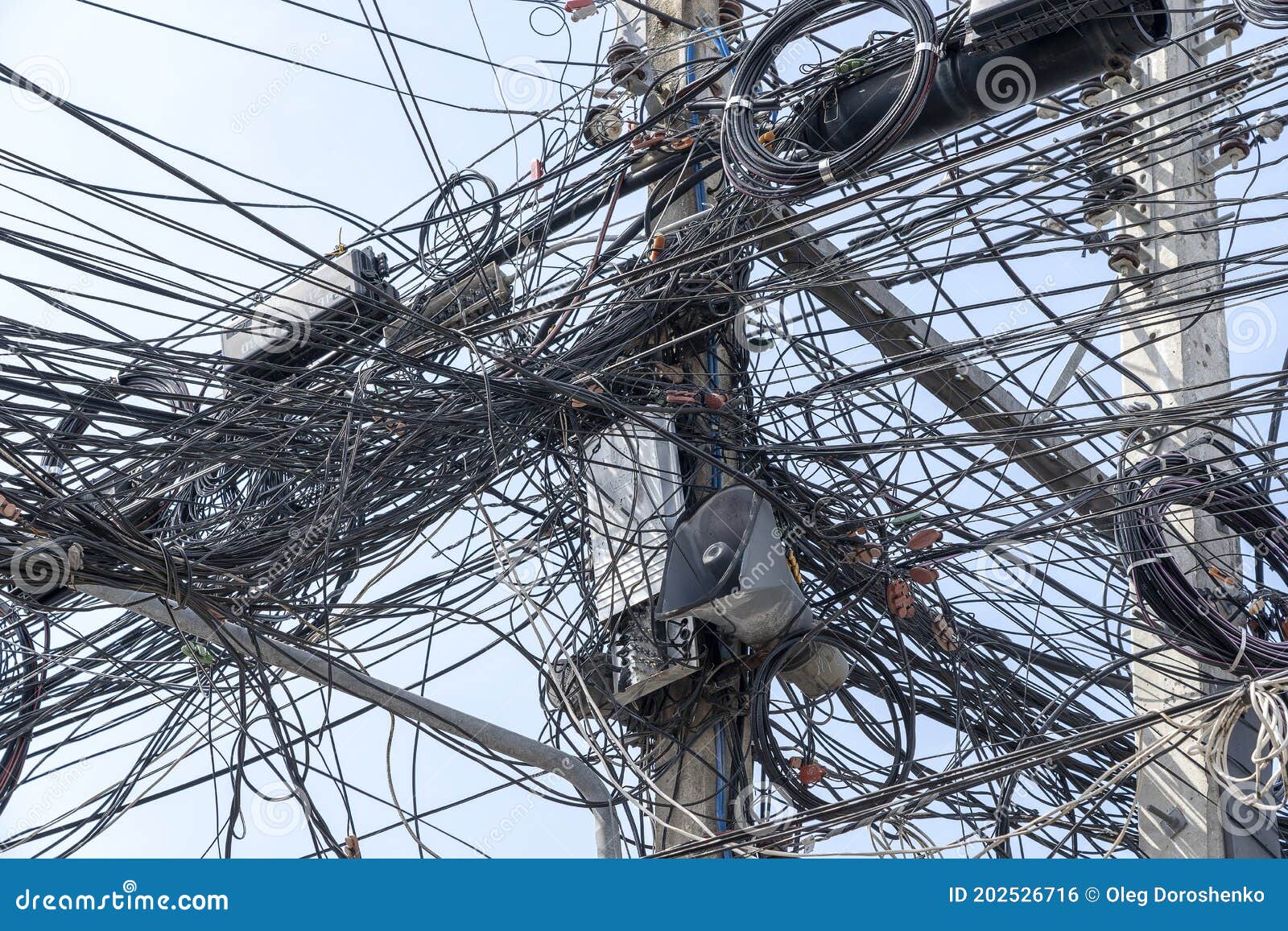
In a proper free market, the telephone poles would have 50 wires, most of which wouldn't be functioning. Afterall, how would anyone provide you internet? Without government regulation any startup has to put their own wires up. This leads to rats nests of wires. Tons of expensive wires being put up for customers you used to have. Free market obviously doesn't work, you must come in and fix that.
Communism on the otherhand is misuse of people. Everyone must be employed full time in communism. In the USSR, there would be multiple cashiers you would have to go through. Just to ensure people have something to do. You also have to have government slaves. USSR had the gulags. China has the uyghurs. Vietnam has their slaves in forced labour centers.
I don't see what communism has to do with everyone needing to be employed full time. That's just what they made of it in the USSR etc.
> Communism: a theory or system of social organization in which all property is owned by the community and each person contributes and receives according to their ability and needs.
I concur, there's nothing "communistic" about the idea of full employment, if anything it strikes me as something rather capitalistic in its nature: Full employment would mean there's an oversupply of labor, which means labor would be dirt cheap and easily replaceable.
That would be the dream for anybody trying to exploit others labor for their own gains, something that's generally seen as a very capitalistic mindset.
The USSR attempting to have full employment was yet another misplaced attempt at trying to "Beat the capitalistic West at their own game".
>I concur, there's nothing "communistic" about the idea of full employment, if anything it strikes me as something rather capitalistic in its nature: Full employment would mean there's an oversupply of labor, which means labor would be dirt cheap and easily replaceable.
There have been nobel prizes on labour participation rate and unemployment rates. The reality is that you have so much population, you have requirements of productivity to produce things for your population.
Cuba is an exception, they do still have government owned slaves. Mostly political prisoners, you can't say anything negative about the government. However, only 30% of their population has a job.
What's the consequence? You only get about 1lb of meat a month. Literally I will eat 1 month's of food in a single meal.
Also what's up with other consequences? Doctors are forced to work ~65hours/week while 2/3rds of the population stays home? Wow. While taxi drivers who work less hours earn more than you.
>That would be the dream for anybody trying to exploit others labor for their own gains, something that's generally seen as a very capitalistic mindset.
Not capitalistic at all, what capitalist society has enforced near full employment? I don't know of any. This is a communist thing. Only communism has ever done this. It's something Marx never said needed to happen. It's just the reality of productivity and how society works.
>The USSR attempting to have full employment was yet another misplaced attempt at trying to "Beat the capitalistic West at their own game".
The even more interesting thing. Graeber obviously says that communism is where you typically get all the bullshit jobs. Yet here they are in capitalism. The reality is that he's right. The reason for the rise of bullshit jobs in capitalism is all the socialism/communism being introduced.
Japan isn't communist and yet they also have government slaves, 99.9% of people accused of a crime are forced to work in a gulag. Why? They implemented loads of socialist policies and blew up their debt. Their public debt to GDP is 266%. That's actually worse than Greece during their collapse. The only thing holding Japan together is the government slaves.
Why does communism(or whatever name) always seem to come with full employment and government slaves in gulags? I actually don't fully understand why, but that's not a capitalism.
I think almost everything you say about Japan is wrong.
"99.9% of people accused of a crime ..." -- this is a reference to the fact that the Japanese criminal system's conviction rate is a startlingly high 99.9%. But what's going on here is that about 60% of criminal cases in Japan get suspended without going to court; prosecutors only proceed in cases where they are nearly certain of getting a conviction, so their 99.9% figure isn't comparable to (say) the US's 93% (that's a figure from 2012; I couldn't readily find anything more recent).
(It may also be true that that 99.9% is artificially high, that substantially fewer than 99.9% of accused criminals who go to trial in Japan are actually guilty despite prosecutors' attempts to proceed only when sure of conviction. But even if say 10% of those convictions are wrongful, that's a much smaller effect than the fact that 60% of cases are abandoned without going to trial.)
"... are forced to work in a gulag" -- so the claim here is that literally every person convicted of a crime in Japan then does forced labour. This is not true, for the simple reason that the great majority of people convicted of crimes in Japan (just like everywhere else) don't go to prison. Only about 15% do.
(It is true that most prison sentences in Japan are imprisonment-with-labour. I'm not sure whether it's all of them; I've seen explicit claims that it is and explicit claims that it isn't. I shall not try to adjudicate whether "in a gulag" is a reasonable description of the life of those prisoners. Incidentally, they are mostly paid for the work they do in prison.)
"Why? They implemented loads of socialist policies and blew up their debt."
The Japanese debt-to-annual-GDP ratio hovered around 50% or so until about 1993 and then started rising rapidly, reaching its present level (the figure I've seen is 225%, not 266%, but in any case it's rather high) around 2012. But they had a policy of prison labour before their debt was large; e.g., here's http://www.jca.apc.org/cpr/kaido.html someone complaining about it in 1997 (debt-to-annual-GDP ratio about 70%) using prison labour figures from 1994 (debt-to-annual-GDP ratio about 60%).
(I shall not try to adjudicate whether Japan's big increase in public debt is the result of "socialist policies".)
"The only thing holding Japan together is the government slaves."
About 50k people are in prison in Japan. The population of Japan is about 125M. That 0.04% of the population would have to be incredibly productive for their labour to be "the only thing holding Japan together".
>I think almost everything you say about Japan is wrong.
Tiny part of my comment, no offense or anything. Certainly hoping to learn where I am wrong.
>"99.9% of people accused of a crime ..." -- this is a reference to the fact that the Japanese criminal system's conviction rate is a startlingly high 99.9%
To be fair, it's hard to compare to English law systems. Perhaps it's totally fine, but when you connect the forced labour. I have questions that are unanswered.
>so their 99.9% figure isn't comparable to (say) the US's 93% (that's a figure from 2012; I couldn't readily find anything more recent).
Conviction rate in Canada is ~63%, even lower if you exclude plea deals. We could go into discussion about how for-profit prison system in the USA or illegitimate crimes being enforced. I'm pretty sure 93% is way too high and it's around ~70%.
>"... are forced to work in a gulag" -- so the claim here is that literally every person convicted of a crime in Japan then does forced labour. This is not true, for the simple reason that the great majority of people convicted of crimes in Japan (just like everywhere else) don't go to prison. Only about 15% do.
I think maybe we are comparing apples to oranges here.
>(It is true that most prison sentences in Japan are imprisonment-with-labour. I'm not sure whether it's all of them; I've seen explicit claims that it is and explicit claims that it isn't. I shall not try to adjudicate whether "in a gulag" is a reasonable description of the life of those prisoners. Incidentally, they are mostly paid for the work they do in prison.)
I will concede this. "In a gulag" was improper. The japanese prisons are not political prisoners like communism. As you say, most prison sentences are forced labour. There's the problem I have with Japan.
>The Japanese debt-to-annual-GDP ratio hovered around 50% or so until about 1993 and then started rising rapidly, reaching its present level (the figure I've seen is 225%, not 266%, but in any case it's rather high) around 2012
266.20% in 2020. Covid made it jump almost 30%
>But they had a policy of prison labour before their debt was large; e.g., here's http://www.jca.apc.org/cpr/kaido.html someone complaining about it in 1997 (debt-to-annual-GDP ratio about 70%) using prison labour figures from 1994 (debt-to-annual-GDP ratio about 60%).
Fair, I was saying that the only reason Japan hasnt collapsed to about 30% poverty like Greece is because of the forced labour.
>About 50k people are in prison in Japan. The population of Japan is about 125M. That 0.04% of the population would have to be incredibly productive for their labour to be "the only thing holding Japan together".
Japan is suspiciously low. Kind of impossibly low. Which in the context of the allegation that people are slaves. In a country with many yakuza orgs, sex trafficing, and some pretty strict rules around many other things(porn for example) it seems to me these numbers are impossible.
One day we will find out what the real numbers are. It also seems to me that clearance rates are impossible. Japan clears arson at >70%? The hell? impossible.
On the US conviction rate: page 8 of https://www.justice.gov/sites/default/files/usao/legacy/2013... says "Of the 87,709 defendants terminated during Fiscal Year 2012, 80,963, or 93 percent, either pled guilty or were found guilty. [...] The rate of conviction remained over 90 percent, as it has since Fiscal Year 2001." I believe that "terminated during FY2012" here means that they went to trial, and their trial ended during that year.
That does seem like it's the figure that's formally comparable to Japan's alleged 99.9% conviction rate, no?
It may well be that in the US, as in Japan but to a lesser extent, cases are dropped when it doesn't seem like they will get a conviction. And of course the US tries very hard to persuade people to plead guilty by threatening them with extra-harsh sentences if they don't but are found guilty.
What apples and oranges do you think are being compared?
You said that 99.9% of people accused of a crime in Japan go to prison and have to work there. Which of the following do you disagree with?
1. Only about 40% of people accused of a crime in Japan have their cases go to trial at all, rather than being abandoned.
2. Only about 15% of people convicted of a crime in Japan go to prison.
3. If only 40% of people accused have a trial, and only 15% of convicted people go to prison, then at most 6% of people accused go to prison and have to work there.
4. 6% is smaller than 99.9%.
You haven't given any justification for your claim that "the only reason Japan hasn't collapsed to about 30% poverty like Greece is because of the forced labour". Again, there simply aren't enough people in prison in Japan for anything like that to be true.
You say you don't believe their figures. That's your choice, I guess. But it seems like quite a stretch, especially if you expect this to rescue your claim that forced prison labour has somehow saved Japan from otherwise inevitable economic disaster.
The official figures say that about 0.4% of the Japanese population is in prison. What fraction of the population would have to be in (I think almost all low-skilled) kinda-sorta-slavery to make the difference between an economy like Japan's and an economy like Greece's? I can't see how less than, say, 4% could do that. (I'd actually have thought it would need to be a lot more.)
In other words, for your theory to work, there'd need to be some sort of secret prison population ~10x the size of the official prison population. How are you suggesting that happens? Do you think lots of people who are officially reported as having been fined were actually hauled off to prison? (How come their friends don't notice that the official accounts have been falsified?) Do you think there are secret prisons in Japan that no one knows about, where these people are held? Or what?
> Mostly political prisoners, you can't say anything negative about the government.
Have you ever heard about the US UNICORE program [0]? In some US prisons participation in UNICORE is mandatory for parole review and sometimes even part of the course to pre-release for prisoners.
The UNICORE program consists of inmates manufacturing equipment for the US military for a pay that no free human being would ever accept for the work.
Now, imagine you are somebody who opposes the US military, who's aware of the MIC, and thus part of your political convictions is not supporting an expansionist and aggressive military.
What do you think is gonna be the outcome there? Exactly, people who will stick to their political convictions will be denied a way to be released early, and sometimes even released at all. Something that has been going on for literally decades, yet US Americans will gladly regurgitate the claim how "There are no political prisoners in the US!". [1]
> You only get about 1lb of meat a month. Literally I will eat 1 month's of food in a single meal.
That's not something to brag about, particularly when looking at what lengths US producers go to get the "meat" even cheaper, involving such tasty sounding additives like "pink slime", which is just rotten meat freshened up with ammonia or feeding the livestock questionable additives like Ractopamine.
None of that is good or a reason to brag about, particularly as the US beef sector is heavily subsidized by the US government, so it's not even a good example for a "free market" [2].
> Why does communism(or whatever name) always seem to come with full employment and government slaves in gulags?
It doesn't [3], but when you decide to label anything "communism" you don't like, while then projecting problems the US has on those places, it's no surprise that you end up seeing "communism" everywhere.
While ignoring realities that don't fit into your definition. Case in point: The country with the most and biggest gulags, some of them even privately owned and operated, locking up people at higher rates than any other place, is not Japan, Cuba or Greece, it's still the United States of America [4].
> Afterall, how do you stop 'You work, I'll be at home collecting UBI and watching TV.'
Well, if there's no money (because it's not necessary), there wouldn't be a UBI anyway? Communism is supposed to come after socialism and before anarchy, in theory. First you build an egalitarian society with a mindset of peaceful cooperation, then you get them to all work together for the greater good, and finally you dissolve the 'taskmaster' of the state, as society is perfect and no longer needs it.
>Well, if there's no money (because it's not necessary), there wouldn't be a UBI anyway? Communism is supposed to come after socialism and before anarchy, in theory. First you build an egalitarian society with a mindset of peaceful cooperation, then you get them to all work together for the greater good, and finally you dissolve the 'taskmaster' of the state, as society is perfect and no longer needs it.
Lets put capitalism vs communism aside.
I imagine a world where we have fully automated producing essential things. Why can't we have a factory farm fully automated using entirely robots producing food at cost. The same can be done for widgets. Robot arms can just do everything entirely. Someone just has to build this; I've been to one of those greenhouses. It picked thousands of pounds of tomatoes, delivered them to packaging, packaged, and shipped every day with only 3 people. The 3 people are for 2 functions. Q/A making sure its not picking rotten stuff and making sure the trucker doesnt do anything.
We can get to the point that the payment for your groceries is watching advertisements or whatever. Simply because the cost of those goods are that small.
If I could be assured my family was fed and such. Maybe I'd quit my job and entrepreneur and do something else. That's the appeal of communism. The idea that innovation and such takes off. The reality is that under communism you have societal collapse. Cuba hasn't built anything in forever. They have no factories, nobody would work in them. They also dont automate, their population has been stagnant and thermodynamics is wrecking their country. In order to have that upward push in communism, you need slaves. Gulags get shit done.
The name is simply internally contradictory: as those subscribing to it are okay with oppression by the super rich, it is not anarchism.
They advocate exclusively for property law, by which the super rich can "legitimately" hang on to their fortunes and thus power. While many of them advocate against laws like "age of consent".
> In a proper free market, the telephone poles would have 50 wires, most of which wouldn't be functioning. Afterall, how would anyone provide you internet? Without government regulation any startup has to put their own wires up.
Seems like a poor example. If there’s all these unused wires owned by people who are losing money, surely a startup could rent capacity on an existing network, or outright buy it if the capital was already available.
>Seems like a poor example. If there’s all these unused wires owned by people who are losing money, surely a startup could rent capacity on an existing network, or outright buy it if the capital was already available.
Thailand doesnt have regulations in which the government picks a monopoly over a media and then forces them to provide near cost access to competitors. Typically, copper telephone vs cable vs fiber.
Therefore you get that utter mess, and there's no way those wires are properly utilized. It's a high cost to society, aesthetics aside, copper is expensive, fiber is expensive. You would be better to manage it so that you can assign those resources more efficiently.
However, this becomes 1 spot where free market no longer exists. Here in Canada we have Bell Canada who lobbied the regulator and effectively gave themselves a monopoly. The regulated market doesnt get near cost access to the wires.
No, not all communists are Marxists and the predominant tradition, anarcho-communism, is not post-Marxist but derives from a different set of authors who opposed Marx during his lifetime. [1]
Thank you. Some of the comments in this thread are so bizarre I have to wonder if it's down to US educational systems placing everything that's not Reaganomics into a basket marked "Communism BAD".