AFAIK, basically all French subway systems opened after the 1960s use this system.
This is one of the things I strongly associate with Paris: the slight smell of burned rubber when you enter a Métro station of a line with rubber tires.
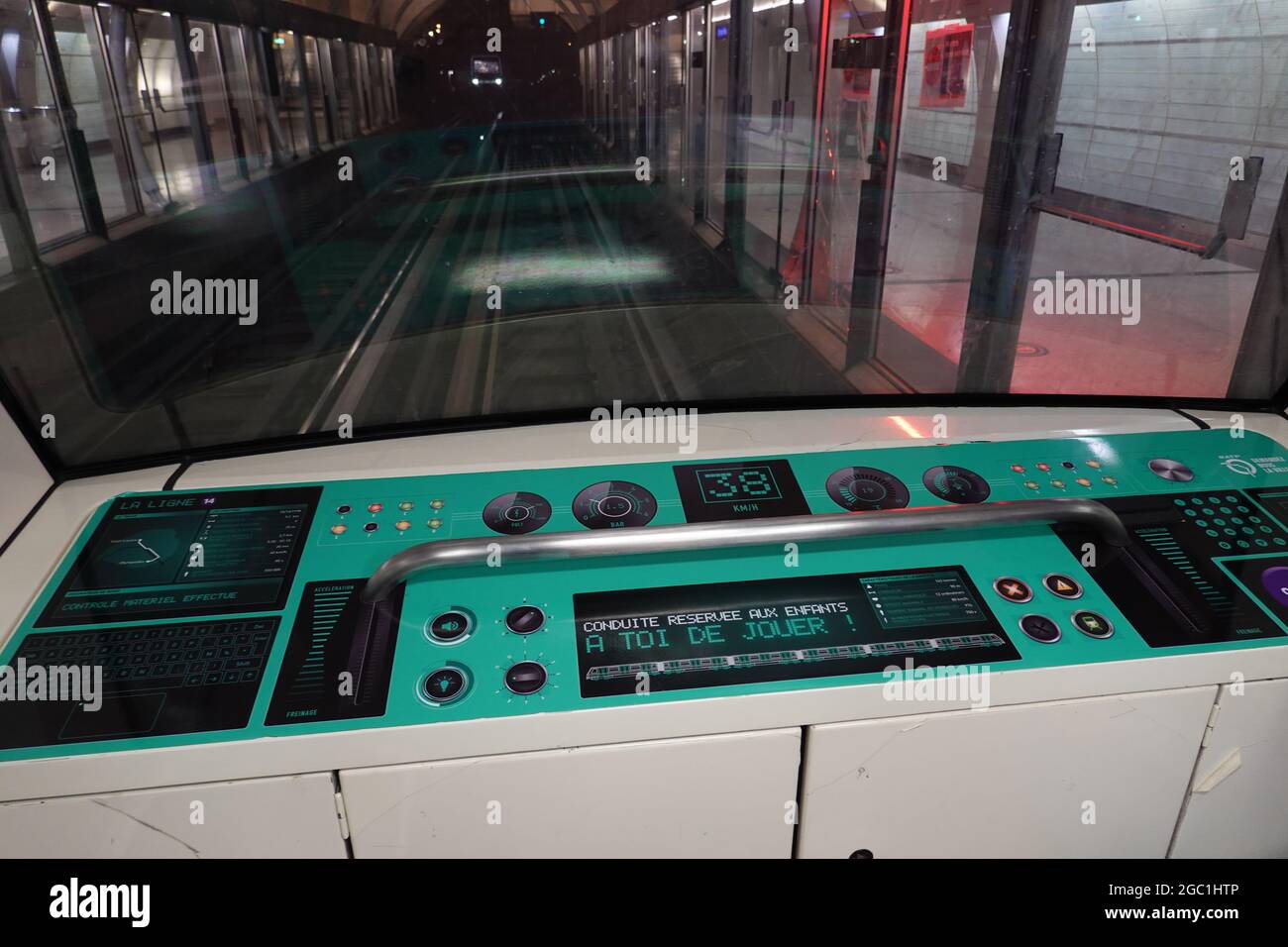
Pro tip for Paris visitors with children: ride with one of the automated lines 1, 4 or 14, and enter through the very first door. There is a fake (printed) control panel for children below the front window [0].
The reason why metros on tires is a thing is that they used to have much better acceleration/breaking characteristics than rails, which is good for metros since you can cram more trains in the same lines this way.
I said “used to” because, from what I understood, the development of ABS made breaking characteristics of traditional trains much better than before, which reduces the improvement you get with tires.
(Don't quote me on that though, I got this from a coffee machine discussion with a former metro driver when I was working for RATP 10 years ago so my memory may not be 100% accurate at this point)
Half right. The limit at this point is much more do with what (likely standing, possibly not even holding on) people can tolerate, not what the device is physically capable of generating.
Both BART and Muni had problems with the service brakes on their new trains flat spotting the wheels – apparently it's still not quite as much a solved problem as it should be. BART especially tends to run their trains with out of round wheels – almost certainly not helped by running aluminum wheels.
Exactly. After initial testing of the rubber tires in the 70ies, RATP quickly decided to not use the full acceleration/breaking potential of the rubber tires, because it was very uncomfortable for passengers.
True, though emergency braking isn't entirely subject to these limitations.
At least for tramways I know for sure[1] that the tram will happily have you break your arm inside the tram because it braked too strong in case of emergency rather than crushing a pedestrian that crossed in front without paying attention.
Maybe the rules are different for metros though, given that there aren't as many pedestrian on the way…
[1] because I got the information from the system design team of a big tramway manufacturer I worked with no later than last year so my memory is much fresher, and the source is more reliable.
Muni reduced the emergency braking force back in 2008–2009 or so, because, yes people were getting injured (and given how frequent EB applications were back then…). You can definitely achieve sufficient braking without having to violently throw people to the ground.
So does Taipei's Wenhu line (https://en.wikipedia.org/wiki/Wenhu_line) which was built by a French consortium in the 90s (Matra IIRC). Construction disputes were epic but it seems to operate very smoothly now. The other lines in the system are rail-based.
Ten of the lines are rubber-tired. Instead of traditional steel wheels, they use pneumatic traction, which is quieter and rides smoother in Mexico City's unstable soils. The system survived the 1985 Mexico City earthquake.