> The 13 deficiencies include: The F-35’s logistics system currently has no way for foreign F-35 operators to keep their secret data from being sent to the United States.
I marvel at how foreign buyers of something as complex as stealth aircraft can have any confidence that the system is not riddled with back doors, remote control capability, "phoning home", surveillance, and kill switches. How would you prove to a foreign buyer that your F-35 would not:
- upload all your secret flight data to a tire pressure monitor every time a maintenance worker checks the tires with the special gauge he has to use, which then retransmits the data when the gauge is put back in the hanger, without needing any cooperation from the maintenance worker
- cause all your F-35s to fall out of sky everywhere in the world when the GPS satellites transmit an extra 64-bit coded message that cause fuel actuators to shut off
- put your F-35 under remote control when a coded microwave message is transmitted directly to the plane during combat or a close encounter
Even children's toys and home appliances are routinely discovered to be phoning home and doing sneaky unexpected things. I'm going to hazard a guess that all large weapons systems are compromised —— perhaps by more than one nation simultaneously since parts and expertise come from hundreds of contractors and many different countries. I'm not aware of any revelations of weapon-system backdoors yet, but we might hear about some of them in the aftermath of the next major war.
The thing is that nobody just buys a weapon in isolation. You buy into a weapons system, which includes not just the weapon itself but a whole universe of concerns that surround it: logistical concerns like spare parts, fuel and ammunition, operational concerns like tactical doctrines that work well with the weapon, and so forth. Without that stuff, the weapon by itself is pretty close to useless.
All of which means that it's more or less impossible to buy a weapon from a foreign power without opening yourself up wide to that power. You have to let their military advisors onto your bases, to train your troops on the doctrines that go with the weapon. You have to let their logistical specialists into your inventory systems, so they can hook you into the pipelines through which the spare parts and ammo flow. Any of these people could be using their access to snoop on you or worse, but there's not much you can do about that because without them all you've bought is a $100 million paperweight.
If you're the buyer, yes, that absolutely sucks. But, unless you're willing to spend vast amounts of money you don't have to build up your own domestic military-industrial complex, you don't have a lot of alternatives. You either buy into one of the existing ecosystems (American, Russian, European or Chinese), or get curb-stomped by a neighbor who did. Once you're bought into one of those ecosystems you're effectively at the mercy of the state that operates it, of course, but hey, you do what you've gotta do. As the saying goes, the strong do what they will, and the weak suffer what they must.
Yep, nobody buy F-35 planes because it's a superior airplane (it's not) countries buy it in order to have better diplomatic relationships with the USA.
It's pretty telling to see Germany refusing to buy F-35 or Hungary buying ones in order to piss off Sweden.
Thats also the situation here in Denmark.. everyone knows its the most expensive, and not the best.. yet we bought it. We havent even gotten the planes yet, but we have also been asked to buy spare parts in advance, as they might not be able to provide them later.. wtf?. Also we have been asked to let a number of the planes remain in the US, for “training”.. this is the shittiest of shitty deals..
I mean, I can understand the training request - the US has a lot more "land we don't care about people flying over at mach 1.2" than Denmark does (which means you'd probably want to train there anyways) and if that's where there's already training infrastructure setup it would make sense not to duplicate it.
And if you're going to be training pilots... Shouldn't you do it on the exact config of F-35 that Denmark's buying? Which means a Danish F-35, which means leaving it in the US.
You have a warped view of world politics if you think countries are incapable of making their own decisions and need to be told what is best for them.
That aside, it's more or less common knowledge these days that the planes have not been delivered for all these years due to the production problems they are still having.
Esquire just did a piece just month mentioning that the plane starts to fall apart if it's flown too fast and the computer fails to detect if the plane is flying to fast about half the time.
> You have a warped view of world politics if you think countries are incapable of making their own decisions and need to be told what is best for them.
We don't know what the "training in the US" requirement looks like, though. I wouldn't be surprised if it was just "you need to use Danish planes to train" + "we only have training facilities in the US, and if you want to bring your own that'll cost money". It has nothing to do with "Denmark can't make its own decisions", because as far as I'm aware that hasn't been alleged anywhere.
Denmark is so small, that most regular fighterpilot training, is already done in the US.. but having to pay billions for jets, that are then permanently in the US, is pretty bad. The high price, means we will have way fever than before.
How is that useless or arrogant? Germany used to train with Phantoms and then Tornadoes in Arizona because they didn't want to fly combat training in their own airspace. Same with Italy, and many other countries. It's a wise decision since the Southwest of the US has wide open spaces where they can do elaborate training like Red Flag etc. What would be useless would be to pay a lot of money for fighters, then just have them sit on the tarmac collecting dust (like Germany has with Eurofighter).
Having a military costs money. Living up to treaty obligations like NATO costs money. Trying to have a military on the cheap just ends up with dead troops/pilots/sailors.
There is at least a partial alternative: you can get involved in the supply chain.
For the F-35, other countries were asked to pay into the R&D budget, with the promise that large contributors could obtain exclusive manufacturing rights to certain components. I've seen a lot of grumbling about this, with people claiming it traded cost savings for a military risk that the planes will be useless (or at least lack spares) if things go wrong for those suppliers.
This is sort of true, but the missing insight is that the dependency is also a goal. It's not going to allay fears that F-35s are calling home with telemetry or have compromised software, but it does help create reciprocal interests in the same way as inviting in a foreign military base.
I think how reassuring that mutual dependency is will depend heavily on how easily Lockheed routes around Turkey now that the US is cutting them out of the F-35 program.
That's a very good point. Turkey is obviously the odd man out on the buyer list, and it seems like a clear case of economic and political considerations clashing with the military rationale of only selling to firm (and easily-defended) friends.
I think it extends the metaphor to NATO very well actually. A mutual-defense alliance gradually turned into a political and economic alliance, and now it's not clear how well the original proposition can be trusted. RAND, at least, thinks Estonia and Latvia can't be actively defended and couldn't be retaken without bombing campaigns in Russian territory. So suddenly, the strength (or at least universality) of that agreement becomes an open question.
Furthermore, buying weapons doesn’t exist in a vacuum. It is a political process. The US will use its considerable clout to “encourage” other countries to buy arms from the US.
Back in 1982's Falklands war, the Argentines sunk two British destroyers with French-made Exocet surface missiles, towards the beginning, and then stopped scoring any hits.
I once heard unsourced speculation that the French might have given the British the scoop on how to sabotage incoming missiles.
It's also worth to note the hit to HMS Glamorgan required Argentina to hack a pair of Exocets to fire them from land without any cooperation from France, which was quite impressive.
I thought that some French tech support/engineers from the company building the missiles stayed in Argentina to continue their job. Same with the French people supporting the French-made airplanes.
Edit: even if France supported the UK during the war, preventing the delivery of more exocet missiles and providing information on the missiles and airplanes to the UK.
Edit 2: Apparently it was an oversight, the French team in Argentina was never told to stop working. Also I guess the missile builder might have been happy to have a live fire demonstration of his products
> A much inferior airforce posed serious trouble to a big power thanks to their great product.
There's no denying their effectiveness in this example, but then the context was the UK was fighting a conflict halfway across the world and without air superiority. Take away either of those elements and the Super Etendards were likely to have been obliterated long before their Exocets were within range.
Nobody said it was an easy conflict to fight for the UK. But Argentina was also ill prepared. They should have waited a few months till they received a whole batch of Exocets, which was already bought and in production. With many Exocets, they could have launched a saturation attack which would have caused serious damage to the British fleet.
Furthermore, waiting would have meant the islands would have entered Antartic winter shortly after invasion, giving them many months to dig in and prepare for UK Task Force landings.
It was a gamble to distract from problems at home.
There where probably career officers raising all the issues you did and more but it didn’t matter.
It’s interesting to speculate what thatcher would have done had the Argentines managed to sink enough ships to end the first Task Force, we where already fighting at our limits (which showed just how poor our equipment and spending was, lions lead by donkeys still applied), force project is hard, force projection for a 2nd rate power (if we class superpowers as 1st rate) at best is ridiculously hard.
I have a vague memory that there were also problems with the Sea Wolf based defence system on the ships. The controlling software apparently recognised the incoming Exocets as friendly. I don't know if there is any credibility to this but I am sure it would have been fixed pretty rapidly.
The problem was more that the only ships with Sea Wolf - which was the only thing we had at the time that COULD have taken out the exocets - were guarding the carrier group during the loss of Sheffield.
AFTER the loss of sheffield, the policy was changed such that each class 42 was escorted by a class 22 (with sea wolfs).
The Argentian navy did hit Glamorgan with an exocet after that, but Glamorgan wasn't anywhere near anything with Sea Wolf defenses at the time.
The 'friendly' aspect is likely apocryphal, and possibly based on the fact that the Glamorgan and Antrim were both exocet missile destroyers themselves, and might thus have had issues with targetting a missile of the same type. But since neither of them had any point-defence systems it was moot.
edit: or it may be from the fact that Broadsword's sea wolf system 'locked up' during the sinking of Coventry, and was unable to attack the inbound A4s that bombed Coventry. But from what I can see, the prevailing belief was that it was unable to lock on for the same reason Sea Dart on Coventry wouldn't - it couldn't discriminate the A4s from the land behind them.
According to an army grunt friend of mine, there's a truism in his profession which goes "Friendly fire... ISN'T!"
Joking aside, I would assume current IFF systems let you define anything not explicitly friendly as hostile - what with shifting alliances, armament development consolidation &c - the issue being how many backdoors there are. I take it as a given no US-made missile can kill a US-operated aircraft, regardless of what the operator of the missile desires. (Same goes for French, British, Russian &c)
> I take it as a given no US-made missile can kill a US-operated aircraft,
I'm not so sure about that. That would require that all US made missiles have a "disarm" signal that the operators cannot override. Maybe for weapons we sell that is okay, but for our own use, that strikes me as too much of a liability if that signal ever gets compromised and spoofed.
I heard something similar, I believe reported by the television news program “60 Minutes”, but the report I remember was about the Phalanx missile defense system not recognizing the Exocet as an “enemy” missile since it was a NATO weapon.
Edit: Note that I’m working off of very old memories, and the 60 minutes reports may not have been accurate.
>I once heard unsourced speculation that the French might have given the British the scoop on how to sabotage incoming missiles.
reminded by association - in the new Russian&Serbian movie https://en.wikipedia.org/wiki/The_Balkan_Line released for the 20th anniversary of the war there is a scene with the French bomb dropped on a house in Serbia and which didn't explode because it was intentionally sabotaged. Doesn’t seem to have propaganda value, and I’m wondering whether it is a play on real facts or just an artistic reference to the French resistance to the NATO bombing of civilian targets.
I find it odd that this is a realistic concern on HN of all places. It's a physical object - and we all know that physical presence means instant own.
How would you prove to a foreign buyer that your F-35 is not backdoored? You wouldn't. You sell them the plane and then they have the best cybersecurity experts the market can provide go into the hangar and completely tear the whole thing apart, inspecting every on board computer, dumping assembly code, inspecting circuit boards, etc. These are being bought by nation states, not Grandma who doesn't know her router has an admin interface with a default password.
Any attempt to backdoor that gets discovered would be an international incident and severely strain diplomatic relations between the U.S. and all of its allies. At the very least, anyone looking for nextgen fighters now would look somewhere else now knowing that we have no qualms with screwing with their defenses.
It's a physical object - and we all know that physical presence means instant own.
It's more like eventual own, depending on your time frame. If someone wants to to to lengths to physically secure something, it can probably withstand 1 seconds of intrusion time. It has closer to zero chance of withstanding 36000 seconds, and very close to zero chance of withstanding 360000 seconds.
From another perspective, creating yourself a brand new weapon system that is designed to be vulnerable to remote attacks, data theft, falling out of the sky on demand, and so on, seems like making yourself really, really vulnerable.
And not to mention, likely unnecessary. Even just cutting a foreign nation off from spare parts and maintenance crews is enough to ground planes, as Iran discovered in the Iran-Iraq war.
the F-35 is only supposed to be sold to close allies anyway so I doubt secrecy from the US is on the top of buyers' minds? conversely, they'd likely engage in joint exercises with the US.
The US already in an economic dispute with many allies (including Canada) citing national security threats. At this rate, the US might have no close allies left by the end of life of the F35s.
POTUS needs to cite national security as is how he is able to unilaterally place those tariffs without congress. Furthermore natsec threats doesn't mean that a partner is not trustworthy. Australia is one of America's longest standing and most dependable ally. If the US were to use Australia as it's primary rare earth mineral supplier a perfectly valid argument could be made that in the event of a global war an adversary could disrupt trade between the US and Australia. Thus there would be a national security threat.
He has access to more intelligence then you and I. He must legitimately feel Canada is a threat to our security. Possibly even imminent invasion, or hostile action. He has the intelligence.
Someone who will persist in a racist lie of birtherism conspiracy nonsense for five years, has zero credibility. What this person "legitimately feels" is so totally out of scope because first his assertions of fact are frequently provably not reality based, second there is no ability to assess anyone's feelings. Why must he legitimately feel Canada is a threat? Why can't he be lying about it just to get what he wants, whatever that is?
This is short term thinking. Allies are aware the administration of the United States can change every 4 or 8 years. If what you need are big guns, the United States is still the best game in town.
Our allies have historically been comfortable that the US President would be fairly responsible with shared intelligence, regardless of which party's in control.
It's slow, but interest rates are going in one direction in the whole world. The last time they were so low was the time before the currencies were hyperinflated and WWII started.
- cause all your F-35s to fall out of sky everywhere in the world when the GPS satellites transmit an extra 64-bit coded message that cause fuel actuators to shut off
This is very close to a plot point from Battlestar galactica (2004). I don't know of a way off the top of my head to detect back doors other than manually reviewing code.
A large company which has a database of many back doors might be able to train an AI to find them. I'm going to guess that someone, somewhere is trying to do this, somehow.
It is worth noting that the dominant systems architectures of today help ensure vulnerabilities remain. Doing something about this could become a defining factor of computing in the 21st century.
Isn't this sort of thing expected through the process of developing cutting edge hardware and software?
I can't imagine there are many airframes that are pushing the technological boundaries as the F-35, aren't bleeding edge products prone to difficult development?
I don't see how this wont be worth it in the long run in terms of getting ahead in an arms race as a superpower.
It seems as though this is probably the hardest thing to get industry insight into given the secret nature of it all.
>Isn't this sort of thing expected through the process of developing cutting edge hardware and software?
To a great extent, that's the fundamental problem with the F-35 program - it's a technological showcase first and a useful weapons system second. It has been designed and commissioned by people who believe that "most advanced" necessarily means "best" and who are indifferent to the actual tactical and strategic requirements.
The Army and Marines have been crying out for years for a suitable replacement for the ageing A-10. It's the finest close support aircraft ever made, it has a legendary reputation among infantrymen who served in Afghanistan and Iraq, but the USAF are still planning on retiring it in favour of the F-35, an aircraft that is simply incapable of performing the same role. Even if the F-35 were inarguably an excellent aircraft, it's the wrong aircraft for a vitally important job.
The F-35 helmet is a $400,000 showcase of AR technology, capable of providing unprecedented levels of data to a pilot. It's also really bad at being a helmet - it's so heavy that it could literally break the neck of smaller pilots during ejection and so bulky that it limits visibility. Test pilots have mixed views on the usefulness of the AR cameras, but they all want the ability to look over their shoulder. It's maybe possibly better at doing a thing that nobody asked for, but it's demonstrably worse at being a helmet.
Servicemen don't want cutting-edge innovation - they want weapons systems that work reliably in the field and provide useful combat capabilities. That's what you need to keep in mind when you hear the DoD hype the F-35. We know it's a hell of a lot less reliable than existing US aircraft and competing foreign aircraft. We know that the one-airframe-to-rule-them-all model is deeply flawed and leaves serious gaps in the combat capability of the US military. What does the F-35 actually offer in the field that couldn't be provided by a cheaper, simpler, more reliable weapons system? I've yet to hear a good answer to that question.
What does the F-35 actually offer in the field that couldn't be provided by a cheaper, simpler, more reliable weapons system?
It offers Lockheed Martin one-point-five trillion dollars, much of which will be spent in key Congressional districts.
That's all.
I suspect that those responsible for making decisions about the F-35 are perfectly fine with this. Rhetoric aside, our government and military appear to think they exist in a world where direct Great Power military conflict is not a possibility. The F-35 seems perfectly adequate to swiftly wreck anywhere on Earth that is not Europe, China, Japan, Russia or India. And that seems to be our actual goal in terms of capabilities for the immediate future.
Have you ever looked at the IDIQs? The list of subcontractors is amazing. And, 20 states have received over $100M.. and only 4 states haven’t received any so far. Everyone is happy! Except the public and the soldiers, of course.
But, seriously, I’ve walked through some of these subcontractors sites. They’re often small businesses run by a politically connected ex-officer, a few revolving door phds (to establish their R&D creds), a disabled (or minority) vet, and a mass of warm bodies to pump money into the local economy. (Ironically most of the money goes to Walmart and eventually goes overseas).
Corruption conquers countries more often than war.
Due to the nature of the goods they sell a surprising amount of Walmart's supply chain is domestic. Basically anything that doesn't benefit from dirt cheap assembly labor or lax environmental regulations is produced domestically or in Canada/Mexico.
This is what always happens with government spending. When this is not the case the system only is in an unstable state and will eventually collapse into corruption.
I mean the cynic in me agrees there's a lot, and I mean a lot, of porking barrels going on, but at some point you are going to have to build unreliable bleeding edge systems so that the next generation can become mass market
sucks to be an early adopter, but this is no different than a gen0 Apple hardware, to draw some parallels.
what really gets me is that because of rules upon rules on acquisition, making such thing and marketing them as they really are (tech demonstrator, prototypes, unrefined products, whatever you want to call them) would never fly. you have to twist those as great budgeting opportunities, inflate the earning options of export versions etc etc.
it's like generations of rotten politics coming into play, portraying it as a greedy company and some unscrupulous congressmen is not wrong per se but a little reductive.
The rules are always flexible enough. They never matter.
The power structure, the actual humans making decisions are all that is important.
And currently that behemoth is hell bent on not giving a fuck about itself, its components [the humans] are mostly looking out for themselves, there's not enough institutional inertia to change this, etc.
I'm not saying it needs to be dismantled, torched to the ground, blablabla, but of course there needs to be deep, systematic, qualitative and quantitative changes. Personnel, ideology/dogma, leadership, training, culture, process, structure.
"Congress" (or more precisely the upper echelon of the power structure - Congress/courts/administration are just the venues where the show happens) is in a gridlock over moral issues, that means everything else is at best performing at the level of the status quo, at worse things become chips in the very high-stakes poker game.
Why is everybody so afraid of violence? Do you think politely discussing on HN the pros/cons of King of Earth owning 79 oil rigs is going to get him to see the error of his ways? That he should stop funding F-35s to bomb his neighbors while he bangs 42 Swedish models per day? "Please sir, that's bad of you."
The problem seems to be not too much pacifism. Quite the contrary. Both sides, every party is able and willing to escalate. Both in domestic and in geopolitics.
This of course leads to a lot of inefficient posturing and back-and-forth, and the preservation of the gridlock.
Building 1500 of the early-adopter version is madness though. What we should be doing is something like what's ended up happening with the much-maligned Zumwalts: build a handful of the gen0 fancy stealth tech and experimental weapons, some of which aren't going to work out. Then take the lessons into the next mass-production system.
I think the F-35 is the first stealth VTOL fighter-bomber. F-22 was just a fighter and wasn't VTOL (and was similarly expensive). Harrier did VTOL but isn't stealthy and only carried IR missiles until recently. B-2 and F-117 are stealthy but are neither fighters nor VTOL.
Done before in a lab, sure. For a service aircraft the full-VR helmet and the lift fan are new, and while the B-2 is reportedly "compatible" with the F-35 data link functionality I can't find anything claiming clearly that that means it's been validated in the field.
Having been on the receiving end of of an A-10 fire support mission more than once, I can speak for the effectiveness of the job they do. Their time on on target is the key to their effectiveness. They are flying tanks. I do not really care the politics of the the replacement, just that the replacement is just as effective. Lives depend on this. It should not be a pissing contest between political views but what just works. As a former grunt I just want my ass saved.
Would a plane better at loitering be able to provide more useful fire support? Or is that simply solved by having more A-10s and cycling them more? (Maybe that's the cost economics problem that the department can't justify? So fuck logic let's just shift the cost structure and pour trillions into a new plane that might look better in the accounting tables?)
If the guys on the ground are having a no good very bad day then having fewer aircraft that can loiter longer is likely going to be better because every time an aircraft shows up there's a ramp up period while the pilot figures out WTF is going on down there and that ramp up period comes with reduced effectiveness and increased risk to the guys on the ground.
Also, time to target is very important. An F15 with the wrong munitions that's seconds away at mach 2 is much more helpful than an A10 that can put the hurt on an entire tank company but is minutes away.
So if the A-10 was never going to be around in enough numbers, what could be done? Only one group had enough distance from the Air Force and enough independent money to consider a viable alternative: buying a cheap, lightweight attack plane on their own. That was the Navy SEALs. A group of them met with the Secretary of the Navy in 2006 to tell him about the problems they faced with getting good enough air support.
Like other American combat troops in Afghanistan, the SEALs sometimes found that high-tech gear couldn't reliably get the job done, or that cheaper, lower-tech solutions worked better. This is how the US military almost adopted the A-29 Super Tucano, a $4 million turboprop airplane reminiscent of WWII-era designs that troops wanted, commanders said was "urgently needed," but Congress refused to buy.
A buddy of mine is actually flying the jet. He said helmet is cool to wear first time but quickly wears out in real flies and is even worse in combat. A lieutenant that first flew it many years ago called it "karate mirror"; he explained it must have been designed by someone who never fought a fight, but somewhat was stubborn enough to assume when you fight karate you would love to have a back mirror to see whats happening behind.
They military argues with contractors atm to actually come back to a regular helmet, because there is really no added value in flying Mach 1 and engage in fight in front of you and having ability to see behind or even under, when you have all sort of warning systems that monitors your surrounding and allows you enough time to alter your direction before you get hit.
I wonder if the VR cams+helmet would make more sense for helicopter pilots, both military and S&R. In XXI century, you don't need to see things around you when flying what's essentially a protein-guided reusable missile launching missiles - but it could come in handy in aircraft that operate at low speeds and altitudes.
Absolutely! LM already has know-how so its a matter of time before it will become an option on their other crafts.
Another buddy of mine (doesn't work on the project but still connected inside LM enough) said that when management seen military officials defending overblown F35 budget they felt actually they sky is wide open to further abuse of $$ and spent shitload of money and time to design and overdesign that helmet.
Eventually you will see it everywhere where it make sense, be it Coast Guard, heck - your local crane operator. But it will take 10 years before LM will makeup the money they "lost" developing it, so it will take time. But F35 will eventually fly without it, no doubt.
The modern apache helmet system already has limited AR capabilities. IIRC, it even includes some in helmet display stuff like systems info and night vision, and also can be used to train the cannon
Generally speaking your post is true, but as others have pointed out, the A-10 is rapidly becoming an unviable CAS platform due to MANPADS and other improvements in anti-air support.
What the others didn't really point out is that the F-35 is definitely capable of what the A-10 does and more. It is faster, brings a drone-like attack platform, and can engage from much higher altitudes.
And this is coming from someone (see my other comments) that doesn't particularly care for the JSF/F-35. The A-10 needs to go away, and the F-35 will be a more than capable replacement for it.
It has those survivability advantages, but it has nowhere near the loiter time of the A-10.
Flying at higher altitude is also not necessarily safer - it puts you out of reach of MANPADS, but in clear view of larger SAMs. Evasive flying generally involves nap-of-the-earth flying, which hides from larger SAMs in radar cover and provides MANPADS and AA artillery with short engagement times. The A-10 is also built heavy and robust enough that MANPADS often aren't enough to bring it down - only vehicle-mounted or static air defense systems have big enough warheads.
If anything, the problem with the A-10 is that it's overbuilt. Its cannon is built to take down tanks in an era when air-carried cannons probably can't get through modern tank armor, and is heavier than is strictly necessary for an anti-infantry role. The air force is looking at much lighter planes like the A-29 and AT-6B for low-threat environments, but could perhaps field a plane with similar loiter-time and survivability characteristics to the A-10 with less weight wasted on that ridiculous cannon.
If there are active SAM sites in the area the A-10C isn’t even remotely operable. Nobody is flying Warthogs in defended airspace. In that case your options are another more capable plane or nothing.
And higher altitudes are strictly safer, even against SAMs. If you’re at virtually any altitude above terrain masking you’re in sight of them. Altitude gives you extra time to react plus requires the missile to burn more fuel reaching you in the first place, shortening its range and increasing the tools you have available to defeat it.
There are a lot of things between "modern Russian tank" and "completely unprotected humans". The 30mm gun is excellent against armored personal carriers.
For the tanks, the A-10 carries the AGM-65 Maverick with 136 kg (300 lb) of explosives.
Upgrading the gun would be useful. We can now make even the 12.7 mm ammunition have guidance, so 30 mm should be easy. We could compensate for the density reduction by upgrading to something like the 37 mm used by the MiG-17. Guidance would allow targeting the most vulnerable parts of a tank. The toughest modern tank still relies on vulnerable sensors. One could also just pound the same spot many times, chipping out a hole. Reactive armor is nothing if you can get a second shot in the same location.
They aren't saying as far as I can tell, except that it receives an optical signal at the rear. Some people are assuming it has fins, but none are visible in diagrams. Beginners can hit moving targets at extreme ranges.
Sandia National Laboratories did something similar, but with a non-standard rifle and using a laser target designator. Russia is attempting to do something similar.
From your first link: "Inside EXACTO bullets are optical guidance systems, aero-actuation controls, and multiple sensors"
Of course that could all be a lie to throw adversaries off the scent, but the trouble with trying to keep a bullet top-secret is the moment you use it, the enemy has as many as they want to study...
Could it contain a charge or instability that destroys the useful innovations when it strikes the target, to prevent that? Even regular bullets look deformed when they hit something, it seems like if you want to slow down enemy research you could exploit that
> Some people are assuming it has fins, but none are visible in diagrams.
Many years ago I saw a concept of a guided machine gun bullet in a "scientific" magazine; the concept involved steering by a mechanism that moved a lump of mass within the bullet around.
How in the world does that work? Bullets spin at ridiculous rates; some 3000 RPS. At long distances it'll have made over 10k revolutions before it hits the target!
The way I understood it, given the very limited number of F-22s, their status of perpetual prototypes and white elephants (IIRC, $700 millions apiece is the most optimistic price range, over 1 billion probable), they will never be used in anything that qualifies as "combat" (bombing from 30000 ft some remote areas of tightly-controlled airspace doesn't really count IMO).
They're expensive, but effective right? They seem like the sort of plane we don't need until we are at war with a near-peer and they are the only thing giving us air superiority. The drop in production was due to the lack of foreign 5th gen fighters to fight against, not because the platform itself doesn't do its job well (AFAIK).
F-22 is not a "perpetual prototype", you're probably thinking of the F-35. And F-22 is optimized for Beyond Visual Range (BVR) detection and destruction of their adversaries before those adversaries even know they're in combat, both via A2G smart bombs or A2A med-long range missiles. If that's the only kind of "combat-not-combat" it ever sees, it will have been worth it - less planes and pilots lost.
That said, it's also one of the best dogfighters in the world in case it ever comes to that, but that kind of combat will be deliberately rare.
The B-2 cost $1 billion more than 25 years ago. Adjusted for inflation, it's probably much more.
Apparently the F-22 cost something between 150 and 700 millions apiece: https://www.wired.com/2011/12/f-22-real-cost/
Even if you factor in the development costs (which isn't really useful since the purchase was truncated very early), the F-22 isn't close to having cost $1B.
That's a luxury the US can afford because for about 50 years it's never fought against a country with an air force capable of challenging it. If the US and China come to blows over Taiwan or Korea, if there's an intervention (however limited) in Ukraine against Russia - then the Army and Marines will have to deal with enemy air presence.
But you have to offset that advantage by the A-10's runway requirements. Strategically (and maybe tactically?), the A-10's inability to be launched from aircraft carriers is a major limitation. Plus, while the Warthog has (maybe?) excelled in our asymmetric wars, the US military sure hasn't. It's a great plane for wars we shouldn't be fighting.
By the same token, the A-10 can operate from unimproved runways. You don't need a carrier, you just need a few thousand feet of dirt. Wherever the troops go, an A-10 squadron can follow close behind. That capability has a huge impact in the response time of a CAS squadron, the number of sorties they can fly per day and their dwell time over the target.
Operating from rough airstrips looks great when touted by the AF, but it usually ignores the problems associated with it. First you need to provide physical security for the strip, facilities for aircrew and maintainers, and finally the two most important things, fuel and weapons.
It's not that "you don't need a carrier", it's often that you "get to use a carrier". Carrier battle groups are much safer than dirt landing strips on foward operating bases.
The nice thing about the gun is that if you need to Swiss cheese a jerk in a Toyota pickup (redundant description, I know) it can do the job with nearly zero risk of knocking over the school on the other side of the block and it is a dirt cheap way of doing that.
I generally agree with your comment though, the A10 doesn't work well enough without air superiority and is comically overbuilt for operating with air superiority. The platform is just... old. It needs to be retired, needs have changed but unfortunately the existing menu of aircraft can't really fill all the niche corners of the CAS role as well as the A10 can.
> ...it can do the job with nearly zero risk of knocking over the school on the other side of the block and it is a dirt cheap way of doing that.
Sadly, if only this were true. The gun's published accuracy numbers have 80% of rounds landing within a ~40ft diameter circle at 4,000ft engagement distance. When the gun is fired—typically in one-second bursts—the nose of the plane lifts noticeably by several degrees and so the gun is always employed in a strafing run: you aim a bit below the target, pull the trigger, and let the target pipper rise up across the target. To make matters even worse, its targeting system is the Mk-1 Human Eyeball.
Even in the best possible scenario, you're firing the gun in a high-angle strafe (30º of dive) from 1.2–0.8nm, where you're talking about something closer to a 60ft circle of death that traverses 50ft across the ground while narrowing to 40ft in diameter. Not to mention the 20% of bullets that fall outside this area.
All this is to say that if you fire the Warthog's gun at a target across the block from a school, there's going to be a very serious press conference happening back at home the next day.
You'll see a lot of videos online where the gun seems to perform better than this, but it's always at static target practice ranges where the pilot is flying extremely low and has the benefit of doing multiple practice runs. In real combat footage, the plane is much farther out and the spread is correspondingly much wider. This video does a pretty good job: https://www.youtube.com/watch?v=NvIJvPj_pjE
> The nice thing about the gun is that if you need to Swiss cheese a jerk in a Toyota pickup (redundant description, I know) it can do the job with nearly zero risk of knocking over the school on the other side of the block and it is a dirt cheap way of doing that.
I think the point was that a smaller gun would do. A Toyota pickup doesn't need an anti-tank round. Something more like what the Super Tucano carries would suffice.
Yeah, 30mm is overkill for a Hilux but you don't want to show up with a cluster of .50s on the day they decide to drive the BMP to work.
That said, antitank weapons are good enough that well trained and equipped infantry should basically laugh off a BMP (or any other AFV) in most situations and there's always bombs and missiles.
Sure - better at keeping to terrain masking. However, the A-29 has far superior performance; in fact, it was originally designed as a helicopter hunter. It has a maximum speed 60% higher, can take almost twice as much payload, and a substantially longer range. In the context of the asymmetric wars the US actually finds itself in, the A-29 is a very good platform.
[qoute]The Serbs quickly learned that opening fire on Hogs with AAA or SAMs made them both obvious and high-priority targets. Serb air defenses attempted to plan their missile and AAA shots to maximize the chances of hitting an A-10 while minimizing their own risks. The “SAM bush” was one such tactic. The Serbs would first fire AAA to make the A-10 jink. When they thought they had the pilot’s attention focused, they launched one or more SAMs in the hopes of scoring a hit. The SAM-bush had zero success, and often the A-10s made the Serbs regret they tried it.[/quote]
[quote]On average, Serb antiaircraft missiles and AAA engaged each 40th EOG pilot about six times—several pilots were shot at much more often... One A-10 AFAC point of pride was that, even though we often took aimed fire in daylight, none of the hundreds of strikers whose attacks we controlled were ever hit...[/quote]
> What does the F-35 actually offer in the field that couldn't be provided by a cheaper, simpler, more reliable weapons system? I've yet to hear a good answer to that question.
I think this line of criticism stems from confusing two mission types which are superficially similar, but actually have very different requirements:
- Attack missions like Close Air Support involve hitting enemy tactical targets on or near the battlefield. In recent conflicts the US has been involved in, these have mostly been in very permissive environments (limited defenses except MANPADs). This is the mission most people are thinking of when they talk about how great the A-10 is, or suggest buying the A-29.
- Strike missions involve hitting targets that might be deep behind enemy lines, protected by multiple layers of radar, air defenses, etc. This is much more difficult to do, and is getting harder as radar, fighter aircraft, and AA missiles improve. Doing it successfully against even a moderately equipped enemy requires aircraft with higher-end and more specialized capabilities than you would need for typical "Attack" roles.
You might notice that Strike is the second word in Joint Strike Fighter. That's not a coincidence - the strike capability is the major distinguishing feature of the aircraft, and what drives a lot of its requirements (stealth, decoys, etc.) The fact that it can also do a decent job at Attack missions is a bonus, but the US has a lot of F-15s, F-16s, and F-18s who can also handle that role in a permissive environment for the foreseeable future.
Times have changed. The B-1B is now generally regarded as the finest close air support aircraft ever made. Compared to the A-10C, the B-1B can get on station faster, loiter longer, carry more precision weapons, and has better sensors and communications.
The US army is not lacking in capability... you have an excess of it!
What you'll earn by having this probably-prototype put into production is tons of valuable data about what works in production, what to improve, what components fails first, how that single-airframe stuff can be made cheaper and more reliable etc. Based on this data nobody else will have, engineers will be able to design weapon systems (think even ML-asysted design based of v2.0 based on telemetric data gathered over decades etc.) nobody else will be able to compete with even if F-35 is a flop. I imagine this is why people fret about the Turkey thing, all this is about the data (that you wouldn't want Russian systems to get a copy of) not about the flying brick.
Overall, putting boring reliable tech in production does not generate much useful data. Putting unreliable prototypes does. And it's all about techno-military supremacy long-term game here, not losing or winning one little war in a country you don't care about.
Now about the pilots and soldiers... yeah, you're doing R&D in "production" (where "production" == "warfare" here), (the wrong) people will be killed, there will be a blood price paid for all this technological advancement, but in the end you'll benefit from it.
...only thing I find slightly horrifying is that this mindset (of "screw the 'client', let'd do some R&D in production to get unique insights and special competitive advantage from it" - that has already sipped into commercial hardware and software for a long time btw), creates an incentive to "gather more and better data" and when this translate to "wage more war" it doesn't bode well...
One major difference between the F-35 and other programs is that it is as close to an aircraft-as-a-service model as you get. You never really own the software and data, only the hardware. And even there requirements Lockheed imposes are crazy high.
And regarding the stealth and other tech stuff, well, I'm not sure about that. During the last ILA the F-35 didn't fly because some company, Hensold if I remember well, had some fancy new radar tech on-site. They only flew when the radar was removed from the premises, even then rumor at the time was Hensold could pinpoint the F-35 reasonably well.
If you ask me, the F-35 was a shot at a NATO monopoly on combat aircraft including a decade long support market and de-facto last word on operations regardless of operator. Seems it didn't work out as planned so far with Germany and France as well as the UK looking at home-grown Gen5+ fighters.
Good points above about lack of reliability and wasteful spending. I also agree with this comment, although it’s incredibly expensive (imagine what the Valley could do with $1.5 trillion) the data is hard to put a price on and keeps us out in front of potential future enemies.
>It has been designed and commissioned by people who believe that "most advanced" necessarily means "best" and who are indifferent to the actual tactical and strategic requirements.
They said the exact same thing about the F-15. And the F-18. Both of which went on to spectacular success - the F-15 in particular has never once been bested in air to air combat, while claiming 105 enemy kills (including MiG-29s). It's able to do that due to its big sexy radar and complicated electronics and all the other techno-gadgets that people like Pierre Sprey decried every step of the way because he still thinks we live in 1967.
On the ground, there is less room for innovation. Guns are a mature technology. The primary concern in 2019 are things like reliability and cost, because the difference between an AK47 and an M16 is not that big. They both shoot bullets, they both are capable of full-auto, they both are light. To the soldier holding them, big difference of course - but from the 10,000 mile perspective they're basically doing the same job in the same way. It doesn't make much difference if I'm a general planning strategies whether my rifleman are holding M4s or M16s or AK47s.
Air combat is different, technology is still radically changing things every generation. And if you're caught a generation behind it's hard to make a fight of it. We have jet engines, and our enemies don't. We have solid state avionics, our enemies don't. We have AESA radar, our enemies don't. And now? We have all those advanced technologies in the F-35, like production line stealth, that no other peer enemy yet has deployed on the field. Certainly technology is not everything, you also need training, tactics, support systems. But it is undeniably a massive advantage, and one that's worth a little teething to get.
>The Army and Marines have been crying out for years for a suitable replacement for the ageing A-10. It's the finest close support aircraft ever made, it has a legendary reputation among infantrymen who served in Afghanistan and Iraq, but the USAF are still planning on retiring it in favour of the F-35, an aircraft that is simply incapable of performing the same role. Even if the F-35 were inarguably an excellent aircraft, it's the wrong aircraft for a vitally important job.
The A-10 is a really awful CAS platform. It's ungodly slow and so takes forever to get on station, the cannon is horrendously inaccurate, it's got a low mission capability rating and the entire concept of its design (low-flying ruggedness) was rendered obsolete with the invention of the manpad. I mean this is the platform that flew the least number of CAS missions of any capable airframe in Iraq 2, yet had the highest number of friendly fire incidents in absolute terms. If you're curious how, the cannon. All the other platforms are using fancy sensors and PGMs, while the A-10 is often going on gun runs with the Mk-1 human eye. The A-10's only two numerical advantages are loiter time and cost per flight hour, but drones exist now so it doesn't even have those unique positives anymore.
The fact that soldiers love the A-10 is meaningless - sailors loved battleships too, even after they were turned into big metal deathtraps by airplanes. The troops just really like giant cannons, even when they're not actually useful anymore.
>Servicemen don't want cutting-edge innovation - they want weapons systems that work reliably in the field and provide useful combat capabilities.
Soviet jets could handle pebbles being blown into their air in takes. They could handle smacking down onto the tarmarc at a velocity that would cripple any modern American jet. They could be nearly shaken apart, but were just built so robustly they'd still make it home. Comparatively American jets were fragile prima donnas who needed huge amounts of maintenance and could only be flown on the most pristine of air fields.
But once they were in the air? USAF planes showed exactly why all that TLC were more than worth it. I'd rather be sitting in an F-15 than any Soviet fighter ever put in the sky. At the risk of repeating myself, the ground pounder ideology of "rugged, reliable, lowest-possible-tech" is suicide in the air. In the air, technology advantages still play a huge role and so suffering a low mission capability rating is quite possibly worth it if you get a massive return on power (within reason of course).
>The fact that soldiers love the A-10 is meaningless - sailors loved battleships too, even after they were turned into big metal deathtraps by airplanes. The troops just really like giant cannons, even when they're not actually useful anymore.
In the same vein, the US developed upgraded Sherman tanks with a bigger, higher velocity 76mm cannon and produced them in mass quantities, but they left them behind during the first weeks and months of the invasion. The men didn't want the new tanks because they hadn't yet experienced a situation where they were woefully inadequate, and the older 75mm guns performed better against soft targets like buildings. Don't fix what ain't broke, and so forth.
Which was a serious mistake. The situation had changed, and the 75mm guns were no longer sufficient to fight more heavily armored Tiger and Panther tanks from longer engagement ranges than they experienced in Italy. They would have fared better had they been forced into using the upgraded equipment that already existed.
I'm not sure that's entirely fair; while troops have sometimes rejected useful weapons systems, they've also been left waiting for years for things that they really need. The obvious recent example is AFVs - when you've got troops in the field welding scrap metal to their vehicles, that should be a clear sign that there's an urgent need. British soldiers knew from a very early stage that the SA80 was total junk, but the MoD pushed ahead with procurement anyway for political reasons.
I think what I'm really suggesting is a move from waterfall to agile procurement. A large proportion of procurement requirements can be satisfied better, faster and cheaper with COTS equipment. Rapid iterative improvements in existing weapons systems can provide more combat capability than big moonshot projects to gain a generational advantage.
The US military has unmatched logistical capability, but that capability is often hampered by slow and unresponsive procurement. Being able to move tons of materiel to any place on earth at very short notice is a massive advantage, but that advantage is squandered if you can't procure the right equipment at the right time.
I wrote a similar post, but honestly you said everything I did and much more effectively and eloquently.
The A-10C is a terrible CAS platform these days thanks to MANPADs. The gun isn’t as accurate or effective as just firing a Maverick or dropping a JDAM/LGB, and those have the distinct advantage of being able to be done with seven or eight miles of vertical altitude between you and the target, rendering pretty much any surface threat completely meaningless.
The F-35’s sensor suite (and altitude) also provides an enormous advantage in situational awareness, which is probably the most important factor in combat operations.
> The A-10C is a terrible CAS platform these days thanks to MANPADs.
As far as I am aware no A-10 has ever been lost to MANPADS or small-calibre fire. Instead several have returned to base with significant damage, exactly as intended with redundant systems.
The A-10 was designed to operate over Central Europe in the face of radar-laid 23mm guns and Gecko & Grail light SAMs. Its primary targets were in fact AAA, SAM vehicles and command tanks whilst CAS was secondary.
Those A-10s were complete mission kills, even if they saved the pilot's life and were able to rtb.
The A10 was designed solely as a tank killer, and was obsolete before it was fielded as the USSR upgraded their tank armor to defeat its gun.
It has never been able to operate in anything other than an environment where we enjoy complete air superiority and near complete ground control. It has never had AAA or SAMs, as targets -- it cannot operate in anything other than a completely permissive environment in that regard. This is not a mystery, it's well known. It was designed to strafe long lines of tanks, was never good at it, and has been obsolete since before it was fielded.
Er, citation required. I dont remember those kinds of complaints. F-16, sure, and theyd be right.
> And the F-18
Well, that depends on if you mean the F, or the A part. Many thought the F-14 was a way better fighter and had better legs. For attack, we ended up with an a/c with less range and payload capability. Which just makes it more acceptable to replace it with something with even less range. All of which reduces the strike bubble of a carrier group.
No one has ever thought the F14 was a better fighter than the F18. The F14 was an interceptor designed for long range fleet defense, not air to air combat.
> They said the exact same thing about the F-15. And the F-18. Both of which went on to spectacular success - the F-15 in particular has never once been bested in air to air combat, while claiming 105 enemy kills (including MiG-29s). It's able to do that due to its big sexy radar and complicated electronics and all the other techno-gadgets that people like Pierre Sprey decried every step of the way because he still thinks we live in 1967.
High tech can easily lead to winning the battle but losing the war. You can have an aircraft that wins every fight that it gets into, but the price of that technological superiority might be that you can't afford to deploy them where they're needed, or can't afford to go to war at all.
The Sri Lankan air force wasn't able to control their airspace in the civil war because their fighters were too fast. I'm sure the F-35's high technology will be well-suited to fighting the Soviet Union. I'm less sure that it will help achieve a successful outcome in the next Iraq, or even the next Vietnam.
While the topic is aircraft, it's worth pointing out the diminished and maybe questionable role of air combat in general. As usual, people think how to win the previous war.
It's all about cyber war, foreign agents supposedly manipulating (US) elections without repercussions, espionage and manipulation of networks and devices on all levels.
This reality requires a complete rebuild of relevant networks, software and hardware, a large "cyber force" of people who have skills that right now only a handful of experts have, and fundamental changes in how society communicates and deals with information.
While your post was entertaining, to me it is about as relevant as a discussion how to breed and train horses for cavalry.
Boots on the ground with logistics to back them beat any army of kids with keyboards. Wartime hacking can only be used to cripple enemy capabilities to some limited extent. It cannot replace taking physical action. In fact, civilian infrastructure is certainly easier to hack than the ad hoc field networks employed by militaries. But attacking civilian infrastructure and critical services like hospitals is a war crime of then worst kind. Doing something like that is unthinkable. The effects would be more like firebombing a city.
I get the sense that what really matters to winning the kind of counterinsurgency the US repeatedly finds itself in is being able to build and defend working infrastructure faster than the competition. Now there would be a strategic shift most people could get behind, especially given its own infrastructure woes.
You say that, but America's traditional villain, Russia, put boots on the ground to annex Crimea. Albeit not with Russian flags on the uniform. It's not all some futuristic fantasy cyber war, and it never will be.
Yet while I'm not advocating starting WW3 over Crimea, given Russia intervened militarily, there arguably should have been more military support for our friends in Ukraine.
I'm likewise not saying there isn't cyber warfare and psy-ops etc, but I'm absolutely saying there are still and will continue to be conflicts where are there are boots on the ground, tanks on the road, and planes in the sky.
Only the discontinued F-117 and the bid-losing YF-23 have better protection against MANPADS than the A-10.
Look at the exhaust, which is where the heat comes from. Nearly all MANPADS are infrared guided. The A-10 hides the engine exhaust by surrounding it with the aircraft's tail. An F-35 doesn't even try to be stealth at the rear, with a great big round hot orifice.
The A-10 can frequently survive MANPADS. It has two engines, physically separated on pods. The F-35 will crash if that single engine gets hit.
> ... suitable replacement for the ageing A-10. It's the finest close support aircraft ever made ...
I'm actually quite happy that they are focusing on theoretical weapon F35, not a practical upgrade to a practical weapon.
I'm hoping theoretical weapon will be used less. I think modern weaponary is so muderous that we should be focusing more on its role as a deterrent (in which being hyperadvanced might help) not the practical aspects (how efficiently it helps people to kill people when in use).
Yes, thats why more and more drones will be the cheap replacement. And in a not so distant future .. we might probably see a swarm of cheap drones just overwhelm that awesome F35
Total casualties. Even civilian "collateral damage" casualties are like an order of magnitude lower than they were in WW2. Bombing raids used to kill tens of thousands of civilians in a single night. Bombs were so inaccurate the only way to ensure you hit the target was to employ them en masse.
Now, we can hit a single building with a handful of guided bombs or cruise missiles and civilian losses are typically in the double digits.
Look, I love the A-10C. It’s a wonderful plane. I’ve flown it for years in sims as part of a realism-based squadron. And I too am sad that such an iconic plane is being put to pasture.
But it’s beyond time for this meme to die.
The A-10C just isn’t suitable for this task any more. Low and slow just doesn’t cut it. It’s slow to respond due to a cruise speed of 200-220KIAS (compared to 550-575KIAS for an F-15E). Having to get to within 1.0–1.2nm to employ the famed GAU-8/A Avenger (or rockets) makes it a MANPAD and AAA magnet. The gun is limited in the types of targets it’s effective against nowadays as well. And if you aren’t using the gun or rockets, you’re dropping JDAMs (GPS and laser-guided bombs) or firing air-to-ground missiles like Mavericks. If you’re using these, you’d rather do so high and fast: you get both increased effective range and more forgiving margins of error during weapon release.
And if you’re doing this, you might as well just put them on an F-15E which outclasses the A-10C in terms of carrying capacity, response time, survivability (unsurprisingly, not getting hit because you’re at 600KIAS at 30,000ft is better than surviving being hit because you were flying 250KIAS at 500ft), weapons availability, and virtually any other trait you can imagine other than “loiter time”.
And response time trumps loiter time hands-down, especially when loitering dramatically increases the odds of losing the pilot and/or airframe to surface fire. On top of this, if you're in permissive airspace there's always a tanker nearby to extend your ability to loiter (and if you're not in permissive airspace, your A-10C fleet is grounded anyway).
The A-10C is lauded, and rightfully so, because it was such an effective CAS platform. But it’s not any more. All of the praise you hear about it it real and deserved, but comes from the perspective of people who saw it in action because that’s the plane that filled the role and so that’s the plane they saw in action. With other planes now filling that role, you will hear the similar praise about those planes for pretty much the same reason. The people who aren’t singing its praises are the commanders who see the frightening number of lost or damaged airframes and see how poorly it stacks up against other planes readily available in our fleet.
Edit: And I have to respond to this point.
> We know it's a hell of a lot less reliable than existing US aircraft and competing foreign aircraft.
The F-35 is literally one of the most reliable aircraft we have ever flown (second only to the F-22). Since 2006 (thirteen years), we've had four losses. For the F-22, it's four losses in twenty-two years. The F-15? 46 were lost from 1972–1985. And nearly twenty-five percent of our F-14 fleet has been lost in non-combat accidents.
This requires the enemy to realize there’s an F-35 even coming. At distances and altitudes an F-35 is going to engage in CAS from, they might as well be invisible.
I’m not saying that loiter time isn’t important. It is. But it’s not as important as arriving sooner, employing more ordnance faster, avoiding killing friendlies, and not getting shot down. All of which the Warthog are objectively terrible at. And if you do need that extra loiter time, there’s always aerial refueling.
Correct. The irony is that the GP claims I'm uninformed, but is apparently completely unaware that the USAF already has their fighter pilots performing CAS with the F-15E (Strike Eagle) while the Navy does so with the F/A-18E/F (Super Hornet). It's true that the Air Force won't risk their fighter pilots, which is why this happens fast and at high altitude, and this exact same same reasoning is why the Air Force is retiring the A-10C.
Furthermore, if combat is happening in an area too unsafe for tankers to operate nearby, your Warthogs won't be operating there either.
Thank you. Also thank for all the info you wrote on the CAS A-10 vs F-35 debate here, you changed my mind on that question (for what it's worth, since I have not stake in the matter as I'm not American, my country won't ever buy F-35 and I'm not in the military).
The only way that would be true is if they dropped tanks. If they had to drop tanks, they were already in a situation where the A-10 would have to turn around and go home without even attempting a run.
First, you shouldn’t even trust a real A-10 pilot on this topic, because “flying a plane” is not a skillset particularly relevant to “determining which fleet of planes best serves the needs for the role of CAS over the next forty years of combat”.
Second, I mentioned this to simply establish myself as someone who very much loves this plane. Flying military sims doesn’t make me an expert on the topic, but it does give some indication that this is a topic I’ve cared about and researched on my own in the past several years. If you have a disagreement with any of the actual points I raised, I’m all ears.
Third, you might be surprised to see how far these “games” have progressed in the past thirty years.
The DCS games get pretty damn detailed, and the A-10C looks good. [0] It is one of their older planes from what I can tell, though. As for what "pretty damn detailed" means, check out this half-hour tutorial [1] on how to start the plane.
> The F-35 is literally one of the most reliable aircraft we have ever flown (second only to the F-22). Since 2006 (thirteen years), we've had four losses.
How many F-35s were operational in that time? Without that information, the number is meaningless.
As far as MANPADS are concerned, the A-10 is stealth.
Nearly all MANPADS are infrared guided. The A-10 hides the engine exhaust by surrounding it with the aircraft's tail. This is better than the F-35 and F-22, and about as good as the YF-23 or F-117.
Any of those aircraft can be additionally protected by a towed decoy.
This is a useful perspective. Thanks. I have some colleagues who work in training at DoD. We often discuss how weapon systems (and training) could be vastly improved if well-defined use cases, requirements, and experience design were sketched out before weapon systems were sent to Congress for procurement. Unfortunately, oftentimes these bills are bloated with ‘advanced technology’ so that the contractor pie is split across enough districts to get a budget line item.
building a bloated, overpriced product that solves world's problems, but cannot accomplish a simple task it was meant for - so it is not just in the software world, eh?
maybe the high level army hierarchy is expecting different war conditions than the Army and the Marines. Much in the like of drones, killing robot machines, remote lasers etc.
The F-35 isn't that "bleeding edge" though. Most of the "innovation" comes from trying to accomplish a bunch of different roles with a single aircraft (shockingly, this has resulted in a plane that excels at none of them).
So VR helmets, EW antennas embedded in stealth skin, and crazy combat networking are all trivial features that we should expect a gaggle of government contractors to get right on the first pass? I'm not sure I buy that argument. The plane looks plenty fancy to me, at least in the context of its alternatives ("first lol" tech demonstrators don't count).
Both the B-2 and F-22 have embedded antennas. JshWright's point seems to make sense: the complexity comes from system's integration and software, compounded by the aircraft having to be too many things to too many people.
Basically, software, of which there's a ton to say regarding F-35 development. All the features required and component integration required them to adopt an agile methodology, moving away from the Ada-style development processes and, arguably hacking things together until they kinda worked. The predictable result is a long-tail of bugs that may never be fully eradicated.
AR, not VR, right? Pretty sure they were doing that in helicopters years ago. Doesn't the Apache have a 30mm autocannon slaved to the pilot's helmet display, such that it shoots where the pilot looks? I'm no helmet geek, but I think that stuff came out in the 80s.
I suppose the F-35's implementation is cooler, on account of being newer, but it doesn't seem earth shattering to me.
Probably depends, but the way I see it, AR is when you pass the world through but draw stuff on top of it, whereas VR means replacing what you see wholesale. So for instance, a HUD is AR, and F-35 helmet is VR.
They may not be firsts overall, but it seems like a pretty complicated environment to perform testing and development in.
I have to wonder what getting a software build out for a fighter jet must be like, and getting someone up in the air in different environments to test it must make the testing process daunting.
But would the alternative of designing and manufacturing many different aircraft be cheaper? And would it be as effective?
For it's faults, the F-35 is a weapon that can be configured and deployed at the drop of a hat for just about anything. That's a very powerful capability to have as a defensive and offensive weapon.
> But would the alternative of designing and manufacturing many different aircraft be cheaper? And would it be as effective?
Yes. The military has tried the multi service aircraft idea in the past, wasted a lot of money, and failed completely to develop one of the desired variants. That was the F-111, which was supposed to have a Navy and Air Force version.
The F-35 was supposed to feature 80% parts commonality between the Air Force, Navy, and Marine Corps versions. Instead, it ended up being 20%.
With that little parts commonality, the different services should've just developed their own planes. All three services would've ended up with a more capable aircraft for their requirements that wasn't so heavily compromised. And it in all likelihood would have been cheaper.
> For it's faults, the F-35 is a weapon that can be configured and deployed at the drop of a hat for just about anything. That's a very powerful capability to have as a defensive and offensive weapon
It can fly a multitude of roles but it is not as good at many of them as a more focused aircraft would be. Considering the massive costs it was a bad trade off.
The F-111 is the right comparison class. It was supposed to do everything; got relegated to the role every failed airframe does: attack aircraft. Basically a shitty expensive bomber. Just as the F35 is. Dipshit Generals who are bribed with Lockheed jobs afterwords will try to convince you that's really what they wanted; it ain't. It is an egregiously failed weapons system, though an excellent piece of modern political corruption. Yay we have a plane that costs $300 a troy ounce which can be used to blow up cavemen in Afghanistan.
Something a cloth winged Sopwith Camel biplane from WW-1 would probably actually be better at; certainly more cost effective.
Nerds who are touting this turkey because "woo woo cool half million dollar vidya game helmet" ... y'awl make me want to renounce my citizenship. This turd can be defeated by a Russian tractor mechanic detuning his radar slightly.
I'm baffled that the largest airforce in the world is so desperate for a jack-of-all-trades aircraft. It makes a lot of sense for a small airforce. The F-16 was incredibly popular with smaller airforces because it could do everything. Never the best at anything, but good enough for a small airforce.
But the US can afford specialised aircraft. Betting the house on a jack-of-all-trades means you end up with a master of none. The US should be master of everything, and that means more specialised fighters, bombers, CAS, etc.
If the A-10 isn't good enough anymore, by all means design a replacement. But don't expect it to also take of vertically and perform air superiority. Everything comes at a trade-off. Having an airframe designed for VTOL and then use it for planes that don't VTOL is just wasteful.
> I'm baffled that the largest airforce in the world is so desperate for a jack-of-all-trades aircraft.
A big motivation was that developing combat aircraft is stupidly expensive and extremely prone to cost overruns, which then make programs vulnerable to cancellation. So the defense industry and DoD got together to make this project very difficult to cancel. They sold the virtues of cost savings by sharing components, then they staked the future of US and allied air power on this one platform. On top of that they spread the production of the aircraft across FORTY-FIVE states. It is not only the most expensive weapons program in history, it is the most politically engineered.
> But the US can afford specialised aircraft. Betting the house on a jack-of-all-trades means you end up with a master of none. The US should be master of everything, and that means more specialised fighters, bombers, CAS, etc.
Yes, but one of the critical weaknesses of the US military's philosophy is that if it's worth doing, it's worth overdoing. The DoD frequently capitulates to the desire to gold plate weapons systems and change requirements to the point that projects get cancelled. So, the JSF is in a way, a response to that tendency, just the totally wrong one.
> If the A-10 isn't good enough anymore, by all means design a replacement. But don't expect it to also take of vertically and perform air superiority. Everything comes at a trade-off. Having an airframe designed for VTOL and then use it for planes that don't VTOL is just wasteful.
I think the STOVL requirement is key factor that really effed up the JSF program. And that entire requirement is born out of an irrational institutional fear the Marine Corps has about being left without air support that they harbor from WWII.
I can totally understand the Marines wanting a VTOL/STOVL aircraft. Just don't make it the same aircraft that the airforce and navy use for non-VTOL missions. That's just putting totally irrelevant restrictions on fighters that have nothing to do with VTOL.
The F111 was designed as an Air Force aircraft. period.
They later built two prototypes to test for the Navy, decided a common airframe wasn't going to work, and built the F14 using the lessons learned from that development effort instead.
The three variant JSFs are essentially three separate aircraft run by one program office.
The USAF and USN used a common aircraft in Vietnam to great effect -- the F4.
The JSF per aircraft cost is going to be less than the F18 by the time the program is finished.
> The three variant JSFs are essentially three separate aircraft run by one program office.
They're actually shutting down the joint program office because it is now in fact, three separate aircraft. Which again, puts lie to the whole rationale of the program in the first place.
> The USAF and USN used a common aircraft in Vietnam to great effect -- the F4.
The F4 did decently, and if we use it as a guide, the Air Force and Navy variants should have been their own program, and the USMC should've had a separate airframe to accommodate their STOVL requirement. But that's not what we got, and that STOVL requirement is a large reason the platform has some big fundamental compromises.
> The JSF per aircraft cost is going to be less than the F18 by the time the program is finished.
People keep promising that, but the DoD and Lockheed keep laying games with how they quote costs in order to make it seem like cost parity is closer than it really is. Flyaway costs for the F-35 keep getting quoted against procurement costs for 4.5 gen aircraft to make the F-35 look better than it is on cost.
The cost actually is. It's not a thought about something in the future, it's a fact.
The USMC used the F4 alongside the USN as they always have. USMC aviators are trained as Naval aviators, deploy with USN ships, and support USN missions as part of the CVW. The ARG concept is different, and USMC STOVL fixed wing wasn't a thing in Vietnam. It's a more modern concept. You're projecting things that didn't exist into the past.
There are no compromises between the platforms for STOVL -- the JSF-B is a separate aircraft as it has been since the beginning and as you say in the sentence above. JSF-A and JSF-C are different airframes with different requirements and different capabilities.
The airframe designs of the F-35A and F-35C were heavily-compromised by the F-35B's wide lift fan. That single requirement makes ALL F-35's wider, heavier, and with worse drag than they would be otherwise.
They're separate airframes. There are literally only a very small number of components (mostly the engine) that are the same across all three variants, and all three variants have different dimensions and flight characteristics.
The fuselage across all three variants is the same, as the other poster stated, the result has been that the F-35 has worse aerodynamic performance, is heavier, and has a wider radar cross section than it would have had if it didn't have to accommodate the STOVL requirement.
So while the different variants have different wing surfaces there is no denying that the Air Force and Navy versions would've been designed differently if the airframe didn't have to fit a lift fan in it.
So then you're back to the fundamental question of why even bother. Parts commonality is 1/4th of what it was supposed to be. Costs are nowhere near what they were originally billed as, even with the most optimistic estimates.
Really the only virtue of the JSF approach was that it made the program too big to fail.
The fuselage between the three is not the same. The A and C model fuselage is not the same as the B.
The size of the aircraft is driven by the need to carry large amounts of internal fuel and all internal stores, not the need for a lift fan for the B model. This allows all three models to operate with a reduced cross section for an expanded set of missions, which is the purpose of the aircraft.
Parts commonality is essentially non existent except for the engine and parts of the avionics -- that does make a difference and is a cost savings, but it's not the issue you make it out to be.
Costs are better than they were sold as, and their availability rates are better than they were sold as, and their accident rate is so low as to be non existent. It's a phenomenal aircraft and a capability that's going to completely change the balance of power in some regions of the world.
But if single purpose aircraft are more capable at that purpose, the F-35 still loses when it goes into battle. The fact that it doesn't suck at anything in particular only counts on a spreadsheet. No F-35 is going to be used for different purposes by the same pilot or military service. The best tool for the job — that's something the F-35 is not now and never can be.
When on a bombing run radar stealth and bomb load matters, but acrobatic agility and VTOL / STOL doesn't. On a carrier, durability matters every time you slap the deck and VTOL /STOL might be very handy, but stealth or high altitude capability, not as much.
Designing a fighter/bomber to please every service is like training every soldier, sailor, airman, and marine to have the same fighting skills. It's going to get them all killed.
It might not be cheaper, though I suspect it would be just because white elephants will white elephant. And besides, what's the likelihood that three separate projects will fail? But the likelihood that a jack of all trades will be a master of none, and thus perhaps ineffective, is pretty high.
> at the drop of a hat
Ha! There are still multiple variants, and you cannot reconfigure instances of one variant to be instances of another, and certainly not at the drop of a hat.
>But would the alternative of designing and manufacturing many different aircraft be cheaper?
Ultimately yes.
You can be much more agile when you aren't trying to satisfy a large collection of armed services, nations, and mission roles many of whom are mostly interested in putting their mark on something instead of making it better.
>And would it be as effective?
Not if your definition of effective is ability of one aircraft to do everything. If your definition of effective is forces ability to achieve goals, then yes a set of aircraft specialists can be better than one generalist.
Just basic post-flight download of data takes more than the flight. The reconfiguration happens only in two or three places in the world and can take weeks if not months and then you need to have high-speed Internet access to get it.
Quick turnaround is something yiu get from Soviets/Russians or Swedes, where the doctrines involved make it priority feature.
I suspect most of the innovation is actually in the acquisitions side of the house. They could burn money for decades on this project and still come out ahead compared to running half a dozen acquisitions projects for multiple planes.
Could you explain this argument in a bit more detail please. Why and how is this way better, what's the comparison, what are the main cost drivers/differences?
Sure, take this chart[0] and multiply it times the number of air frames one would anticipate needing to accomplish various missions. Not only are the bureaucratic meetings amplified, but the O&M long tail starts to kill you with the logistics of moving and storing parts, training specialists on each aircraft, administering the additional specialists... it keeps going and going.
As an aside, I didn't say it was "way better", I just said they would come out ahead even burning money for decades.
If you were to try to write an allegory of a superpower in decline, you could hardly do better than tell the story of the F-35. The most expensive weapons program in the history of the world, a decade overdue, still plagued with showstopping problems, loaded with features no one asked for, packaged in a compromised design that makes it not quite what any of the service branches actually need, with specs that do not favorably match up to the F-4. At best, we could say it was a jobs program that taught us how not to design and manufacture military aircraft in the future. The price we’ll pay for that knowledge is $1.5 trillion, along with two or three decades of air inferiority.
> If you were to try to write an allegory of a superpower in decline, you could hardly do better than tell the story of the F-35.
The Russian Su-57 is plagued with the same kind of issues, made much worse by the fact that Russia is no longer the superpower it was. The difference between the US and a superpower in actual decline is that the US can throw almost unlimited funds at the F-35 program and Russia can't. The real mark of a superpower isn't that it makes clever things but that it can afford making stupid things.
I understand your argument, that frivolous spending and basically throwing money at technical problems until they go away are the exclusive purview of superpowers. But I think calling Russia a "superpower in decline" is slightly off-mark. I would call them a "Great Power that understands its limits". I would argue the decline has stabilized from lows of the 1990s. Now they are in a kind-of stagnation caused by demographics, sanctions, and a failure to diversify away from a kleptocratic resource-export economy.
The Russian approach to their defense industry is pretty rational IMO: they do small batches of extremely high-tech stuff mostly to keep their engineers active and to improve their institutional knowledge. Then they spin off iterative improvements and upgrades to the bulk of their legacy military hardware. Perfect examples are the T-72B3M and the Su-35. Hell, the Su-57 itself, if you look carefully, is basically a heavily-stealthed Su-27 planform.[1]
And they can do this because their MISSILE tech is absolutely first-rate. Russia understood the "payloads over platforms" mentality long before the US did. And their national defense posture is basically "We have nukes to deter anyone who is an existential threat, and everyone else can be beaten by our leftover Soviet stuff."
The defense acquisition process is supposed to allow for production of bleeding edge development efforts while minimizing risk and meeting requirements, on budget and on schedule. In theory, anyway.
The main problem to me is the F-35 is three airframes with three different sets of (competing) requirements, trying to save cost by keeping as much similar between them as possible. I don't know in the end if we would have just been better off with three purpose-built aircraft.
>> I don't know in the end if we would have just been better off with three purpose-built aircraft.
We've tried this in the past and failed to control costs spectacularly. The JSF/F-35 project is an insane boondoggle but it seems unlikely that the alternative of splitting them out would have been better.
We all know what should have been done by this point, which is... not the JSF. But we're pretty far down this road and we do need to modernize the current air superiority weapons we have, so... eh. It looks like we're stuck.
> We've tried this in the past and failed to control costs spectacularly. The JSF/F-35 project is an insane boondoggle but it seems unlikely that the alternative of splitting them out would have been better.
If it had been split out into three separate programs, we'd probably have two aircraft that were "good enough" and one that was behind schedule or deficient in some way.
I'll take that over one "no, really, we have just one more round of changes to make, and then it'll be ready to satisfy everyone" fighter.
The 35 costs more than the existing different aircraft, while performing worse in many scenarios. We do not need to "modernize" anything if that means reducing capability while increasing cost. Technology doesn't matter if it doesn't serve a purpose.
Wikipedia indicates the A10 runs about $12M. Maybe it's actually more, but there is alot of room between 12 and 81. The article also indicates that the F-35 needs upgrades as soon as it's purchased, so they are playing games to lower the quoted price.
You did ask about "modern aircraft" which the A10 is not, but that's my point. "Modern" or "Advanced Technology" is not relevant - the troops and pilots are saying the F-35 can not perform the mission of the A10 as well as the A10, so it seems to be a case of "modern advanced technology" is actually an expensive step in the wrong direction.
>"Modern" or "Advanced Technology" is not relevant
The A10 is completely ineffective against any enemy with modern air defenses or any enemy with serious ongoing support from such a country.
The A10 helped against Iraq, Afghanistan and ISIS (if it was used against ISIS) only because no such country had any serious commitment to the survival of those regimes.
Moreover, the A10 cannot be upgraded to be effective against modern air defenses without basically designing and developing an entirely new warplane. It would for example need new engines capable of generating vastly more electricity than the current engines can.
I'm glad that the Air Force of my country is not spending a lot of money or time and attention planning wars against opponents that will quickly lose any ability to shoot down its planes. Even if those are the majority of wars it will fight in the future, what really matters is the next war that is not like that.
Agreed. As much as I thought it looked like a pregnant fish from the side, I wonder if Boeing's design would have been better later in the development lifecycle.
The X-32 used a direct-lift thrust vectoring system for its STOVL variant, while the X-35 used a lift fan. Late design change ramifications and logistic footprints for the two options would have been different.
While we're in a speculative mood, just what kind of planes do you think are needed to be a superpower nowadays? Seems to me that a plausible answer is drones, lots of drones, and missiles, with a EW / networking / stealth focused plane to forward-position a human to coordinate them. The F-35 seems to fit that role like a glove.
ICBMs are another potential answer but I have a hard time being angry at war toys that provide intermediate options between "peace" and "destroy the world."
I believe that a mix of 5th-gen airplanes and many UAVs, both with AI and with remote pilots hosted on stand-off AWACS-style planes, is the right answer.
I believe the same would be true for tanks. Lots of small and nimble tanklets remotely operated from stand-off mobile c&c centers.
AI technology isn't something that actually exists today (outside of a few limited parlour tricks). It's science fiction. Procurement decisions have to be made based on reality.
Remote operation is vulnerable to jamming and anti-satellite weapons.
The whole scenario was unrealistic. Simple rules of engagement, pre-programmed objectives, little or no EW, no ground control or AWACS, no ground defenses. The technology holds promise and will eventually be capable but we're still decades away from something that can replace human pilots across the full spectrum of missions.
Yeah, I think the big question is which style of C&C is better. A single pilot in a F-35 closer to the action, or a bunch of pilots further away in a sitting duck with a big antenna.
The answer might even change as AI develops.
If I had a budget the size of the US military, I'd want both.
And thus lasers, which will presumably have a far higher sustained fire rate / magazine depth than ASAT-capable missiles. (And 100kW-class lasers aren't science fiction anymore, since the US Navy is deploying them for testing)
The Chinese and Russians seem to be going for intermediate-range semi-ballistic missiles (i.e. with terminal guidance and maneuvering), China in particular focusing on the anti-ship role and seriously worrying the US Navy in the process.
Of course, no one knows that the next war is going to look like until it happens; speculation on what mix of weapons will be most effective is fruitless without combat experience, and we haven't had symmetrical wars with the latest technology since... what, 1973?
Agreed on the future being lots of drones and missiles but I don't see how throwing a human or two into the middle of that chaos will help much. And the plane is either stealthy (but not as much as a smaller drone) or a powerful EW/CC antenna (but but as much as a purpose-built AWACS), but not both (unless they're using point-to-point laser comms already).
In a well-tuned AI drone/missile fleet I'd expect a forward-positioned human to be completely useless, but I wouldn't expect the first AI engagements to be anything resembling well-tuned.
Antennas can be turned off in microseconds, but AWACS can't stop being a big fat sitting duck ever.
I think drones and missiles are definitely the current best answer against countries that have poor capabilities of defense.
In case you need to assert air superiority over a better armed adversary then you would need the best fighter planes possible and this F35 will probably not pass the mark.
F-35 development started in 1992. First flight of X-35 was 19 years ago. First flight of F-35 was 13 years ago. It's still fighting with problems and not ready.
Meantime military technology and requirements evolve constantly. They don't wait for F-35 to be ready.
That is the result of the brilliant idea of "concurrent development", where they start producing aircraft for delivery before the testing and validation phase is done. The idea was that computer modeling would obviate the need for extensive real world testing and that the time and cost savings would justify the approach. And of course, another facet of it is that it makes the whole program more difficult to cancel.
The result has been expensive retrofits to the fleet as more and more defects have been found.
The F-35 really isn't cutting edge. It is in many regards a nerf-ed export-ready version of the F-22 tech, which everyone wants but no one gets, and designed to be a jack-of-all-trades-master-of-none type platform.
There is definitely a "targeting the down market" aspect to the productization.
Point is, once you are certain of your superiority you dont even need to act on it. The mere threat is sufficient. That is why nukes are so powerful in preventing global conflicts.
Declaration of St. Petersburg, 1868
Hague Convention, 1907
Universal Declaration of Human Rights, 1948
Geneva Conventions, 1949
The Protocols Additional to the Geneva Conventions, 1977,
An of course, UN Security Council resolution 255 (1968) including the 1977 clarification is still supported by USA, UK, Russia which 'positive assurance' against the use of weapons against NNWS.
(Which as an aside makes Trump's recent tweet to end Iran illegal under US law and probably a war crime).
But of course, its precisely the posession of these weapons that makes all these niceties irrelevant.
I work at a defense contractor. One of the guys in my row of cubicles has his wall plastered with political cartoons mocking welfare, social programs and anyone who thinks the government has a role to play in reducing poverty.
Every-time I pass this gentleman's desk, I see him playing solitaire on this computer. Defense contractors are adult daycare.
Government is the one funding this guy’s adventures in Solitaire. What makes you think Government can do anything efficiently, let alone reduce poverty?
I am not lost on the irony. The military industrial complex has irony with layers of richness, second to none.
The idea that private enterprise leads to greater efficiency can be thoroughly discredited by anyone who has stepped foot into an industry that manages rent-seeking.
The nice thing is that, if left alone, one doesn’t need to be concerned with or frustrated by the inefficiency of others.
Markets work this way, and when individuals are left, for the most part, to operate in the same fashion the intrinsic efficiency of supply satisfying demand is better than anything we might, as a group, think up.
Very unlikely. Ideally you want your adversaries to be so afraid of how capable your new weapons system is that it acts as a strong deterrent.
Not only that, but a large component of the Joint Strike Fighter program was selling it to allied militaries. It would be silly to trash the aircraft publicly if you want a dozen other nations to buy it.
I hardly think the Office of the Director, Operational Test & Evaluation counts as an "anti-fanboy". And their reviews of F-35 progress of been the bureaucratic equivalent of damning.
The easiest way to defeat the aircraft is to cancel the program. I'd wager a lot of negative press the aircraft gets is pushed by adversaries who are scared to fight it.
Disaster possibility 1 is that nobody bids on the project. It is too risky.
Disaster possibility 2 is that the original bid is met... but one critical feature is left out of the contract (overlooked) and is thus not in the result.
Disaster possibility 3 is that the company does go bankrupt. Uh, oops, we needed that company. Now we can't get parts for other products. This could be fixed via a huge bailout.
This is a problem that cannot be solved by hard and fast rules.
There needs to be a decision making process that can guide the R&D project.
Unless of course goals, progress, etc. can somehow be quantified. (But these are complex projects, complex goals, even coming up with relevant metrics is hard, and somehow coming up with one utility function is kind of impossible - without spending a lot of money on R&D for that, but then you're back to square one.)
That said, yes, risk should be better spread, but also the following are all critically related to public spending/procurement: Personal accountability and motivation, too big to fail, cartel/oligopoly, agent-principal problems, corruption, institutional deadlock, too much bureaucracy, bad responsibility-authority allocation, etc.
This is a terrible project for many reasons. The insane cost, a plane trying to be everything but master of none, and the whole concept of human piloted planes is so antiquated.
Air craft carriers are obsolete, the same way the carrier made the battleship obsolete in the second World War, but nations were slow to realize it. Missiles make the carrier obsolete today. If you look at China's fast missile boats, they know this already. However it's quite handy still for projecting air power against much weaker foes - which to be fair is what the USA does today.
Human planes are just silly though. Make drones, work on improving the ability to control then accurately remotely. They can out fly and out manoeuvre piloted planes at a fraction of the cost without risking the pilot's lives.
The big risk I see with drones is that with aggressive jamming and cyber attacks your drone fleet could ostensibly be crippled. But as you said a drone could easily turn harder than any manned aircraft could, loiter/patrol for far longer, and have a much smaller radar cross section since it wouldn't have to accommodate a cockpit. Sooner or later unmanned combat aircraft will dominate.
I also agree that the aircraft carrier will be supplanted at some point because of sophisticated anti ship missiles. But, if carriers can launch drones from much greater distances it will allow carriers to extend their usefulness for quite some time.
I think lots of smaller done carriers make way more sense than supercarriers when all it takes is one missile to sink them. Drones don't have the same runway requirements.
Jamming remotely piloted drones is a good point. A backup autonomous system can help there. But I don't understand enough about how easy it is to jam signals designed to work through jamming would be.
Backup autonomous system is how Iranians(not Russians or Chinese..) managed to take over and land completely in tact top of the line US drone. Autonomous fool proof weapon system that are actually given freedom to kill things are VERY far away.
I think looking at Russian commitment to EW is one of the possibilities of next step. Imagine war with no gps, barely functional coms etc. Basically go back 40+ years that is war vs adversary with good EW.
Now the counter is killing EW platforms as they necessarily emit.. so emit less or communicate less to not get fixed and pounded into the ground etc.
Manned platforms are not going anywhere any time soon. Humans are just too clever and adaptable
What do you do when your drone fleet gets jammed so you cannot communicate with them, or worse, they get hacked and the entire fleet gets turned back on you?
The US won't sell F35 to non-friendly countries, and friendly-countries are already in bed with the US intelligence-wise, where the US typically allow the other countries to use their intelligence-gathering systems, in exchange for the US to get access to the information they gather.
That ends up meaning that all intelligence that other countries intelligence-agencies end up collecting are available to the US.
I'm sure Norway and the US are friendly and exchange lots of information within NATO, but if Norway wants to tell the US how their F-35 moves between various caves for service I'm sure they want to do so in a high level intelligence exchange type of way, and not because some Lockheed logistics system automatically phones home about Norwegain F-35 locations.
Well, thanks to Trump exposing Israeli intelligence and requiring immediate extraction of an agent. Most countries are extremely wary to share shit while the dementia filled man is in the white house.
Its funny how I hear that a lot of UFO activity is really just "secret defense projects" that are not available yet, like there is some skunk works out there that is building stuff that is light years ahead of the state of the art. Meanwhile when we look at what the defense department is actually doing, they are building a plane that is trying to be all things to all people that defies the laws of physics with the expected results.
I'm really of the belief, based purely on imagination, that a lot of the spending and research went into being able to make the F-35 autonomous with a switch.
Drone warfare really is the next step and having full jets that appear to be piloted but are actually completely autonomous would put the US ahead by decades.
Starting with a manned aircraft is a terrible way to build an unmanned one. A good fraction of the weight is there to provide life support and safety for the pilot. The canopy is a huge compromise between aerodynamics and visibility. And for manned aircraft, it's worth spending 10x more to get a slightly lower failure rate, because pilots are so valuable. For unmanned aircraft, the reliability calculations are all different.
But it gives access to thousands of hours of training data for that particular aircraft across a range of different situations, and it allows you to test that ML model in real situations.
Moving to something lighter or more aerodynamic becomes a lot easier after that. If you look at the Boeing Airpower/Loyal Wingman UAV, it looks like its based on this concept quite closely.
That doesn't seem to be the route the XQ-58 is going, though. [0] It's an attritable stealthy missile/bomb truck - and at a projected unit cost of $2-3 million, they'd be cheaper than some US air-to-air missiles.
It doesn't force others to enter into a public arms race with you. It's something you can do completely under the radar indefinitely. Of course the per unit cost of aircrafts will go down when you don't need to account for the safety features, and performance will go up dramatically, and the enemy will never know that there is nobody in the cockpit.
I highly doubt that. A fully autonomous air force would make your entire air force susceptible to hacking and thus your enemy could turn your entire fleet back against you with a single hack. That is an insanely huge risk.
As for remotely controlled drones, that suffers from jamming.
F-35 project is infinitely more valuable as its contuined production provides A LOT of employment and contracts. I sincerely don't expect the project ever end or deliver anything worthwhile.
What is the main problem with developing a remotely controlled fighter jet? Is it signal jamming? If so, why not make it autonomous? After all, we are actively developing self driving cars...
Does it though? I suppose it heavily depends on your definition of "fighter", but cranked-kite and flying wing designs have been the go-to for subsonic stealth jets and UCAVs. Under a "something that is intended to kill other planes" definition a subsonic stealth air-to-air platform with good sensors might qualify as a fighter, but many people seem to think "fast, hypermaneuverable" are requirements too. Confusing the goal with the method, IMO.
Another major design constraint difference between "unmanned fighter" and "cruise missile" would be the deployment and reusability goals. Cruise missiles tend to need to fit in launch tubes or under wings, while presumably an unmanned fighter would not be so constrained (and thus be able to use larger wings). And while cruise missiles are very single use, the sensors on an unmanned fighter may make it too expensive to discard that way.
Jamming, hacking, possibility of being exploited(thing adversarial ML) etc etc
If we get real self driving cars how long till someone figures what you need to plaster on a tree to fool ML into crashing a car :) now imagine full nation state behind such effort. The risk of not having human in the loop is just too great.
You also just can’t do anything limited. I mean you can have even now fighter jet just kill anything it finds that does not transmit id, good in war maybe not so good at other times. Aegis is old tech and it is automated to kill anything that looks like a missile in full auto mode.
Iron dome probably same thing, engages and fires on full auto. Now imagine you hook it up to some automated 155mm battery, the moment missile get painted, it would start counter battery, I am guessing the round would land in Gaza before the rocket hits Israel. Now how many people would be ok with this is another question.
I wonder if the jamming problem could be solved by having a satellite relay communication to the jet via a laser beam, assuming the receiver on the jet can be tracked precisely. Perhaps also having redundant communication relay links from nearby jets. That would be harder to jam, right? Adversarial attacks could happen, but given enough diversity in sensors and algorithms I think it could be made reasonably robust.
I mean, the benefits of a pilotless fighter jet are pretty significant: more maneuverable, faster, easier to design, and probably cheaper. I'm especially curious about fighter pilots' opinions about this.
It's a counterfactual speculation now, but what would have happened if there were two airplane projects, one designed for vertical takeoff and landing, and another for more general use?
What if airplanes had to be cranked out at a rate like the WWII Merchant Marine Liberty Ships: 2,700 of them from 1941-1945? (There's a restored one, SS Jeremiah O'Brien, at pier 45 in San Francisco.)
Are these machines so complex now that it necessarily must take a generation to develop a new one?
Japan recently lost one of their first F35s and the pilot. One wonders whether one of these problems was the cause of the loss of the airplane and the pilot, not pilot error.
Perhaps the perceived shortcomings appear to be obvious to even the non-aeronautically trained?
I recall the MCAS issue being discussed here well before governments grounded the 737max. The FAA being one of the last to ground.
The F-35 issues appear to share those common in engineering. Over promising, over spending and not able to deliver on those promises, because no solution can satisfy all wants/requirements.
In my explicitly unqualified view, the F-35 tries to be everything to all services, yet my limited understanding on aeronautics is (similar to marine engineering); is the best designs are those that focus on a specific task.
To alter the picture a bit and complicate a lot more:
it's of course possible to make a new jet fighter/bomber/thing that satisfies all of the requirements. The issue is cost and time.
The F35 is a classic mega-R&D project. Like going to the Moon, fusion, self-driving cars, XUV litography [or the whole process/node change from 10nm to 7 or 5nm]. Costs are enormous, lifetime TCO is also very high. It's so complex and funding is so far from infinite, that it is and will be never "done".
We know these. Just as you can always tweak a nuclear reactor or atomic bomb design, just as you can always make better microchips, you can always make better jets.
It's also very similar to the JWST (James Webb Space Telescope) - the goal/design is pretty straightforward, just the engineering way to get there, is not. It calls for "tech" that's simply does not exist, and calls for systems integration of that tech on a level that simply cannot be adequately estimated/planned.
Fusion, the JWST and the F-35 have different principal constraints (the JWST seems the simplest, it is simply cost constrained - every part of the R&D/assembly/verification process seems so underfunded that all the other parts/participants have to wait for each other - and downtime is not cheap either, specialists can't just go and have a gig while they wait for others/testing/manufacturing; the F-35 is probably very bureaucratically constrained, a bit like ITER [the big international fusion project] - everyone has a small part in it, so there's is lots and lots and even more back and forth between everybody, problems are discovered, tweaking needs discussions, discussions with many parties are a nightmare, everything needs paperwork, because it's public money after all, etc.)
This does not make the F35 "bad", but of course begs the question of spending efficacy. Was there really no better way to spend all this money and achieve very similar goals? There probably was.
But. Usually these projects are a success even if the end result is useless. Because they fund R&D in many places.
For example a good overview of how mega-R&D translates into tangible innovations is the W7X brochure: https://www.ipp.mpg.de/987655/w7x_and_industry_en.pdf (Germany spent a few hundred millions euros, and most of that went to small shops iterating on their tech - which of course helps Germany remain competitive on the global markets).
I'm not remembering all the details (I think the F-102). They tried an all service fighter back in the 1950's and the Navy eventually put their foot down. My impression has been the F35 is spork with wings.
> I’m amazed at the quantity and quality of the comments.
How do you measure the quality if you are not an expert?
Surely many are an enthusiast in aeronautics. There are plenty of documentaries and incredibly lots of information on the internet about aeronautics. And I believe that's still just some shallow information.
Aeronautics is (still) an incredibly glamorous field, and fighter jets and aviation disasters are a stereotypical topic of fascination for male engineers. HN is all about the "cool", charismatic side of engineering, and it doesn't get much cooler than critiquing warplanes and analysing air disasters.
Geeking out about this kind of topic is routine for people with an interest in engineering. And let's be clear: it really is just a matter of geeking out, people getting a thrill out of playing at "appearing to really know their stuff".
The HN audience is very big. So having 20-30 who are specialized in very niche domain becomes quite probable. Unlike Reddit, HN gets moderated heavily for useless and troll comments. The noise is reduced.
I've asked myself this too, and it occurred to me that there are a fair number of people on HN who are "older" (even older than me!) and Defense/Aerospace were pretty common places for techies to work in, say, the 80's. Often the only game in town.
That, and I think tons of tech-oriented people love flying machines, and a good exit or a fat Google salary makes it much more realistic to exercise that passion in real life.
There's been a decade of smart (at least seeming) people complaining about how badly conceived and pointing out the various issues with the plane are. So at this point distinguishing between people who have the experience to know what they're saying and people who have read a lot about the F-35 program is going to be a bit tough in a vacuum.
Sadly, most of the 'informed' comments here are anything but. 60% seem to just wanna trash on the military, 20% took a flight on a cessna once and think theyre pilots, 10% knew a guy in the 'defense industry' and 10% are bleating their political opinion, poorly dressed in technical garb. Take it all with a gargantuan pile of salt.
Not sure why this is downvoted.
The nature of conflict has changed many times through history, obsoleting state-of-the-art technologies (which arguably the F-35 is unconvincing at) from a bygone era.
I think it is because the "nutcases" (a rude term BTW) were specified to be on one side of the political spectrum, and that the country chosen for the example of "persuading the American electorate" (later referred to as "Gullible people") also implies something about one side of the political spectrum. Overall, the comment strongly implies that one side of the political spectrum has the "nutcases" and "Gullible people".
>Well, when did left wing anybody engage in violence against a right wing anything?
Bike lock guy? That guy who kicked a woman filming him at an abortion rally? There's a whole bunch of inciting online all the time, but we ignore that. There's been a whole bunch.
Timing is impeccable: Trump is about to sell a bunch of F-35's to Poland, so let's hit them with a "cluster of damning reports" to sour the deal.
If you read the actual article, you'll see that most problems are either fixed already or aren't as severe the headline would make you believe. But nobody really reads the articles.
In your scenario, who is behind the "cluster of damning reports"? Liberals? Poland? Russia? China? Defense contractor competitors? I agree with the second part of your comment.
Could be anyone. Could even be several parties simultaneously feeding information to the media. The only unlikely party is the competitors, since it's not in their interest (in this case) to shit on Lockheed.
Controlled flight into terrain can cover incidents such as flying in limited visibility using instruments where the instruments aren’t wrong, the pilot is conscious and in control, but gets task focussed or misinterprets a signal and takes deliberate action that ends up in an unplanned lithobraking event.
Flying limited visibility or with horizon obscured is a typical scenario for controlled flight into ground. Some pilots will also feel less confident with a particular implementation of the artificial horizon.
Then there are transition states between particular instrument assisted flight modes (“autopilot”) and manual flight modes, as well as assisted flight modes where the pilot and the computers disagree on the appropriate course of action (similar to, say, automatic trim of horizontal stabiliser in aircraft with engines slung under the wing). The pilot might switch modes and assume control over pitch and yaw but the computer was handing over control of throttle. So the pilot ends up fighting the computer for control rather than actually flying the aircraft.
Labelling it “pilot error” can cause investigators to stop looking for the root cause. “Controlled flight into ground” leads to the question “why would an otherwise competent pilot do what this pilot did?”
"Controlled flight into terrain" is a euphemism (one of several) for "pilot error". It's a term of art in the aviation safety industry for "the aircraft didn't break, it wasn't in an unsafe state like a dive or spin, the pilot just flew it into the ground".
In this case, though, it seems to be used incorrectly because it's being applied to a problem that causes the aircraft to be difficult to control. A plane that is too hard to fly isn't the pilot's mistake.
Controlled flight into terrain used to be one of the leading causes of aviation accidents. All it took was for the pilot(s) to get disoriented, distracted, or make a bad miscalculation, particularly at night or in cloudy weather.
Ground warning sensors and training are better now so there's less of it, but you still get it from time to time.
For the trillion(s) that have gone into this fighter, one could wonder if there were other better uses of that money.
Even if defense is a necessary evil, it should be obvious by now that electronic (cyber - forgive me) warfare is the future of military.
Why attack with physical weapons when you can literally shut down the power to an entire country? Or jam its communications en masse. Or cripple its transportation infrastructure.
There is no "future of warfare" in terms of just being one thing.
When guns came out, they said it would be the end of warfare. Instead of spending years training archers, you could pull farmers from the fields, put together huge armies almost overnight. When machine guns came out, it was the end of warfare. How could massed formations fight against so many rounds going downrange at the same time?
This continued on with aircraft, aircraft carriers, nuclear weapons, missiles, and so forth. Nuclear weapons are especially interesting because instead of eliminating war, it looks like they eliminated formal war, pushing all that conflict down into police actions and non-state actors.
All those other things stuck around. What became really tough is that you had to integrate all of those other things together so that you use that right tools in the right way, almost like putting together a symphony. Cyber is the same way. What we're seeing now -- and I'm a firm believer we are currently in a cyber war -- are a lot of different actors seeing how hard they can push things. It's a war without any conventions about what "fighting fair" means. Bad place for us to be.
I think the F-35 has been a giant disaster, but that's part of a different discussion about military priorities versus strategic planning.
But I think you need to take a step back and ask what the point of a military is.
If the point were actually about defending one's country, then there are surely more effective ways to spend the money.
By all appearances, the modern military is just a convoluted way to funnel public money into the pockets of a few contractors and corporations (whose investors and shareholders win). It's an immensely inefficient way to skim money from the general population.
One might say the modern military is more precise, suggesting that we care about avoiding civilian casualties. However, the US drone use blows that theory.
If the goal were to defend a country from terrorists (modern invaders), then we would be concerned with right wing extremism which is responsible for more deaths than foreign "terrorists".
Lastly, if we were just concerned with human lives and longer lifespans, we would be putting most of our money into combating heart disease.
>>But I think you need to take a step back and ask what the point of a military is.
I completely agree. I think at the heart of the United States is a terrible vagueness and corrupt idea of why we have a military.
They to call it the War Department. While that certainly doesn't sound very nice, it cut to the direct point in having a military: fighting a war. That made it a lot easier to reason about.
So what's a war? A war is when people are doing something you don't like and you want them to stop. You have tried talking and reasoning with them and that didn't work. So you have to figure out other ways of making them stop fighting you.
That's it. You don't need guns, tanks, or even explosives. If you can make those other people over there stop fighting you, they surrender, you win.
At some point, probably around the time of WWI, mission creep started taking us into all kinds of places that either wasn't a war or we didn't like admitting was a war. So we started changing the language, setting up all sorts of units and programs that were only tangentially-related to war, and so forth. I read at some point when Bush was president we had military operations in over 80 countries.
Now most of those operations were peaceful: medic clinics, training, and so forth. You could argue that they were strategically fighting a war -- happy, trained people tend to be happier. But that sure looks like social programs, diplomacy, and police action than war. Don't get me wrong: these may be great things to do. My point is that if you stretch the language so far, then pretty much any damned thing you want to can be considered part of the military. Or a war, for that matter.
Based on this, and the ton of inertia and corruption that's been associated with war fighting since forever, I really don't think we can expect the Department of Defense to act in a sane manner. My gut tells me that we built the F-35 because we thought that's what we were supposed to do: come up with new, expensive tech that's better than the other guys.
We're going to need to get back to funding DoD to fight wars: real, live, in-person conflicts where the other guys need to be convinced to stop fighting us. That's going to take a ton of re-organization and strategic planning that I don't see happening any time soon. (Also, agreed with your statement about tunneling money to contractors, and defending the country. We've come a long, terrible way from the idea of a citizen soldier defending his home.)
Because you don't need much in resources to run a command center on diesel generators that can scramble some Russian surplus jets from the 1970s to start bombing runs on your carrier group. Electronic warfare is the next edge on the battlefield but you still need traditional weapons. There is a certain advantage to not have cutting edge tech in every facet of your society, how are you going to hack the power utility when they are still running the same equipment from the 50s?
You don't need a broken trillion dollar jet to combat 1970s jets. Our F16s would do that job nicely, even if the maintenance cost is high (but nothing on the scale of what the F35 costs to even operate).
You can disrupt 50s utility equipment with radio/em. You don't need a trillion dollar jet for that.
I'm just saying that we're spending money on the wrong stuff. And we're doing it in a HUGE way. There's a reason we do that, and it's not because of defense concerns...
F-35 and all fighter jets all use and must use by design synthetic stability, without computer control the airframe would be impossible to pilot. You need this aerodynamic instability to be maneuverable. If you don't have it turning is very slow. Flight characteristics are very much dependent on software. It isn't a glitch or a "move fast break shit" but a fundamental design feature of fast maneuverable planes.
The last couple generations of fighters have moved away from airframes that are passively stable (imagine a car or something that requires no control to remain upright).
Newer designs are only stable when their attitude is constantly monitored and adjusted by control software. (To continue the metaphor, imagine a Segway or a pogo stick, more agile than a car)
The benefit you get from giving up passive stability is increased maneuverability in the case of fighters.
What actually moves the surfaces hasn't changed radically. It's a question of whether there is a computer that controls the servos, or just a stick that does it.
A stable plane can fly with a stick controlling surfaces. Just like an ordinary cessna does. An unstable plane has to fly by wire, where a person moves a stick to ask the computer to tell the computer to roll the plane, and the computers calculate the necessary control surface movements and tells the servos to move.
More importantly, the computer tells the servos to move the surfaces many times per second just to keep the plane straight, because it's not stable. Looking at a modern jet fighter from the outside it's hard to see just how unstable in they are. You can get some idea by looking at where the weight is (in an empty plane) vs where the surfaces are. They are built like a dart, but with the wing in the front and the weight in the back.
Look at where the engine (the thing that weighs a lot in an empty fighter built from composites) starts in this cutaway: right under the tail! It's a backwards dart.
https://www.slideshare.net/SaabGroup/saab-gripen-3d-cutaway
Ironically, also a core fighter pilot mantra to the detriment of flightline maintainers and field support engineers alike...you might call it a symbiotic relationship.
If the military-industrial voting complex (defense companies geographically spreading manufacturing operations over key swing congressional districts), I believe more can be done than most think. I believe their key influence is what props up US military spending that the pentagon does NOT want [1].
Lots of countries burn money on labor and goods they don't need, they just call it "socialism" instead of "defence". The US might be better off of they acknowledged that the fruits of this particular labor weren't going anywhere real.
Turning that on its head, is “defense” (a euphemism used to justify wars) really worth it compared to better healthcare and bridges that don’t fall apart?
> Lots of countries burn money on labor and goods they don't need, they just call it "socialism" instead of "defence"
I suppose in your eyes, 'need' is a loaded term. Maslow's hierarchy of needs, while subject to some debate, has become a popular consensus on what the term means. Many socialist policies are in favor of universal health-care, food and housing programs etc. which sit at the foundation of the hierarchy.


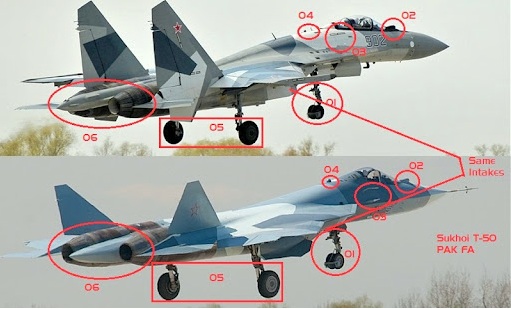
I marvel at how foreign buyers of something as complex as stealth aircraft can have any confidence that the system is not riddled with back doors, remote control capability, "phoning home", surveillance, and kill switches. How would you prove to a foreign buyer that your F-35 would not:
- upload all your secret flight data to a tire pressure monitor every time a maintenance worker checks the tires with the special gauge he has to use, which then retransmits the data when the gauge is put back in the hanger, without needing any cooperation from the maintenance worker
- cause all your F-35s to fall out of sky everywhere in the world when the GPS satellites transmit an extra 64-bit coded message that cause fuel actuators to shut off
- put your F-35 under remote control when a coded microwave message is transmitted directly to the plane during combat or a close encounter
Even children's toys and home appliances are routinely discovered to be phoning home and doing sneaky unexpected things. I'm going to hazard a guess that all large weapons systems are compromised —— perhaps by more than one nation simultaneously since parts and expertise come from hundreds of contractors and many different countries. I'm not aware of any revelations of weapon-system backdoors yet, but we might hear about some of them in the aftermath of the next major war.