I can't believe how weak these cases have been - are these more of a posturing thing?
* These were all approved at the time. This is going to make for a crazy world if folks act on an approval and then they are reversed.
* The focus of a lot of these seems to be on harm to other (sometimes very scammy) businesses. The Apple case has this issue as well. Match group can't do non-cancelable auto-renewing billing in their own app store. Rando app can't get your email and other details but you can route via apple. Etc. Why not focus on consumer harm more - that was traditional focus. The complaint is Facebook doesn't make an easy api for others to scrape their platform - uh, hello cambridge analytic?
* These social network things seem somewhat fragile. Myspace came and went, Friendster was hot. Now I see a lot more folks on tiktok. Are kids still even active on facebook?
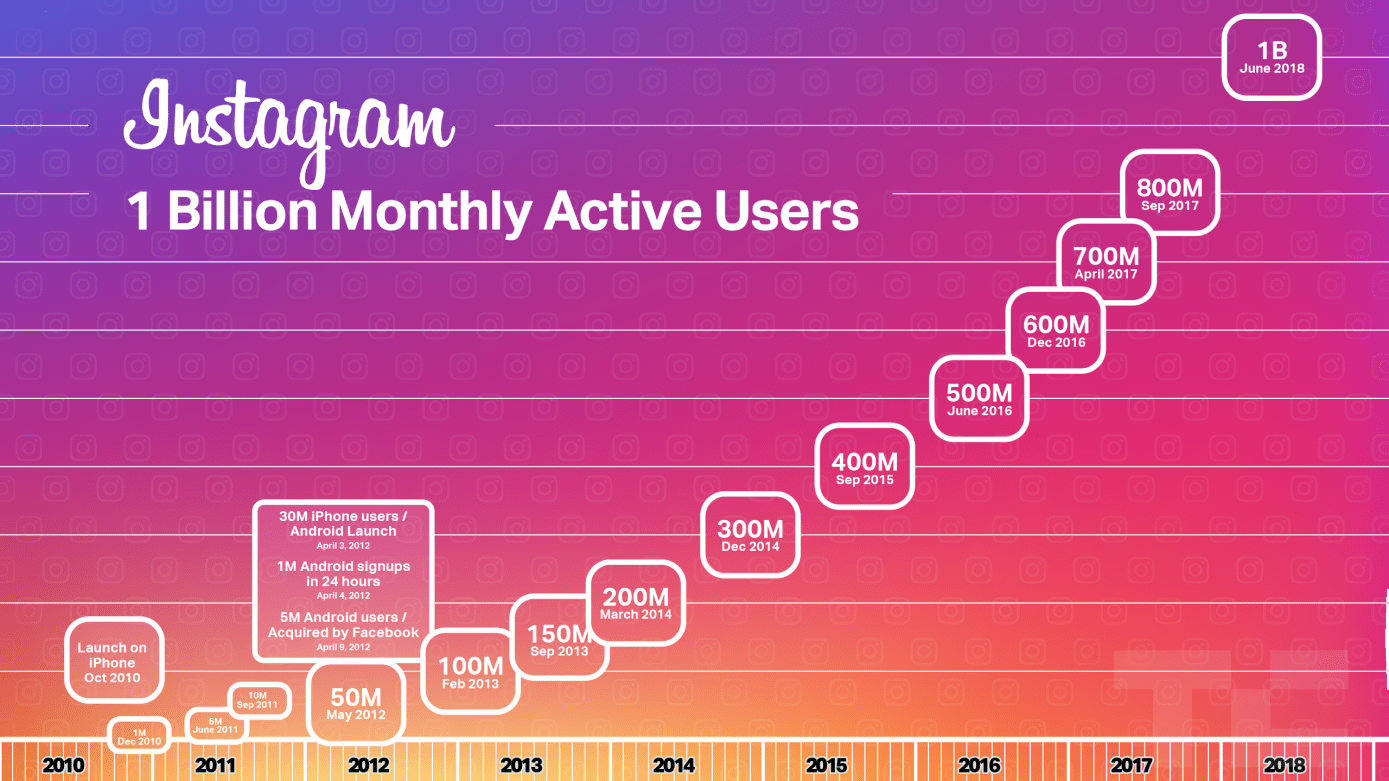
* Instagram wasn't that big when purchased, and many folks (including same people writing the articles now about monopolies) said that facebook wildly overpaid.
What's crazy is there is so much straight pure scam crap on the internet the FTC does nothing about. I mean, stuff that is obvious consumer harm. In my case I tried to cancel a subscription 30 days in advance recently (nearly 1K per year). It turns out you have to cancel 90 days in advance but not more than 120 days in advance?? So now I'm on the hook for another 1K. That is just total trash behavior online. And instead of the click to sign up, I had to go through endless hoops. Talked to someone, then they wanted me to submit a case, I did that, then back and forth to "verify" me etc etc.
The FTC is crickets on just endless false advertising, misleading internet offers etc (stuff that's not even close to OK).
>What's crazy is there is so much straight pure scam crap on the internet the FTC does nothing about.
>In my case I tried to cancel a subscription 30 days in advance recently (nearly 1K per year). It turns out you have to cancel 90 days in advance but not more than 120 days in advance?? So now I'm on the hook for another 1K.
>And instead of the click to sign up, I had to go through endless hoops. Talked to someone, then they wanted me to submit a case, I did that, then back and forth to "verify" me etc etc.
>The FTC is crickets on just endless false advertising, misleading internet offers etc (stuff that's not even close to OK).
I share your frustration, however I suspect this is more an indictment of our industry than FTC's apathy. Of course the FTC and other regulatory bodies are pursing enterprises for behavior other than that described in the link, but it may understandably be perceived that nothing is being done about those other egregious behaviors due simply to the sheer volume of occurrence.
This industry is rife with user-hostile behavior. It's become so commonplace you'll find these purveyors openly discussing it as if there isn't anything wrong with what they are doing; industry "best practices."
They do bring suits against scammers pretty regularly, but they only really go after very successful scammers who have stolen 7-8 figures+ from their victims. The FTC does not have the resources to go after smaller claims. They leave that up to civil plaintiff to at least somewhat rectify. They're not as inactive as you think it's just that there's a LOT of federal crime that goes unpunished. The federal government in general is only capable of effectively pursuing a small sample of federal crimes that occur.
This has a lot to do with the way that we finance our regulators -- a lot of these crimes could be handled on a bounty system, which would fix the manpower problems.
But even going against big players like Amazon, why can't they say - hey, you are selling products with totally false descriptions, refund everyone who but the fake "apple certified" device, or the "UL listed" device. Just do mass refunds across 10's of thousands of customers.
Instead they are going after Apple. In my experience at least least scammy company out there. My refunds go through, the warranty / applecare stuff works, subscription renewals are fair and easy to cancel, no * fine print on trials.
Khan has only held the chair for two months. FTC has had other priorities in the past, but given her publishing history it's a good bet that Amazon is now under scrutiny as well.
>But even going against big players like Amazon, why can't they say - hey, you are selling products with totally false descriptions, refund everyone who but the fake "apple certified" device, or the "UL listed" device. Just do mass refunds across 10's of thousands of customers.
Do we know for a fact that there is no activity here, that the FTC (or other bodies) aren't currently building cases or performing investigations?
Every federal agency that has anything to do with consumer products sends Amazon warning letters all the time regarding specific sellers and individuals, including the FTC, telling AMZ to knuckle down on the seller and/or the brand, or vaguely telling Amazon "do something" which Amazon may misinterpret. Then there are the more significant inquiries that are also going on apart from those 'market, regulate thyself' actions.
>We as in the public have not been told this is underway. Nor have we heard hints, leaks or anything of the sort.
>This is not happening right now based on the available information.
If we continue with that logic -- an apparent lack of information regarding active investigations -- the only conclusion that makes sense is "we don't know."
I don't think they're inactive. I tried to convey that by describing what may be perceived as "doing nothing" is really the inundation of awful behavior in this industry.
>This industry is rife with user-hostile behavior. It's become so commonplace you'll find these purveyors openly discussing it as if there isn't anything wrong with what they are doing; industry "best practices.
The interesting part is that the comment you're replying to attempts to normalize a number of anti-competitive strategies employed by Facebook in the exact same way.
Supernormalization at work - if your institutions get defanged, people 'learn' to accept the new status quo as the way of things.
"In my case I tried to cancel a subscription 30 days in advance recently (nearly 1K per year). It turns out you have to cancel 90 days in advance but not more than 120 days in advance?? So now I'm on the hook for another 1K."
I believe you can put a stop payment at the bank. At my bank they charge $30. When the creditor calls the bank, they will
read to the creditor the reason you are not paying.
Not paying does not absolve you of your contractual obligations though.
I had a service that I just stopped paying for once, assuming that they'd cancel my account when the money stopped coming. False - they kept billing me then sold my "debt" to a debt-collection firm who called me at work etc.
When I was young I learned this the very hard way. I moved. Called to cancel my cable service. Person said no problem, box up modem and leave it outside. I did that.
Never thought of it again for 4-5 years until I was trying to rent a place in my own name. Yep, the retention specialist 5 years ago met his numbers by NOT cancelling me out. So I had something like an extra 12 months of charges plus modem cost plus a credit hit.
Because I really need this place to live in (3 others were depending on it/me) I ended up coughing up a ton of money. Lessons learned.
We used to refer to these things as press release politics. There is no goal to enforce any rule or punish anyone, they are designed for those on the political side to say, see, look how hard we are working for you, then the business consents to some minor thing with zero punishment and gets to say, see, we worked with the people in politics and we have all made things better.
You can see this see this at all levels of politics and business.
Sure - but there are folks getting straight scammed endlessly online - can't they do these press releases AND do some enforcement of just stuff with direct consumer harm?
Facebook Kids Messenger is popular with my kids and their friends; AFAICT, it's the only messenging app that allows preschool and primary school kids to communicate with each other under the watchful eye of their parents.
It's got solid parental controls, fun little mini games, loads of photo editing and video tools that are appealing to kids.
Pretty much kept my kids' cohort of friends connected during the lockdown.
Facebook Kids Messenger is decent (for all the reasons you mentioned), however, I am pessimistic about it being genuinely appealing to kids. It's staying alive because middle-aged parents are forcing it on their children - they are the consume and decision-maker. My experience is once kids are allowed to make their own decisions they quickly move away from it.
Of course once kids are allowed to make their own decisions, the main value of FKM is gone. (parental controls and such)
So it isn't the best example, and it isn't really facebook per se but more of a separate product, but still.... it is squarely aimed at kids that aren't old enough to make decisions for themselves, by design.
The last case against FB, that was thrown out of court was also very weak. Now, the new head of the FTC had spoken out against monopolies. It isn't surprising that a hardliner who is emotionally invested in bringing down Big Tech won't accomplish much. I think we can expect similar cases brought against Google, Amazon etc.
I think there are probably good cases to be made in areas.
Maybe something around consumer harm - ie, people bought oculus devices being told no facebook login, now required to use a login - do something like a 70% refund for those who want one and return their device?
10 years ago in college, about 90% of my friends were using Facebook every day.
Today, we're ~30 y/o. I'd estimate about 10% of my friends use facebook every day, and more than 50% of them use it less than once week.
I wouldn't be surprised to hear that many people younger than me are barely using facebook at all. Most of the people I interact with on facebook these days are older relatives.
Right - similar boat. I haven't posted in a year or two plus? I used to work with kids when it was basically the be all end all of everything. For me the endless politics just was a turn off - keep friends updated other ways (icloud shared albums are fun!).
What's the basis for saying they're "crickets" on such scams? Those shady operators tend to be much smaller and less newsworthy than Facebook, so you don't read about them, but that doesn't mean it's not happening.
I interned with the FTC's consumer protection division in Los Angeles during law school. My job was calling up people who had filed Better Business Bureau complaints and helping them to provide affidavits against the companies that scammed them. At the time we were focused on prepaid debit card scams.
Have you complained to the FTC about the company with the 1k/yr subscription? Made a BBB complaint? Filed a small claims court suit?
The fact that robocall scams still exist is all the evidence I need.
It has a pretty easy regulatory solution too: fine everyone up the chain for every one of these calls delivered. Service providers will figure it out pretty quickly.
> * These social network things seem somewhat fragile. Myspace came and went, Friendster was hot. Now I see a lot more folks on tiktok. Are kids still even active on facebook?
Facebook's only role in my life is as the main web presence for lots and lots of small organizations. They may have other things—even a website—but FB will be the first, and sometimes only, place content is posted. HOA, kids' schools, small area businesses, almost all treat FB is their main outlet for information, even if they do communicate some on other channels.
What's crazy is there is so much straight pure scam crap on the internet the FTC does nothing about. I mean, stuff that is obvious consumer harm. In my case I tried to cancel a subscription 30 days in advance recently (nearly 1K per year).
These situations are solved with regulation. But not the regular kind of regulation, but one that forces business of a certain type to have simpler procedures for actions like canceling, procedures that also keep a public record that some authorities can readily inspect and do instant arbitration.
It's possible to make it work. Once there is no incentive for the companies to stall your cancelation or complaints, they suddenly lose interest and use their resources to do productive work. How do I know it works? I've seen it in action for the last decade or two: if you want to change mobile providers (in Spain, not sure about the USA) you just start a suscription with the new one. The former receives the notification and you don't even need to deal with them, except for one call offering you a counter-proposal.
A similar system could be implemented for many other suscriptions services.
>These social network things seem somewhat fragile. Myspace came and went, Friendster was hot. Now I see a lot more folks on tiktok. Are kids still even active on facebook?<
Not until they need it for a job or coordination need. Laying all the platforms out as competitors is sort of misguided imo though. Most social media platforms aren't competing for the same space they're competing to be the first to establish that space. Insta and Snapchat compete as did Myspace and Facebook. But Facebook, Insta, Discord, Whatsapp, Tiktok, Twitch, and Clubhouse are wildly different beasts as far as the experiences they offer and encourage even if the millenials and older generations just lump everything under 'social media business' because they see feeds and instant messaging. Most of these platforms might share demographics but they're wildly different products.
> *
What's crazy is there is so much straight pure scam crap on the internet the FTC does nothing about. I mean, stuff that is obvious consumer harm. In my case I tried to cancel a subscription 30 days in advance recently (nearly 1K per year). It turns out you have to cancel 90 days in advance but not more than 120 days in advance?? So now I'm on the hook for another 1K. That is just total trash behavior online. And instead of the click to sign up, I had to go through endless hoops. Talked to someone, then they wanted me to submit a case, I did that, then back and forth to "verify" me etc etc.*
Do a chargeback and let the company deal with the fallout from their
payment processors.
Use privacy.com for this. For every online subscription, you create a new credit card number, which can have preset limits. I like to give it enough money for ONE payment, and then it expires. You can also make it a one-time-use card.
These temp cards are all backed by your "real" card.
There's no fee. You don't get real privacy (i.e. the payments still show up on your bank statement) unless you pay $10/month, but if all you want is the ability to cancel immediately, this is for you. Take back the control.
Some web service makes it difficult for you to cancel? Screw 'em -- just cancel the credit card you gave them.
One issue - I like actually that Apple is big enough to negotiate (ie, screw over) third party developers.
You have to notify of renewal terms of trial in same font (ie, $1 for 1 week, $100 per month after).
You have to allow people to use your app anonymously (ie, with an apple sign in).
I KNOW I could never negotiate terms like these - but Apple can.
Yes, it probably is a sign they have too much power, but they seem to direct a lot of their headaches to third parties, which makes my consumer experience better not worse.
Most people my age don't use Facebook or only use it to keep in contact with family. My friends and I have recently re-created accounts on the platform because our respective universities require them for orientation or clubs and whatnot.
Could you instruct the payment vendor not to pay this charge? I've found that to be quite effective for "free first period" offers that refused to turn off.
Reversing mergers is completely appropriate when the merger is found to have caused harm to competition after the fact. It would be a crazy world if the FTC didn't pursue that.
Ugh - I hate this HN type of misinformation. It just seems reactionary.
Please post to the conditions facebook violated around their instagram acquisition. Remember, instagram had 13 staff or something - it was pretty tiny!
Even folks who are arguing for breakups admit this fact:
" Yet the Federal Trade Commission approved the merger without conditions. "
That's... the point. Instagram was a very rapidly growing threat to Facebook's market position. Facebook took drastic action to ensure that they didn't become big.
I'm talking about Instagram the company, which is what the FTC cares about -- competition. FB eliminated Instagram as a competing company when they purchased them. Buying up competitors to keep dominant control of a market is absolutely an antitrust violation.
It is a hard requirement that my two non-profit organizations have a FaceCrook presence. It is the same for a majority of businesses. This is clearly a monopoly position.
The level of service that they are providing to the user pales in comparison to the value of the data they extract in exchange. There is clear harm to the users.
That this is not a simple case against them is a clear failing of the regulators and/or their laws.
In the US at least, not having a social presence is indicative of an outdated enterprise. FB is the primary expectation. (along with a Google and Apple Maps link for your address)
> After suffering significant failures during this critical transition period, Facebook found that it lacked the business talent and engineering acumen to quickly and successfully integrate its outdated desktop-based technology to the new era of mobile-first communication. Unable to maintain its monopoly or its advertising profits by fairly competing, Facebook’s executives addressed this existential threat by buying up the new mobile innovators, including its rival Instagram in 2012 and mobile messaging app WhatsApp in 2014.
Man, I hate FB as much as the next guy, but this argument is weak as hell.
FB was still the #1 mobile app in the world when they bought up both of these companies. Hell, neither were even direct competitors any more than Oculus was.
FB's play is clearly a horizontal integration - they want as many different types of products to fall under their single advertising pane of glass as possible. The FTC is going after them for doing the exact opposite thing.
Agreed - the idea that facebook was "outdated desktop based technology" is laughable.
It was one of the first apps most people installed - and they actually made it run on an INSANE number of platforms. Wasn't there versions of facebook for things like symbians and nokias and low bandwidth devices in developing countries?
Instagram had a pretty small team when facebook bought them, and facebook was active on mobile before that.
This complaint is such trash - I can't believe they can't find better arguments to make.
Edited: It looks like in 2010 or so facebook had something like 150 million mobile users (using this "outdated desktop technology"). I don't doubt it wasn't perhaps best of breed, but there were lots of mediocre approaches back then. Did the FTC even have an app? Did the fortune 500 all have amazing apps?
Interesting! I didn't actually know that. I just remember being in a developing country and like Nokia's had facebook or messenger or something? Skype and Facebook were showing up a lot of places way back. I remember the office I was in ran everything on skype - period. Months with no phone calls really, but you could somehow get on facebook. Symbian / Nokia I'm trying to remember how this worked back then. I'm sure they dropped them, and I may be confusing who was on these crap devices but I vaguely remember thinking damn, facebook and snake are like the advanced apps on phones.
I assume this is completely unintentional, but the narrative that Facebook was just expanding into new markets is pure revisionism. It was very clear around the time of purchase that Facebook considered Instagram to be a competitor, and that fact has since been verified through leaked Facebook emails and documents.
Facebook's concern was that social paradigms would shift and that Facebook would not be the predominant way that people communicated in the future. To get around that problem they aggressively targeted almost every small company in the space. Their goal was to make it so that the market couldn't shift quickly in any direction at all until Facebook had already become the dominant player within that shifted market.
The purchases were designed to make sure that there was never any opportunity for a competitor to build a large, secure userbase before Facebook had an opportunity to replicate their features.
Here's the direct quote from Zuckerberg himself[0]:
> One way of looking at this is that what we’re really buying is time. Even if some new competitors springs up, buying Instagram, Path, Foursquare, etc now will give us a year or more to integrate their dynamics before anyone can get close to their scale again. Within that time, if we incorporate the social mechanics they were using, those new products won’t get much traction since we’ll already have their mechanics deployed at scale.
Facebook's concern about horizontal integration was not about expanding their business, it was about protecting the company from potential changes in the social landscape. This tactic was being discussed as recently as 2020, and we literally have scores of internal documents describing Facebook's mindset. How are people's memories so short about this?
> Facebook found that it lacked the business talent and engineering acumen to quickly and successfully integrate its outdated desktop-based technology to the new era of mobile-first communication
LOL. This literally goes against every Facebook announcement and press release broadcast in the last 10 years.
Of course were Instagram and WhatsApp competitors.
Not on the service side but at the user base. FB users switched to Instagram and WhatsApp, that's why they bought them.
> After failing to compete with new innovators, Facebook illegally bought or buried them when their popularity became an existential threat.
Illegally bought or buried them?
1) FTC approved all the mergers. So, it is surprising that they'd say that these were illegally bought.
2) Facebook seems to be operating all key acquisitions (Instagram and WhatsApp) as separate products and hasn't made their usage conditional to having a Facebook account.
This is re-writing history and it is just as dangerous when the FTC does it as it is when a political party does it.
It specifically discusses the 2012 consent order, approved by the FTC, in which it penalized Facebook and allowed future uses consistent with the consent order. It's not relying on that as a basis for reevaluating the legality of the mergers.
The complaint does not explicitly describe why the FTC has changed its mind, but the general idea seems to be that over time Facebook has demonstrated a pattern of buying competitors that wasn't apparent to the FTC in 2012 or 2014. It has nothing to do with data per se.
This year they were pushing to expand more data sharing between the platforms, but the profiles have been linked internally by phone number for years now.
they are not. you can do cross-messaging between FB and IG if both parties have accounts linked, but otherwise you can have an IG account that is not linked to FB.
Internet companies of all sizes can do all sorts of things to identify you. Instagram could also do things server side to link your accounts without any scripts from other origins. The fact a script from FB.com is loaded tells you zero information about account linkage.
Linking accounts is optional, and combined cross account data is used when they are linked. Otherwise, subsets of the apps may or may not "know" about the link between your accounts via your phone number, email address, or access patterns.
Facebook also lied about requiring a Facebook account on oculus. Now they have cameras and microphones in peoples homes and a spectacular privacy history
I know it's just boilerplate that probably goes on a lot of news articles, but I find it so ironic that they are releasing a press release about ongoing legal action against Facebook, yet include the below call to action to 'like' them on that very same website!
> The Federal Trade Commission works to promote competition, and protect and educate consumers. You can learn more about how competition benefits consumers or file an antitrust complaint. Like the FTC on Facebook, follow us on Twitter, read our blogs, and subscribe to press releases for the latest FTC news and resources.
>“Facebook lacked the business acumen and technical talent to survive the transition to mobile. After failing to compete with new innovators, Facebook illegally bought or buried them when their popularity became an existential threat,” said Holly Vedova, FTC Bureau of Competition Acting Director. “This conduct is no less anticompetitive than if Facebook had bribed emerging app competitors not to compete. The antitrust laws were enacted to prevent precisely this type of illegal activity by monopolists. Facebook’s actions have suppressed innovation and product quality improvements. And they have degraded the social network experience, subjecting users to lower levels of privacy and data protections and more intrusive ads. The FTC’s action today seeks to put an end to this illegal activity and restore competition for the benefit of Americans and honest businesses alike.”
Shouldn't the FTC be a neutral body?
How did the FTC miss this criminal activity for 10 whole years? I think an investigation should be called for.
The supposed antitrust laws have failed miserably. This must be the one of the FTC's worst failing ever, by their own admission.
This gem: “Facebook lacked the business acumen" FB has a market cap of
1T USD. That's $1,000,000,000,000. She sounds deluded.
Um, no. The FTC is not some 4th branch of government. It is not part of the judiciary, either. Its head serves at the pleasure of the President. You don't have to agree with what it's doing with FB to accept that.
> Shouldn't the FTC be a neutral body?
How did the FTC miss this criminal activity for 10 whole years? I think an investigation should be called for. The supposed antitrust laws have failed miserably. This must be the one of the FTC's worst failing ever, by their own admission.
So, should the FTC have blocked these mergers? If the FTC has failed to the extent you have said, then it sounds like this is a step in the right direction. Either the FTC was correct before or is correct now.
The proposed remedy in the complaint is the divestiture of Instagram and / or WhatsApp (extremely unlikely) and increased oversight on Facebook in the future that would make similar acquisitions much more difficult (more likely).
As Scott Galloway has been saying for years, it would be great for stockholders. Facebook is an old-n-busted service for old-n-busted people. (You might think I'm one of those, using such an old-n-busted idiom, but even I'm young enough not to be on Facebook.) IG and Whatsapp both would thrive if they weren't chained to all that dead weight.
Divestiture wouldn't be so good for Facebook execs, but does anyone care about them?
These companies are now too big to fail and too big to meaningfully prosecute, even a $1bn fine is not really going to trouble the likes of facebook. Any more meaningful punishment would have pretty adverse financial market and political impacts, which people would get over eventually but would take some serious conviction to inflict.
The only real recourse is to stop more of the same happening again in the future.
I'm not sure why you would think that, and I don't think anything you explained supports that. I'm also not sure it makes any sense at all when applied to Facebook.
Facebook is not going to "fail" over a weekend like Bear Stearns. If it dies, it will be a slow hemorrhaging death, and there will be plenty of time for employees and investors to deal with it. Even if a law were to be passed tomorrow saying they couldn't collect and monetize non-provided personal information and that they couldn't advertise to uses, there would still be a year or two of them wildly trying to pivot, not a collapse over a few days, and the effect on the wider ecosystem of tech wouldn't be all that important.
Saving major financial institutions because they were too bug to fail was not just because they were big, but because the finance sector is all intricately connections, and if a large enough player collapses the cascading effects of missing money could have a very outsized effect and drag the economy down. Facebook? Nobody would really care. A competitor or new alternative would absorb the users fairly quickly. The only thing of value that would be lost, and probably not even that, is the list of people you're friends with.
Honestly, Google might not be much more important, other that they just employ way more people. Probably not Apple either (having to switch to Android/Window is an inconvenience, not a major life change). Amazon would actually have a big effect though. The amount they've integrated themselves into the supply chain for normal people and how many people sell on it would cause major disruptions if it were to disappear within a year or two. Or maybe not, I'm sure Walmart would love for you to use them instead, or Alibaba. Nothing says the American company has to be the preferred one for Americans.
In the case where actual prosecution was conducted, as you suggest - what would be the opening price on the Monday morning for the share price? Bear Sterns peak valuation was 20billion, Facebook sits at 1,000billion. Just wiping half that value off over a weekend would be 'not a great day in the financial markets' - if no other stock moves (and they will), it's -5% on the Nasdaq on the first tick of the day. People would lose money, some probably a lot of money, in May 2021 Facebook was the most widely owned stock by hedge funds.
Now I am not suggesting anyone should lose sleep over some billionaires losing a bit of money - 'people would get over eventually'. However it would come down to a question of political will rather than points of law to persue a meaningfully prosecute or reduce the power of Facebook (and others) in any way, and any aftermath, as short term as it may be, would be considered to be self-inflicted by the politicians that conducted the exercise.
Tech is, through its collective behavior and practices, interconnected. If the political will emerges to curtail tax evasion, monetization, etc in the sector, the valuations of every tech company conducting their affairs similarly would be called into question.
> In the case where actual prosecution was conducted, as you suggest - what would be the opening price on the Monday morning for the share price? Bear Sterns peak valuation was 20billion, Facebook sits at 1,000billion.
The stock market is mot the same as the synthetic derivatives market. One of the main reasons we had such a problem with synthetic derivatives, is that it hid the fact that a lot of these instruments were worth much less than thought, so when it was realized the extremely troubles housing market was linked in a way that wasn't quite understood previously, a whole bunch of losses were realized after the fact. There's a huge difference to that than any other sort of news.
The biggest difference is that in the case of Facebook at an announcement of a prosecution, the stocks of Facebook have the exact same value immediately after, and only start dropping as people start selling, and respond to how people react. Unlike synthetic derivatives, there is no inherent value backing it (which normally you would think is worse, but when that inherent value is made of or mortgages and a large chunk have used legal means to wipe out their debt, that value is forever eroded).
The simple answer to the price is it would drop, but over some time. Some people would wait for more info, or think they could beat the case. Those people that laft would invest their money somewhere else. Some would put it in non-tech stocks, others would choose tech stocks they thought immune from the coming shift in privacy (if that's what the prosecution seemed to foretell). The important thing is that most wealth would not be destroyed, but just shifted to somewhere else.
For synthetic derivatives, what's not what would have happened. Bear Sterns failing entirely would have meant that any of their repackaged derivatives would have also had problems. Everyone was sitting on investments (CDOs) where they couldn't easily tell if they had lost 5% or 10% or 50% of the value because it was repackaged so many times, and there was a real concern that other companies would fall like dominoes as the few percent worse the Bear Sterns/Lehman Brothers situations made it, which in turn exacerbate others.
As for Facebook and the NASDAQ, I think you'd see a far lower impact. Even if the equivalent of 5% of NASDAQ's cap was lost from Facebook, I think a large chunk of that would flow to other stocks on NASDAQ. Facebook's loss is other company's gain. Probably Apple's, I would think, for people that still want that portion of investment in tech but want something less likely to be negatively impacted because of more stringent privacy requirements.
Please keep in mind that one of (perhaps THE?) largest donors of “dark money” campaign contributions to the current administration was Dustin Moskovitz, who, last I checked, held the super-voting shares that are voted by default in Mark Zuckerberg’s favor, granting him a de facto corporate monarchy.
The best way to control the game is to own your opposition, and make sure they’re loud, credible, and totally ineffective.
Yeah it's definitely facebook that's the problem, as opposed to Google, Amazon, and payment processors. Definitely if I'm looking for a monopoly, my top concern is making sure people on the internet can chat without that familiar old household name "whatsapp."
> "The Facebook social network is known internally at Facebook as “Facebook Blue” and has more than <hidden> monthly users in the United States. Instagram attracts more than <hidden> monthly users."
I don't understand why some of the publicly available info in FB earnings reports is redacted from the complaint[1]. Does anyone know who determines what to redact and why?
It's not unusual for deadlines to be changed. It looks like the FTC filed a motion for an extension a week before the initial deadline (6/23) and Facebook didn't oppose.[1] (Typically opposing counsel will discuss and agree before these motions are even filed so it's not surprising that Facebook did nothing in response to the motion.) The linked press release makes it sound like the Commissioners voted on whether or not to re-file the complaint so I'm guessing 30 days wasn't enough time for the FTC go through whatever that governance process entails.
Without Facebook Instagram wouldn't exist since Instagram used Facebook's social graph aka "Log in with Facebook" in order to kickstart and grow its userbase.
Instagram was growing like crazy[0]; it launched in October 2010 and by April/May 2012 it had 50 million users. So they gained 50 million users in one and a half year. There were other photo sharing apps as well at the time on the Iphone so the growth is even more impressing.
Future for them was bright but they needed more engineers and more professional management to cope with the rapid growth since they had only 13 employees at the time of proposed acquisition which eventually happened. Zuckerberg said Instagram was about to hit the wall if it wasn't Facebook because their backend wasn't good enough for millions of users but if they got more engineers and a good CTO and a good COO they could've survived and grow on their own.
This was done in 2019 regarding Google. Unless it is followed up with some political and judicial muscle, it is useless. Facebook knows this. I am betting on this going nowhere, directly by owning Facebook stock and funds heavily invested in Facebook. biden needs silicon Valley support.
Their stock price hasn't appeared to notice - so I'm guessing that investors (like the majority of us I'd assume) are cotinuing on with the theory that even outright identifying a company as a monopoly isn't going to result in any serious anti-trust legislation in this modern world.
Obviously Facebook itself is going to try and play it cool throughout this entire proceeding - but the investors will usually jump ship if they're concerned.
Saying that Facebook has an impenetrable competitive position when they aren't even the dominant social network for young people anymore, and haven't been for years. They made a good deal with Instagram but that hasn't stopped innovation in the space at all.
What is particularly unfortunate is that Facebook are in the firing line because they became the lightning rod for politicians...and there are actually companies out there doing anti-competitive things. Google has bought up digital advertising, they have a piece of all parts of the value chain...how is this legal? Apple and Google have sewn up the market for apps? Nothing.
Also, Facebook has been the most responsive to politicians but the fatality was being seen to have helped Trump in 2016 (even though they didn't do so as actively as they helped Obama). FB are terribly rapacious but you feel bad for them in that there is literally no way for them to win (I suspect the core social network will eventually get spun off as it gets overwhelmed by govt claims against it).
ATT's bell labs generated 9 noble prizes. Per wikipedia Bell Labs developed radio astronomy, the transistor, the laser, the photovoltaic cell, the charge-coupled device (CCD), information theory, the Unix operating system, and the programming languages B, C, C++, S, SNOBOL, AWK, AMPL.
Yes, they are broken up, and now the separate baby bells (pac bell etc) I don't remember anything close coming from them.
How many of those computer hardware, operating system, and programming developments occurred after AT&T was barred by its 1956 consent decree in US v. Western Electric (filed in 1947), preventing the company from engaging in information services or entering the computer industry?
On January 14, 1949, the government filed an action in the District Court for the District of New Jersey against the Western Electric Company, Inc.[3] and the American Telephone and Telegraph Company, Inc. (Civil Action No. 17-49).[4] The complaint alleged that the defendants had monopolized and conspired to restrain trade in the manufacture, distribution, sale, and installation of telephones, telephone apparatus, equipment, materials, and supplies, in violation 136*136 of sections 1, 2, and 3 of the Sherman Act, 15 U.S.C. §§ 1, 2, and 3.[5] The relief sought included the divestiture by AT & T of its stock ownership in Western Electric; termination of exclusive relationships between AT & T and Western Electric; divestiture by Western Electric of its fifty percent interest in Bell Telephone Laboratories;[6] separation of telephone manufacturing from the provision of telephone service; and the compulsory licensing of patents owned by AT & T on a non-discriminatory basis.
ATT maintained exhorbitant long distance pricing which made computer networking prohibitively expensive for everyone but very expensive mainframe users like IBM.
ARPA was required to develop the ARPANET because only a defense agency could bypass the legislative prohibitions that enabled ATT to keep private enterprises from using their lines without permission.
ATT spent decades choking out innovation because their monopoly hold meant their was little incentive for them to improve the product so they didn’t. They sat on lots of innovations that didn’t see the light of day until they were forced into competition. This was the main driver for that monopoly revocation.
Sure, but on the consumer side there was basically nothing. I imagine the person you're replying to was referring to things like Caller ID, Call Waiting, Three-way calling, etc.
Bell Labs wasn't great because of anti-competitive behavior, they were great in spite of it. Are you saying that if we break up Facebook or other anti-competitive mega-corps that we will be missing out on untold innovation?
I am suggesting that innovation can occur both outside of facebook (see tiktok and thousands of other innovations on the internet) and that even inside facebook there may be development and innovation (react? open compute stuff?). Not I don't like or use facebook personally.
The idea that facebook has a monopoly on the internet or innovation seems a stretch to me.
Cassandra, GraphQL, Open Compute, eBPF, Hack/HHVM, Flow, Hadoop (contributor), PyTorch, ARIES, TerraGraph, Presto, React, Jest, rocksdb, folly, Relay, zstd, infer, buck, proxygen, Hermès, tons of NLP research and libraries, pyre, redex, Haxl, osquery, LASER, Kats, phabricator, Thrift (contributor I believe), Nuclide, and so much more.
Let’s separate the company from the technology contributions engineers have made from working there. This list doesn’t even include the HUGE list of startups people have created with inspiration from internal FB tech.
I have plenty of experience with half that list. My statement still stands. You also can't separate the company from the engineers who worked on these projects because they literally funded their development.
Most long-term research comes out of monopolies, which by definition have slack time and money to invest in speculative projects.
(obviously not all monopolies choose to invest this way, but absolutely no companies which live or die by quarterly earnings b/c of market competition can do this)
Seeing some weird comments that disregard a lot of public history about exactly why there are anticompetitive complaints about Facebook in the first place. A quick breakdown of some of the common criticisms I've been seeing about whether Facebook is anticompetitive, and why they don't really stand up to scrutiny:
----
1. The nature of social networks is such that the landscape can change overnight. Do we need anticompetitive enforcement?
Correct, social networks can change overnight. But leaked documents[0] show that Facebook was aware of this (having gone through such a shift already with Myspace), and that they used purchases specifically as a defense against this phenomenon.
Facebook's plan was to use purchases to slow down the market and to make sure that no other competitor could grow large enough to be a threat. Zuckerberg said of this:
> "There are network effects around social products and a finite number of different social mechanics to invent. Once someone wins at a specific mechanic, it’s difficult for others to supplant them without doing something different."
A large part of Facebook's strategy to avoid the fate of MySpace was to lock down the network effects and make sure that no other company had the time or resources to win at any social mechanic before Facebook got its foot in the door. It is specifically because of the ever-changing nature of the social landscape that Facebook pursued anticompetitive strategies and purchases.
Their purchasing strategy was designed to make these kinds of large market shifts impossible, not because Facebook could compete with every one of these companies, but because they would fold any existing userbase/featureset into Facebook before competitors got a chance to build a competitive userbase.
----
2. But Instagram/WhatsApp weren't even competing in the same space! Why would Facebook target them?
Facebook undeniably considered those companies to be competitors and threats. Again, this isn't theorizing, you can go read the leaked emails yourself if you don't believe me[1].
Here's Zuckerberg again:
> "Instagram can hurt us meaningfully without becoming a huge business."[2]
A little while later, he responded to another internal email:
> "I remember your internal post about how Instagram was our threat and not Google+. You were basically right. One thing about startups though is you can often acquire them. I think this is a good outcome for everyone."
Even later, on messaging apps, he wrote:
> I think we should block WeChat, Kakao, and Line ads. Those companies are trying to build social networks and replace us. The revenue is immaterial to us compared to any risk. I agree we should use ads to promote our own products, but I'd still block companies that compete with our core from gaining any advantage from us.
----
3. But is Facebook even a threat anymore? TikTok is where the kids are!
Facebook spent around 6 months trying to buy TikTok early in its life[3], and (opinion me) I think the only reason it didn't pan out was because it was operating out of China and the deal was too complicated to close. After TikTok started to become a meaningful competitor, Facebook launched a public campaign painting the app as a national security threat.
Personally, I don't think it's a good long-term trend in the market that the only upstart social networks that seem to be able to meaningfully threaten Facebook are the ones coming out of China. And it's not clear to me that a startup American company today could replicate TikTok's success against Facebook.
> FTC Alleges Facebook Resorted to Illegal Buy-or-Bury Scheme to Crush Competition After String of Failed Attempts to Innovate
Ouch.
It's important to analyze this in the context of the initial complaint, which was rejected because they didn't show enough evidence of a monopoly (and many commenters here questioned that assertion too, discussed many times, but here for example: https://news.ycombinator.com/item?id=27666439). This amended complaint seems to make their claims more explicit.
Note that if I'm following correctly, the main thrust of the complaint is not that they are a monopoly now, it's that they were in the early 2010s, and they abused that monopoly position at that time. Though they do also spend some time making the case that they currently have monopoly power, I'm not sure that they need to substantiate monopoly in 2020; they might just need to substantiate it in 2012 (Instagram) and/or 2014 (WhatsApp).
> By 2011, Facebook was touting to its advertising clients that “Facebook is now 95% of all social media in the US.”
I find that more specific argument much more convincing, although I'm convincable that they have a 2020 monopoly too.
> According to the amended complaint, a critical transition period in the history of the internet, and in Facebook’s history, was the emergence of smartphones and the mobile Internet in the 2010s. Facebook’s CEO, Mark Zuckerberg, recognized at the time that “we’re vulnerable in mobile” and a major shareholder worried that Facebook’s mobile weakness “ran the risk of the unthinkable happening - being eclipsed by another network[.]”
> After suffering significant failures during this critical transition period, Facebook found that it lacked the business talent and engineering acumen to quickly and successfully integrate its outdated desktop-based technology to the new era of mobile-first communication. Unable to maintain its monopoly or its advertising profits by fairly competing, Facebook’s executives addressed this existential threat by buying up the new mobile innovators, including its rival Instagram in 2012 and mobile messaging app WhatsApp in 2014
> The amended complaint bolsters the FTC’s monopoly power allegations by providing detailed statistics showing that Facebook had dominant market shares in the U.S. personal social networking market.
Also, another claim might be that TikTok is a viable competitor; they claim TikTok is in another market:
> TikTok is a prominent example of a content broadcasting and consumption service
that is not an acceptable substitute for personal social networking services.
It seems that a lot of antitrust complaints come down to where you draw the dotted line of the "market" in which they compete. This seems quite technical and IANAL so I'll just note this as interesting, without opining.


* These were all approved at the time. This is going to make for a crazy world if folks act on an approval and then they are reversed.
* The focus of a lot of these seems to be on harm to other (sometimes very scammy) businesses. The Apple case has this issue as well. Match group can't do non-cancelable auto-renewing billing in their own app store. Rando app can't get your email and other details but you can route via apple. Etc. Why not focus on consumer harm more - that was traditional focus. The complaint is Facebook doesn't make an easy api for others to scrape their platform - uh, hello cambridge analytic?
* These social network things seem somewhat fragile. Myspace came and went, Friendster was hot. Now I see a lot more folks on tiktok. Are kids still even active on facebook?
* Instagram wasn't that big when purchased, and many folks (including same people writing the articles now about monopolies) said that facebook wildly overpaid.
https://twitter.com/rockspindeln/status/189416024058245121
What's crazy is there is so much straight pure scam crap on the internet the FTC does nothing about. I mean, stuff that is obvious consumer harm. In my case I tried to cancel a subscription 30 days in advance recently (nearly 1K per year). It turns out you have to cancel 90 days in advance but not more than 120 days in advance?? So now I'm on the hook for another 1K. That is just total trash behavior online. And instead of the click to sign up, I had to go through endless hoops. Talked to someone, then they wanted me to submit a case, I did that, then back and forth to "verify" me etc etc.
The FTC is crickets on just endless false advertising, misleading internet offers etc (stuff that's not even close to OK).