> Meanwhile, renters are desperate. They’re begging for housing prices not just to slow, but to fall.
I have a friend who is a head chef at a decently popular bar and restaurant on Broadway in Capitol Hill, Seattle (very trendy part of town if you aren't familiar, steep commercial rent). He lives in a 400 sq ft studio and is barely, barely making it from one paycheck to the next. I am sitting on a 2.6% interest rate mortgage and my prices are set for the next 30 years. I probably work half as hard as he does, if not even less than half. I have a lot of cognitive dissonance associated with that.
I'm a new immigrant to the US, and housing is my single biggest worry together with my work visa.
Our household income is north of 300k, but housing still seems unaffordable. It might sound like whining, but we only achieve this level of income recently, so our lifelong savings are in the low 6 figures. We got no assets or property abroad, and no family that can help us to get in the property ladder.
Even old, basic houses in our suburbs outside town go for ~$1M. I spend an inordinate amount of mental energy calculating how we can jump into the property ladder as quickly and safely as possible. My current plan involves saving for a few years and dump a good chunk of cash into a down payment; it doesn't seem we could ever afford a property otherwise.
I wonder how property prices affect "the american dream". It's baffling to me that I'm so worried about housing while making a top ~5% income.
I don't mean to be blunt, but if modest homes in your area are $1m, then you are in a VERY high-cost-of-living area and what you see here is not at all typical of the rest of the country. Where I live, a charming 1200sqft starter home in a blue collar neighborhood goes for $150-$200k.
A lot of jobs are in high cost of living areas. The reason they're high cost of living is because there are jobs there, the demand to live there is high, and they haven't built nearly enough housing. Some bay area municipalities have essentially not added any housing in the last 50 years. They made it illegal, because incumbent property owners don't want more people to be allowed to live there.
And it's not just the bay area. The populations of Cambridge and Boston have gone down since 1950, because a series of laws were passed that put tight restrictions on residential construction that reduced the allowed density and effectively made almost all of the existing housing stock illegal (but it was grandfathered in) and anything more dense than that, like even building a 5 story residential building in a lot zoned for 4 stories, when that lot is surrounded by 4 and 5 story buildings, is an expensive, long process of arguing with the zoning board and going through arbitrarily subjective design review processes.
I would rather Google and Facebook and the other mega-hire companies would build up outside the bay area, rather than continuing to pack more people in.
The Bay Area isn’t remotely “packed in.” It’s good that the state of California is starting to take steps to prevent its current inhabitants from pulling the ladder up behind them.
You are correct but the NIMBYs will stop at nothing to prevent new housing because they think it will make their homes go down in value. The market for SFHs is completely different from the market for MFHs / apartments.
There’s not an acre of open land between San Jose and SF that doesn’t have a building structure on it. Compare with most other US states where land is plentiful and they could use the economic boost of additional residents.
You are correct that all the easily buildable land is filled in, however it is mostly with suburb. San Jose is like 94% single family homes although that likely has decreased slightly since that statistic came out.
Rural areas where neighbors are miles apart tend not to be luxurious and in fact are very cheap. You can get 100s if acres of undeveloped land for next to nothing. It’s a very “city” idea that large quantities of land should be expensive. If it’s valuable to you then why not buy now while it’s cheap?
I believe GP was describing the [Land Value Tax](https://en.wikipedia.org/wiki/Land_value_tax). The idea being that a government invests in the infrastructure that improves the value of the land and because it's _public_ money funding those improvements, the property taxes should reflect the value provided.
No one would be forcing people to live a certain way, just forcing them to either pay for the privilege of living in an area that was granted public funding for improved infrastructure, or live somewhere else that received less public investment.
As a thought experiment, I find it easiest to understand the arguments for the Land Value Tax if you imagine a local government building a new subway line. Obviously, the existing homes around the new stops would have their property values increased. After all, many commute times were just cut in half! The local government is interested in more people living near those lines, more people == more tax revenue after all. If the local government had a Land Value Tax implemented, the infrastructure improvements they made to the area would automatically be included in the calculation for the taxes owed by the existing homeowners near the new subway stops. $1M/yr may sound insane, and it would be for a single-family home, but because of the new subway line, local developers are lining up to purchase the homes around that line in order to build new higher-density homes. The existing homeowners can either choose to pay the high tax and enjoy their short commute paid for by other taxpayers, or sell at a nice profit to developers. New higher-density homes get built, more taxpayers move in, the city can now build more infrastructure to improve the city!
But now where did the idea that the land that is privately owned being subsidized by the public? That’s an arbitrary add on that doesn’t reflect any reality in the US. So again, it’s changing the system to match another’s ideals on how people should live.
There's also a lot of open area in the yards and air 10-30ft above single-family homes. There are lot of property owners who'd be willing to demolish the SFH on their lot and build a lowrise multi-unit building with 2-6 units, and the only thing stopping them is that it is illegal to do this.
I have a question that is tangentially related to the OP, but not based on the irrationality of the housing market. What I want to know is: given the way things are today, how do you identify and locate neighbourhoods, towns, and cities where housing will appreciate in value the most? IOW, what is the data you need to make a good "buy low, sell high" decision?
Demand:
Interest rates(good luck predicting that)
Median income(predictable)
School districts (good schools attract people who care about that... as you can imagine that's a spiral one way or the other)
Supply:
Current inventory
Potential inventory
Sf is dense but SF is and has been for 70 years about 800k people. The bay area overall is around 7.7 million and the greater bay area is 10 million. Places like San Jose which take up a lot of the bay area are almost all suburb. That means even with long commutes to those high paying jobs houses are still 2+ million.
Not quite that many or long, though reasonably close.
SF hit 5000k in the 1920 census (506,676), 634k in 1930 and 1940, 775k in 1950k, which was its peak until the 2000 census, at 776k.
The first census besting 800k was 2010, and as of 2020, 873k.
Wikipedia shows the 2021 population as 815,201, a loss of 58,764 (6.72%). I'd heard the population had dropped, but that's a pretty significant town's worth of exits. The city of San Rafael in Marin Country, for example had 61,271 residents --- SF lost very nearly that.
They are. Durham, NC; Pittsburgh, PH; Atlanta. They already have facilities or will grow. Remote will also have an impact. Housing prices will still grow with more tech jobs, though certain areas can absorb that impact better than others. The remote push from COVID also drew a lot of housing increases across the country.
Not correct, that post was about San Francisco only. The Bay Area is much, much larger, and has a density of ~1000 per sq mi. If the entire Bay Area were as dense as SF (not even close), that would be a megacity dwarfing NYC and Tokyo several times over.
They said sf which is strictly different than the bay area as it only has about 1/10th the total population and a significantly smaller fraction of the land. If you want to go from the silicon valley to sf its 45-50 miles.
The population keeps growing, everywhere needs to take their fair share of that increase. People who want to live in a more spread-out area have the whole country to choose from; there are only a handful of big cities, we should be letting those who want to build more homes in them.
Great, if only there were adequate jobs in those places, so we could all own homes without needing $300K annual family income.
The dissonance comes from the fact that a lot of hackernews readers make apparently high incomes, but the cost of living in their areas keeps them squarely working class.
The best example I can give is in the Bay Area. I lucked out with $2850/month to rent a 1400 square foot house in San Leandro. Except that I worked in South San Francisco, and my commute was 45 minutes to 90 minutes each way, every day. I looked into it, even did the math with average commute times and Health and Human Services housing cost data, and found that if I wanted to cut 15 minutes off of that commute would cost me an extra $1000 a month, or I'd lose the yard and the other bedroom. With a kid, a stay-at-home spouse (a lot cheaper than child care given wages for my wife's field in the bay area) and a dog, that was just a non-starter. I knew people who drove in from Vacaville or Tracey, every day, just to keep the housing prices within their means.
Prior to that experience, I honestly thought $140K a year was the best I could ever hope for. I was top 15% of individual wage earners in the country but I was considerably more stressed out than when I was making minimum wage at an office supply store in suburban Oregon.
In effect, your example demonstrates that a key effect of USA tech industry is taking vast amounts of customers' and tech investors' money and handing it over to California landlords / real estate investors.
I was living happily in Wyoming when my employer said "move to California, or find another job" which, if you don't know the Wyoming economy, translated to "leave Wyoming for us, leave Wyoming for somebody else, or go work in a coal mine".
I work in embedded systems, firmware and hardware. Unfortunately, I've got a solid decade of professional development before I can justify going freelance competitively. The thousands of dollars in test equipment is quite the barrier.
But even if I wasn't in a field that requires time spent hands-on with the physical hardware, a lot of companies (my former employer in the Bay Area amongst them) insist on in-person work for most positions, even if the position doesn't really require it. And so it goes, people making $60K in Wichita or wherever glibly say "I can get a house for $180K, you make 5 times what I make, complaining about million dollar homes is just a rich person lacking perspective". Even if you do the math and show that holy cow, homes are expensive in tech hubs, even considering the median income, all people see is how high the median income, and assume that there's no real problem.
The wages in SV price in the cost of living to a certain extent. I’m assuming if the remote work pattern continues, we can’t be expected to make coastal salaries while living in rural Wyoming any more that we would expect a FAANG company to pay an overseas employee SV salaries.
I get that. Wyoming sure can be beautiful and full of certain opportunities but embedded software isn't often one of those.
There are markets other than California and Wyoming though. I'm sure you're aware, but its always good to compare compensation versus living expenses. Almost every time I've been given a chance to move it meant I'd be trading my lifestyle in a negative direction (from my perspective) and smaller savings in the end even if the salary was over 2x my current. Everyone has their own priorities in life though, I hope you find a way to achieve yours.
I ended up in the Seattle area, and I'm pretty happy with it.
I'm still frustrated by the high price of housing, because I fundamentally agree with the thesis of the article: housing, especially single-family housing, should not be expected to appreciate faster than inflation. To that end, so long as my house's worth when the mortgage is paid off (on a 30-year mortgage) is about double when I first bought it, I'll be happy.
I don't share the article's glum outlook. I think if enough people can be convinced that houses aren't, and shouldn't be, viewed as money-makers but just, you know, houses, this problem can be solved. I understand that's a pretty radical and utopia position to take though.
The problem is, for an intellectual, it's important to live in an environment rich with mental talent. Bay Area is the intellectual capital of the world, and while Einstein could maintain his patent clerkship and have famous physicists visit him in Bern (http://norvig.com/performance-review.html) for the lesser minds in another era settling on another place is a loss.
>The problem is, for an intellectual, it's important to live in an environment rich with mental talent.
My eyes rolled straight into the back of my head.
I agree that an 'intellectual' (as a social class construct) might require similar socially oriented individuals to feel like they're among equals. I have no respect for such 'intellectuals'. I have a great deal of respect for people who are curious about the world around them and love to make new and wonderful things and think novel ideas.
Yeah, mine too. It's hard for me to take these kinds of arguments seriously in 2023. I'm willing to concede that geographic proximity was necessary for collaborative intellectual work, but the internet has changed that milieu. I also don't think it was true pre-internet, as Einstein himself showed.
Linus Torvalds didn't need to be in the Bay Area of California when he created the Linux kernel, yet it didn't happen without a massive amount of collaboration enabled by the internet. Solzhenitsyn, after he emigrated to the USA after getting deported by the Soviet Union, continued his intellectual work and writing in Cavendish, Vermont which was and is extremely isolated. And that was pre-internet!
I agree about as much with the idea that the Bay Area is the intellectual capital of the world as I do with the idea that "STEM PhDs per capita" is somehow a measure of intellect.
Hell, pockets of New Mexico have a higher number of PhDs per capita. The idea that SV is the intellectual center of the universe makes it sound like someone has been inside the bubble too long.
(And that’s not a knock on NM. I being it up as an example of an area that isn’t rarely bright up in these conversational circles)
That assumption shows a very SV-centric mindset. Intellectual property is largely an legal economic construct. The PhDs in places like Los Alamos generally work more on classified projects. Your point is like saying the NSA must not have many smart people working there because they have no patents. Intellectual capital can create societal value being just dollars and cents.
For any city making the claim, there would be someone claiming it ridiculous.
There aren't many places where very smart people from all over the world move. New York is one, London used to be one, Bay Area is one. There are a lot of smart people in the bay area.
So your argument is the only place to find intellectual people to hang out with is the Bay Area?
I grew up surrounded by literally rocket scientists and some of the top minds in biochemistry and mechanical engineering as neighbors. Incredibly intellectual people. I did not grow up in California.
Its not like the Bay Area is the only place with smart people.
You're surrounded by the intellectuals who aren't clever enough to figure out how to surround themselves with brilliant people without paying the SF premium.
I live in Reno. A past employer insisted that I relocate from Reno to SF for a new position, so I did.
What I learned very quickly is that it's rather difficult to stay intellectually engaged when even a six-figure salary is paycheck-to-paycheck living in a studio apartment.
I moved back to Reno shortly before COVID, and since doing so I've found myself to be much more productive. The "intellectual capital of the world" can shove it.
No, it's the - the - intellectual capital of the world. I have reasons to think that, but you see here is not a good place for that discussion at the moment, too heated.
Maybe :) but to show compelling reasons would still take time and space, and also, I suspect, an effort to unlatch from a formed opinion. We're all just humans.
In a more lightweight form - what would you, as somebody interested in the matter, consider good criteria for "being the intellectual capital of the world" and what place would fit them?
> what would you, as somebody interested in the matter, consider good criteria for "being the intellectual capital of the world" and what place would fit them?
I'd say such a place would need to be geared toward minimizing anything that could hinder intellectual capacity. The SF Bay Area (as I learned firsthand) is not such a place; the constant stress of financial insecurity does not bode well for intellectual pursuits. I don't know if any such place really exists, for pretty much the same reason - certainly not here in the US.
In short, it'd need to be someplace where people could engage in intellectual pursuits for their own sake, and where the results of those pursuits are freely available to everyone - no censorship, no profit motives, no IP restrictions, nothing except the free creation and exchange of knowledge.
I firmly believe that any city which institutes a land value tax and uses it to fund a citizens' dividend / universal basic income is much more likely to become an intellectual capital than a city which does not. Land speculation is the major contributor to socioeconomic inequality and consequently the major obstacle preventing cities from being truly amenable to intellectual pursuits (rather than the current status quo of financial pursuits). Directly addressing it - by requiring landowners to internalize the opportunity costs they otherwise externalize onto the rest of society - is IMO the most crucial step toward allowing people to engage in intellectual pursuits without fear of failure and without being bound by concerns like profitability.
Culturally, San Francisco, Seattle, and Boston strike me as good candidates once they address the above; the first of those three to implement LVT+UBI is the one I'd bet on becoming the "intellectual capital of the world". I'm personally hoping Reno evolves into such a candidate, but that's one hell of a long shot :)
If any industry is poised well to make relatively high pay anywhere, it’s tech. It’s speculation on my part, but I assume tech has one of the highest remote work percentages.
This is a phenomenon that is prevalent in other industries, without that remote work luxury. Oil and gas workers get paid handsomely but often have to live near the worksite. Even then, rent is astronomical without all the luxuries that SV offers.
Don’t you think the amount of remote work has changed that?
I think part of the problem is the presumed loss aversion of moving from a $300k salary to, say, a $175k one that is remote but allows for a better standard of living (particularly for families).
You say this as if getting a fully remote job that pays $175k is easy to come by… I’d guess that most people making $300k in high-priced areas would take this paycut to $175k every day of the week and twice on sunday if they were offered
This just doesn't make sense to me. The employer can hire two instead of one while getting the same performance. Supposing we're not talking about 8+ hours timezone difference, it's much more valuable than just having someone physically in the office!
I keep wanting to think this way as well, but then I am reminded that there are more costs for a position than just the salary most of the time. Lots of administrative overhead. I don't know actual numbers, but it's probably more of a conversion of one position into two for 30-40% of the salary at best.
Well, the jobs that pay the high incomes are in the very high-cost-of-living areas.
This is a huge problem for economic growth. If housing costs in the Bay Area were at US average, easily 10M more people could live here and get high paying jobs. But that path to a better life is very constrained.
Back in the day, many of my friends and I lived a cool city life before we had kids. After kids we couldn't afford the city any more, and moved out to the boondocks with daily 3-4 hour round trip commutes that included cars, trains and subways. I know the problem is worse now, but city life being more expensive has always been a thing.
Alternatively, those jobs are only high paying because the red are very people who can fill them solely because of housing and far less so about skill. If 10M people could move to the Bay Area tomorrow, those jobs would pay a lot less.
Also why people insisting on teleworking as a permanent option haven't really thought it through.
Indeed. If your complaint is that you need to be a millionaire to get basic housing, it's because you live with other rich people. Since the overwhelming majority of humanity lives in houses with value far below 1M$, we can conclude that no-one really has to live in a place with only 1M$ houses, but you, for some reason, want to do so.
Living in a posh neighbourhood is a luxury, like Ferrari (which, by the way, costs much less) or a golden watch. If you want rich people lifestyle, then you should be prepared to pay rich people money for it.
Dude, this guy isn't talking about some posh high end part of Seattle. I just sold my "quaint 1200sqft starter house" in a remote South Seattle neighborhood for $675,000. It's 45+ minutes by transit to downtown. You know what I paid for that just 5 years earlier? $350,000.
This is the part of town where the grocery store has security guards all over the place, and the bank has thick bulletproof glass between you and the teller, and the transit options such big time. If you want to live anywhere remotely near where the jobs are, every house is near $1m+ now.
Conclude what you want, you're completely wrong and out of touch with current housing prices in a lot cities.
Funny reading some comments. I currently live in the northern part of Kirkland, in a very average suburb.
This isn't rich people houses folks, these are middle (possibly lower middle) class houses. Most people here didn't pay 1M for their homes, they most likely paid a very affordable price many years ago. It's worth repeating that house prices increased an average of ~40% since the beginning of Covid. That should help to put prices on perspective.
Going to the Safeway on Rainer is really on you. It does get dicey at night, but the day is okay.
One reason I would never live in "South Seattle" it's a literal food desert. The WinCo being in Kent is it's only saving grace, but even the QFC a bit north of the Safeway on Rainer - yeah.
The fun part is, all the good brands are routinely on sale/discounted heavily because the local population either does not like or can't afford it - e.g. cheeses. Always 20-40% discount on cheese.
Not so common in north outside Seattle limits, or even along the border - but yeah to go back to point -
"This is the part of town where the grocery store has security guards all over the place, and the bank has thick bulletproof glass between you and the teller, and the transit options such big time. If you want to live anywhere remotely near where the jobs are, every house is near $1m+ now."
Is why the good houses cost 1,000,000+. Community and neighborhood alongside school district.
There is some irony, though, in being in one of the most portable sectors of the economy but complaining about having to live “where the jobs are.” I think a lot more of it has to do with FOMO and wanting to live a particular tech lifestyle rather than needing to live in Washington or California to work in tech.
Other jobs literally have to move to continue their work in a particular industry. When a factory relocates, line workers need to move too. Nurses often have to move, or learn a new job. Sure, you may not have a high status FAANG job, but there’s way more remote work in tech than probably any other industry. I think it’s more an issue of managing expectations and wanting it all, than lack of opportunity to find a job in an area with a decent quality of life
I don't think you are in touch with the reality of the housing market right now. That "posh" neighbourhood that you're referring to is most likely where people were born and raised and the first place you want to buy a home. I live in Etobicoke, Canada. My neighbour across the street growing up recalled a time they built the houses in the neighbourhood and it was previously farm fields. My parents bought their house, a cottage, and paid both off quickly. Property is now selling for almost $2 million. In 2 generations it went from field to affordable to completely unaffordable, and Etobicoke is far from any kind of "rich people lifestyle".
> If your complaint is that you need to be a millionaire to get basic housing, it's because you live with other rich people.
Hawaii would like to have a word with you, unless you suggest every single non-rich local would just have to move to the mainland. I believe the cheapest home I've seen available, where the neighbors aren't cooking meth, is probably in the $500-600k range and going up.
The sad reality of it is such expensive neighborhoods as we see on east and west coasts, don't actually _feel_ luxurious - there's barely enough infrastructure and convenience associated with them, compared to living far away. The standard of living just isn't as high as the price.
“Rich” is highly relative. If someone lives in an area where everything costs on average twice as much as somewhere else, their money is effectively equivalent to half of what it would be somewhere else. The reality is they’re probably looking to afford a upper middle class lifestyle and make an upper middle class household income. They don’t sound “rich”.
But why does everything cost twice as much as somewhere else? Perhaps living there itself is the wealth. Access to high paying jobs, rubbing shoulders with other high achievers, the weather, the beach, the mountains, year round fruits and vegetables, better labor laws etc.
As the saying goes “I would rather be dead in <X> than live in <Y>”.
On the other hand, wealthy is not quite as relative.
A person having a jet that costs $100 can do about as much with it as a person with one costing $100 billion.
Same goes with housing, mostly, with some obvious wealth breakpoints.
The confounder is location, as defined by time to travel and job availability.
Quantization artifacts dominate. Having access to basics vs not has a much bigger effect than either quality or quantity.
This is why having just one house is not an investment - you cannot afford to not have one unless you're so rich you could outright get multiples of them in some places, get there and live comfortably.
I live in rural BFE utah, (Cedar City, 45 minutes east of St George). Average home prices here have gone from 200k to 400k in 3 years. I'm a freelance dev, earn maybe 80k, but that fluctuates a lot, and 400k is a tough number to swallow when it was 200k a few years back, I keep hoping it'll go back to those days, but I doubt it will.
Not really true. Urban areas suffer from this everywhere due to chronic lack of building (due to government policies mostly driven by nimbyism and similar factors). As a result absolute dumps on the bad side of town go for ridiculous sums.
> The reason that I think the Bay Area and other tech hubs are so expensive is that asians with PHDs who fly in for their $500k/year machine learning tech job want to live around other asians. They do not want to live in rural Utah where you can get a nice house for $200k and remote work, but there are no asians around and there's probably more discrimination.
You can probably safely extrapolate that to all races who move to a foreign country. They tend to want to live amongst themselves. Not necessarily for racist reasons, but because it's a bit more familiar and you have an easier time communicating with others speaking your dialect, as well as having similar customs and social norms.
It really depends. In some countries, a desire to escape the "customs and social norms", or sometimes the current political trends, is one of the popular motivations to immigrate. I know quite a few Russian immigrants in US who consciously avoid areas with large proportion of compatriots and community events etc for this exact reason. More so since the war, of course, but it was already a thing when I moved here 12 years ago.
Another reason is the belief that there is a level of safety that comes with living with others in the same culture/religion/etc. not saying that it works out in practice, but it is something that holds some sway.
i'd say you're describing something that's pretty obvious on its face.
what's not obvious is this dynamic has been going on for over a century and a half in california and the greater american west in general. the white native reaction was at first the chinese exclusion act, then japanese internment / asset seizure.
the difference is this time the legacy white property owners are cashing out (cashing in?) in a huge way in both sales and rent as asians move in, so you can expect it to continue.
it's white flight, but financially inverted. in other words.... asian gentrification.
No we don't want to live with other asians. We want to live near our family (brothers / sisters / cousins) who are also in Tech. We will have no family in rural Utah.
same issue with my chinese wife alltough she doesnt has a PHD… We could work in lovely amazing places in france but we have to stay in the capital. yet with time it changes…
actually they (the asian you say) would face less discrimination but they just dont know it so they could be also racist by themselve (english is not my best, just trying to explain, of course they are not racist)
I see this in my street, 2 kebabs, one filled with black arabs with hallal meat, the other one being « american organic kebbab » and filled only by 35+ white people. it saddens me because ignorant me was thinking people will mix together at lunch…
> actually they (the asian you say) would face less discrimination but they just dont know it so they could be also racist by themselve (english is not my best, just trying to explain, of course they are not racist)
Thank you for speaking on our behalf and enlightening us on where we would/would not experience more/less racism.
> My current plan involves saving for a few years and dump a good chunk of cash into a down payment
That's exactly the on-paper ideal for how one comes to buy a home here. With rents soaking available income, and a high average debt load because of education costs, most young American's now struggle to see any non-negligible growth in their savings until later in life (if then). If you have substantial savings and anticipate growing it further in the near future, you're already winning the game. You're fine.
With 300k income you should be able to save a 200k/20% down payment in a year, especially if you have 6 figures already. With todays rates you looking at 70k/year mortgage and <25% of your income.
If you take your numbers at face value and don't try to cut costs, that is still 60k savings per year and would take 2 years instead of 1 to hit a down payment.
If you take the mortgage interest tax deduction, you will be spending about 35k/yr less on taxes and have more disposable income relative than renting at 60k/yr rent VS (70k mortgage - 35k less taxes).
If two years is too long for the road map, you can rent a room in Palo Alto for 15k/yr or a 1Br apartment for 30k/yr.
If you are paying a 50% tax rate, I would also look at tax avoidance strategies. Maxing out the 401k and HSAs to get that down. Each person can always borrow 50k back from the 401 account to put toward the down payment.
Cost of living is definitely much bigger than you make it to be. Just paying rent, car, bills, etc. easily cost 5k a month. A good chunk of my comp is stocks, which could go up or down with time, so a bit of a wildcard there. My wife is a freelancer, and she can bring home anywhere from 1k-10k each month depending on the market (and market is REALLY bad now), so can't count on that.
I might be able to save all my stocks, pray that they don't go down any further, and cash all of them for a down payment. Then I have to pray to not have any unexpected emergency or lose my job, since I dumped most of my life savings in a down payment.
I can certainly empathize, living in the Bay Area on ~half the family income and having bought at the peak last year.
All I can say is that no option will be risk free and all involve uncomfortable tradeoffs. Every choice has an opportunity cost, but they are mostly financial.
5k/mo including rent actually sounds reasonably frugal in a HCOL city, about as low as my partner and I wanted to go in SF. My only recommendation would be to pick a number for your emergency fund and pick a goal for your down payment. If you have a concrete goal, you can see yourself getting closer, unlike some nebulous idea. I considered my 401k part of my emergency fund and wanted a year of mortgage because I would spend that before selling the house if was laid off. The banks will tell you how much they are willing to loan based on stock comp and variable freelance work so you my not even have the choice to worry about that.
The worst that can happen is you lose your house and all your money, haha.
It can start to push up that way if you count 20-ish% in Federal income taxes, 10-13% in state income taxes, 6.25% (on the first $150k for social security). 4.5% for Medicare, a 3.8% surcharge on any capital gains or non-qualified dividends. Add in a 10% sales tax and plenty of misc fees (another name for a tax) and while you might not get to 50% exactly, it's a pretty good approximation.
California marginal income tax rates for a single person on $300k are less than 10%. On the other hand, federal rates are higher than 20%. You don't pay 10% sales tax unless you're using your entire income (uh, including the stuff that was taxed away?) on items that the sales tax applies to (and you certainly aren't).
If you're a single person in California, at $300k, if you have no special tax situation, you'll pay a bit less than 40% tax. If you're married, significantly less than that.
No, it is basically 215K post taxes. Taxes are marginal. 300K couple faces ~28% _effective_ tax rate in California. Even marginal tax rate is far from the 50% you claim - it is ~36%. They will have to be making 2M or higher in order to be paying 50% effective rate.
300k isn't 300k, as we all know. Probably want to drop 40k in 401k, maybe some in an HSA, probably paying for health insurance. Then the Fed and potentially state/city want their share, which is about a third if you're lucky, closer to half if you're not. Then you're paying outrageous rents, transportation/parking costs, etc.
It's easy for me to believe that a family making 300k in Seattle could be living paycheck to paycheck without being extravagant. Definitely not frugal, though, either.
>It's easy for me to believe that a family making 300k in Seattle could be living paycheck to paycheck without being extravagant
This is incredibly out of touch with what it means to actually live paycheck to paycheck. 300k is at a minimum 160k post tax which is a little over 13k a month
I believe that anyone at any income can be living paycheck to paycheck or even growing their debt.
However, having lived through it, I think more of the challenge is prioritization and sticker shock for high earners, opposed to financial impossibility. For example, you are allowed to take a year off contributing to your 401k to buy a house if it is a higher priority to you, or simply borrow the down payment from the 401k. Smart people often get bogged down in opportunity costs and wanting it all.
> With 300k income you should be able to save a 200k/20% down payment in a year
A 300K income is well below 200K net, so even if they could live with zero expenses, they can't save 200k in a year. But of course they do have expenses, so it'd be a lot less than that.
So don't buy. $300K is enough to easily afford rent. And if you compare what you pay to rent vs cost to own equivalent in the Bay Area, in most places renting is actually cheaper.
$300k is a very very good family income and is in the top 90% if not more. Even if you just got the job you should be able to afford a house. $1m for an old suburban house is very high for most places in the US.
Are you in the Bay Area? If so I saw an ad in SF for condos/1 bed flats starting at high $300k on the weekend. With recent zoning changes it might get easier for you soon.
Those condos are likely to be reserved as Below Market Rate housing stock for households making somewhere around the area median income (who, honestly, still can't afford them). You get the same incentive structure that the medicaid gap created.
It's very frustrating to be /in/ the gap. Bay Area homeowners act like the apocalypse is coming if increased supply means poors who /only/ make 100k are allowed to buy next to them. The horror. The humanity.
Still, we are a couple nearing our 40s, it seems insane to me that we need to "settle down" for a 1 bedroom flat while making ~3x the median local income.
Before Covid, there's sections of my city where you could either A) put 500K down + have 1M in outstanding mortgage (whatever that payment was) + 1600/month taxes + 1600/month condo fees or B) Rent a place in the same building for $4K/Month for similar sized apartment
It might be good investment when you sell it in a few years. But lets leave the specifics...
To live (with long term attachment and commitment) at a place, people want something that is decent and new-ish and much bigger than a 1B condo. Especially given how laborious and costly the buying and selling process.
Most working class people die with savings below five figures. You should re-evaluate how good you're doing.
Of course, if you live in California or New York, you're basically broke, since the cost of living in those states is designed to keep people poor. But that's why people left those two states in droves over the last few years.
I don't think the parent post was punching down on working class people, but rather making the point that if housing is unaffordable for even someone with a 300k household income, it is truly catastrophic for people on the average wage.
Thank you for this comment, in case someone misunderstood my original post.
I'm from a working class family myself. My parents were factory workers, and they managed to buy a new 4 bed apartment in a new part of town and raise 3 children.
And yet I don't feel I'm doing materially better than my parents at my age. I definitely don't feel upper middle class even if my income suggest so. As you point out I can't imagine how people with more average incomes get by.
New York City. New York State, once you get outside the city, is a fairly average state with a lot of rural area that has moderate-to-low cost of living.
I would venture to say that more land area of California is in the "unaffordable to average people" range than that in New York, either as an absolute or as a percentage of the state.
Agree, but with the caveat that the prices might not come down at all. But still I think that's ok. What will come down are the interest rates, and right now you can make 5+% risk-free on savings, so it makes sense to keep renting and saving.
The worry is understandable. As someone who's been in a similar situation before, the worry with a work visa and housing tends to go away one way or another. Either you get out of a work visa at some point, or you accept that you will never receive a green card in your productive years and you jump into the property market with that risk anyway.
> I spend an inordinate amount of mental energy calculating how we can jump into the property ladder as quickly and safely as possible
You buy a cheap house far away from where you work, and rent it to someone. Let them pay your mortgage and before you know it, you've got enough equity to put towards another house. Rinse and repeat.
This sounds like the kind of high risk gamble that relies on prices continuously going up to work out. It might work out for some and hit it big, or the market can go belly up and leave you in ruin.
I'm also a bit weary of having to manage properties in far flung locations. I rather use a property manager, who would eat into the profits.
> It might work out for some and hit it big, or the market can go belly up and leave you in ruin
No different from living in a house you buy. Except what I recommended is a little safer. If you lose your local job because the local economy collapses, you're now stuck with a house you cannot sell, cannot rent, and that ties you to the area. Ouch!
With a rental far away, if that economy collapses it's already a small mortgage so no big deal. If your local economy collapses, you can move out of your local expensive rental and look for work elsewhere. Or even move into the cheap rental investment you just bought if that economy is doing well. Buying far away spreads your risk and is safer than buying to live in near your work.
It's not high risk. It does not depend on prices going up. It depends on renters paying most or all of your mortgage.
It just runs itself if you get good renters. That's where you put all the time and effort upfront.
Yes it has some risk. All investments do. I answered the question about how you get on the property ladder if you can't afford local prices. There might be other ways too.
Is this path still actually viable for HCOL areas?
I remember having a conversation with a real estate developer in SF in 2021. They said that this used to be the path to owning in places like SF, but that it’s no longer a viable option.
I'd say not right this instant, given interest rates. But if you really want to, look for condos out by, like, American Canyon or Vallejo or similarly far out locations. 20% down for a $300k place is $60k. Which, while being a good chunk of change, isn't as far out of reach as the $200k down payment for a million dollar condo in SF.
Before you do the investment property thing though, make sure being a property manager is truely how you want to spend your life. Investing money into financial instruments is a lot less work these days, what with robo advisors platforms (eg wealthfront, betterment) providing easy places to invest from.
I doubt it. I said "far away" meaning buy in a low cost of living area. Especially one that is popular and growing. Although it's convenient to live in your first property investment, it's not a requirement. Rent near work as cheaply as possible but very likely in a neighborhood where you can't afford to buy. And buy somewhere else.
If you're renting out the house, does it need to be in a HCOL area and does it need to be just one house? It goes against the idea of 'housing as investment being a negative thing' though.
You can get cheaper housing further east from Seattle, past Issaquah (Preston, Snoqualmie, North Bend, Fall City, Carnation etc) if 40-50 minute commute is acceptable. Snoqualmie in particular is seeing a lot of new development in the past few years because of this.
I'm not sure if I believe this. The places you "want" to live may cost 1M+, but I refuse to believe that if you just go another 15 minutes out (or add 15 mins to your commute), you can't get something for 2/3 of the price.
In the greater Seattle area you need to travel quite far out to cut the price by any significant amount. There are some very basic suburban houses in Bellevue, Kirkland and Issaquah selling for upwards of $2 million, and those are a good 15-20 miles away from the city itself.
If you don’t believe it, pull up Zillow or Redfin and set a price threshold under $1M and see how many listings instantly disappear. If you want a good laugh, take a look at what’s left.
The irony is that the influx of millions of foreigners to urban areas increases the demand for existing housing stock whilst the same people who are for millions of immigrants are against new housing built. The price pressure will only be upwards and benefits the existing landlords (and the big funds who own property like Carlyle and BlackRock and are big political donors).
What sucks is a lot of young renters with steady jobs can afford to pay off a mortgage month to month, but they just can't afford that down payment (especially the 20% needed so as to not need to get mortgage insurance)! I was in that position for a while. Every time it seemed like I could afford to put that money down, the housing prices went up! It took a handful of years of renting cheap places (with roommates), living with my parents when I could and getting a few raises at work that I could finally save up enough for a down payment.
And here at the bottom of the see, there is no down payment (financing up to 100%), but young renters still can't get the a mortage of the same monthly amount as they pay rent, because of regulatory reasons -- mortage ceiling is defined as something like 5x gross yearly salary.
Somehow it's fine to pay half the salary in rent, but not fine if it's financing the mortage.
That sort of makes sense. When you own a property, you have to maintain it and pay property taxes. When you add all that up, you either need a lot more than rent, or you need the mortgage to be lower than rent so you can afford those other expenses.
It makes absolute sense, because maintenance costs are non-negligible. I just paid a fifteen thousand dollar plumbing bill. Since rent would include the ability to call the landlord to make him fix that, I sure would expect rent to be higher for the same place than my mortgage is.
Last year I spent twenty grand on a new roof. What's next? Idk, but that's why my mortgage isn't half of my salary. If it was rent, these things wouldn't be my problem.
Depending on what you include I figure property taxes, insurance, ongoing maintenance of my house and property are a good $1K/month (obviously with a fair bit of lumpiness for large projects). Some things you can postpone and some things you can trade money for your time & effort but it's still a non-trivial amount.
I'd love if all that was $1K/mo total. My property taxes alone are $1001/mo (for 2021; they went up a little bit last year, but I could quickly look up 2021 online).
Property taxes vary a lot. Mine are about $350/month.
$1K/month is probably low for me though if I added up all the expenses a renter wouldn't generally have although a renter also probably wouldn't be renting a house like mine for an extended period so it's a bit hard to do apples to apples.
In any case, living in a house is very much not free even once you're paid off the mortgage--especially if you make an effort to prevent a lot of maintenance debt from accumulating.
> I just paid a fifteen thousand dollar plumbing bill.
That has to be for commercial real estate, or you've been ripped off. There is no possibility of a single family dwelling ever having plumbing problems of that scale.
But maintenance costs are in general a landlord lie. They wouldn't rent out their properties if costs where anywhere near income. As for my own anecdote, my landlord has spent at most 0,5% of what he's gotten in rent from me on maintenance over the years. A normal tenant won't break anything or induce any maintenance costs.
That is a very believable number. I had a leak in my concrete slab last year. The plumbing bill was $20k, which didn't include fixing all the holes in the drywall nor the bathroom remodel after they went through the shower to jackhammer a hole in the foundation.
Our home was $200K. If we own it for 30 years, the property taxes will average to about $180K over that time. If we have $70K expenses (roof, HVAC, etc.) then the total would be 250K.
If we sell our home at the end of 30 years for exactly what we bought it for, no raise in value at all, 200K, then 250K of maintenance works out to around $700 per month for each month of those 30 years.
Any amount we can sell the house for over the original $200K price, reduces the taxes and maintenance down from $700 potentially to zero.
If we sell at the end of 30 years for $450K, even accounting for taxes and maintenance, we lived rent free for 30 years.
Yes, after 30 years, you came out ahead. But also, you can't sell your house when the drain breaks and you need $10,000 today to pay for fixing it. Especially if you just bought the house.
Also, you forgot to account for the $180K in mortgage interest.
Don’t forgot that rent goes up. Renters pay taxes too.
My apartment that was $900/month in 2001 is $2200 today. Outside of some of the really stupid markets, it’s almost always better to own. You’ll be fixing that drain every year.
I'll throw in the 180K mortgage interest and the mortgage insurance which I also forgot and wager I still come out ahead. Rent would be somewhere between $750K to $1M over that time and none of it is returned.
Since we control our mortgage, we paid it off early, at around 15-16 year mark (due to my wife making me realize the importance of it). We live rent and mortgage free the rest of our lives thank God. I only wish I'd kept either of our 2 former houses instead of taking better job offers requiring moving ultimately to the bay area where we couldn't afford to buy a home. Texas is nice though!
My Dad always said, buy a house as soon as you can.
In most Bay Area markets, it makes more sense to rent than buy from a purely financial perspective. It's only if you value the ability to modify the home or have a sense of permanence that it starts to flip.
Don't forget the opportunity cost of that $200K of equity. If that money invested earned 5%/yr on average that is another $10K/yr bringing your $700/mo to $1,533/mo. If you sell at $450K after 30 years, that mostly just makes up for that opportunity cost (30yrs at 5% would be 432K).
But it's not as though property taxes and ongoing maintenance costs don't exist for apartments. The income the owner receives from the rents has to cover all of that.
Well, yes and no. If you own and the roof needs replacing, you need to have that money on hand (or be able to take out another loan to cover it, which isn't always possible). If you rent, you don't.
I don't see how that's important to the discussion at all. Sure, if you live somewhere, a problem with the roof is "your problem". But if you own, it's also "your responsibility" vs renting where it's "their responsibility". And the person whose responsibility it is is the one that is saddled with the need to acquire that lump sum of money to deal with it.
How much does being able to call an expense an expense figure into things? Like, why wouldn't I set up a company owns my house and rents it back to me?
Also, it's a little easier to just scrape by for 12 months of a rental contract than for a couple of decades of a mortgage, and a lot more difficult to repossess a house.
And I think we all saw why banks should be expected to be a lot more cautious in rating homebuyers' ability to pay than some individual landlords might be about their tenants in 2008
100%. If it's an older house, the mortgage might not even be half your costs for the first few years, while you get everything that breaks back in good condition.
> Somehow it's fine to pay half the salary in rent, but not fine if it's financing the mortage.
50% of income as mortgage payments are extremely risky mortgages. We've just had the entire financial system collapse not so long ago because of such shenanigans.
Don't people remember the 2008 mortgage crisis?
If you can't pay the rent, you rent something cheaper. It is not nearly that easy when you have a mortgage.
>Somehow it's fine to pay half the salary in rent, but not fine if it's financing the mortage.
Where is it fine to rent for half of the salary? Last time I rented a couple years ago, the corporate landlord wanted to see either a paystub exceeding 4x rent for the same period or a bank statement for the funds exceeding 3x total rent. This varies, of course, but the standard used to be the 40x rule (rent not exceeding 30% of income before tax).
> Somehow it's fine to pay half the salary in rent, but not fine if it's financing the mortage.
Because eviction is easier than foreclosure (and, actually, a lot of big property management companies look at similar affordability criteria as lending banks, but you can find mom & pop landlords; mom & pop mortgage lenders, unless they are literally rich family members making an informal loan, probably not.)
Bought a house in 2019. Downpayment and Credit Score will make a huge difference. This seems accurate to my experience though. At 5% down, $170k household income. 740 credit score. (Credit Score bumped us from a 2.5% interest rate to 3) The bank said we could afford $680k max.
> especially the 20% needed so as to not need to get mortgage insurance
The mortgage insurance isn't nothing, but it's not a big enough cost to warrant waiting until you have 20% down if that's still a long way off. You can also very easily remove the mortgage insurance once you get to 20% equity, so it's not like it sticks around throughout the entire mortgage if you can't scrape enough together at the beginning.
This! I strongly advise anyone stuck thinking they can't do a thing till they hit 20% to talk to a professional, there are options, especially if you have a reasonable tech income and good credit scores.
Granted, this advice was a lot easier to consume when interest rates were at record lows...
If all you care about is the monthly payment then sure but got damn it adds up now that money isn't free anymore. Even with the the projected rent increases it's significantly cheaper over my lifetime to just rent until I can basically buy a house in cash.
In NYC, a lot of the affordable housing stock are part of co-ops, where the board has to approve your finances before you can move forward with a purchase. If your monthly income is less than a certain multiple (you would think 3x, but it's usually 5x - 10x depending on the co-op) of your monthly payments ie maintenance + mortgage + insurance, they can reject your application.
And even if you found a condo (usually 2x as expensive as a co-op for same QoL) without a board to reject you or just lived in a city without co-ops holding a lot of housing stock, banks have similar requirements in co-op applications as well. So you really need to have a massive income to go in without a >20% down.
Among the young people who may like to buy a house, this probably applies to a few rare folks working for a bay area tech company salary but are allowed to live in any other city where the home prices are more affordable.
I used streeteasy[0] almost exclusively during my home search. They label every listing by home type (co-op, condo, townhouse, etc)
I don't think I found a condo under 800k, while there are plenty of co-ops across the boroughs, including Manhattan, in the 300-800k range.
EDIT: just noted you said "in another place". In my experience it's very hard to find this information in America outside NYC without investigating individual buildings.
Anecdotal, but:
Head over to https://streeteasy.com/ & do some searches with whatever you deem to be "affordable," then compare between the various "building types" in their filtering.
It's been a little while since I've done this–I, at least temporarily, gave up the idea of buying something in the city–but I noticed similar trends to keerthiko. Similar to when I was actually looking at places with a broker.
The problem appears when you try to buy a home from a seller entertaining 10 other offers, most of which are cash offers for 10-20% over listing price with escalation clauses. It can be really hard to buy a home, especially in markets like Seattle, because the seller chooses which offer to accept and, all else being equal, will accept the offer with the fewest conditions (no financing required, inspection waived, etc).
The mortgage company that we chose had a program where they did all of the underwriting before we even started making offers, and part of our offer was a certificate entitling the seller to $5000 at the mortgage company's expense if we couldn't get financing. Kind of like extra earnest money from the mortgage company offered as a guarantee that there wouldn't be any problems in closing.
We ended up getting the first house we made an offer on in spite of an insane market, so I guess it worked!
It's not the money that's the point, it's that the mortgage company is putting skin in the game. The value of a cash offer, aside from going above the appraisal value, is that there is no risk of it falling through due to financing problems. The $5k is nothing except that it shows that our offer may as well have been cash as far as that concern goes.
Yep. This. I'm living in a much lower COL area, but it's still crazy. I've been hunting for a house for the past ~6 months. And have been outbid in every offer by someone else waiving inspection, waiving appraisal, and/or paying all-cash. It's wild how many people are apparently able to / willing to behave that way.
I scraped together 10% and various fees brought it down to 8%. Still closed on a house(2019) and now dog-friendly rentals in my area have passed my monthly mortgage. Math changes away from my favor if I didn't choose to have dogs.
You can just refinance out of it (when the numbers are right), and it’s often easy since you now have equity, a proven payment history, and are presumably looking at even lower payments on the new loan.
Wasn't that a part of the problem with the real estate meltdown back in 2008? We had people getting into loans with either zero down or far less than 20% paying only the interest and not the principal for the first 5 years. They were told that real estate value only ever increases and they'll be able to refinance the loan and put the new equity into a standard loan. That worked fine until it didn't and the whole thing came crashing down. I thought I saw that 10% down mortgages are more common now, except you will have to pay for PMI until you have enough equity to cover a certain amount of the loan.
Those loans had variable interest rates and balloon payments.
They were told they could refinance before the balloon payments came due into conventional loans but when housing prices drop, you can't refinance because you owe more than it's worth. Combined with "no document" loans (aka, people lying about their income), people were buying houses that they very literally couldn't afford, not just in the "that's too much of your income" way, actually in the, "that's more than your income" way. Those were the subprime loans you hear about.
2008 would have been very different if everyone was on a conventional 30yr fixed loan.
It was even worse than that at the bottom of the market. There were people getting 'nodoc' loans where they did not prove their income. People were inclined to mark their income down as the presumed appreciation of the home value, like some sort of financial Ouroboros.
Buy a "starter house" and begin to build equity. It's how people have always done it. You buy a really small house that isn't in the most desirable location and start making payments into it. Down the road you have built equity and you can sell your starter home and buy a nicer, larger house. You maybe have some family to support then and need more room.
But you see young people renting for 15 years in expensive places of cities because they want to be close to nightlife/etc. and then trying to figure out how to come up with a 15%-20% down payment on a dream house when they're nearing 40 and wondering how anyone does it and complain the system is broken.
They do it by buying a small house in an expensive location and building equity and then upgrading.
This is also, IMO, part of the problem. As you “move up” more and more undiversified wealth is tied up in your illiquid “investment” leading to overly protectionist policies.
Imagine if 70% of Americans invested their wealth in, I dunno, IBM. Don’t you think that’s going to incentivize some crony policies?
A house/property isn't as illiquid as you think. You can take out loans against it and invest those, often at below or near inflation rates and very often below average market returns. The equity in a home is collateral for more property, investments, etc. I can't sell it on the stock market in an instant, but I can use the equity in my properties for a ton of things.
Right, that’s part of the same problem. Let’s go revisit the IBM stock example and say 70% of Americans wealth is tied up in it.
Now imagine we make a rule that you can’t exit that position. But you can borrow against your unrealized gains. That obliviously incentivizes even more protectionist policy.
Just like with housing, you can rarely fully exit the market because you’ve got to live somewhere. But when people have most of their wealth tied up in a single asset that also acts as a revolving line of credit, it tends to overly inflate the value of that asset. It just makes people protect those unrealized gains that much more or risk being upside down on an asset you can’t sell.
> This is completely ignoring the increase in house prices
Guess what, the small and lower cost place you bought 10 years ago went up in price too. So you have equity and you've been in the rising market.
> The fact is, in many areas, buying any house at all is not feasible for the vast majority of young adults.
100% untrue. Buying a house in the place they feel they deserve to live is. You can buy a home that is a 30m commute by train or bus to NYC for <= $400k.
> the small and lower cost place you bought 10 years ago went up in price too.
Exactly, that's the problem. There exist people who did not buy houses 10 years ago, due to personal failings such as being teenagers at the time. Yet the houses continued to appreciate much faster than inflation and are now out of reach.
> Buying a house in the place they feel they deserve to live is. You can buy a home that is a 30m commute by train or bus to NYC for <= $400k.
A: You absolutely cannot.
B: Why don't they deserve it? Why should would-be buyers be forced out of every major city and even the surrounding areas, due to artificial price increases, when that was never the case for previous generations?
It's not about deserving it... it's basic supply and demand. If the house is desirable, people will bid up the price. People with more money than young adults (older adults with more career experience) can afford to pay more and so will bid up the price on the most attractive housing until they get it.
I gave up air conditioning (among other things) for a few years to help save money for a down payment on my first house. What makes a person who didn't sacrifice/safe more deserving of the house than I (who can afford to pay more)?
A famous person once said "there are a million things in this universe you can have and there are a million things you can't have".
We all can't live in high rise penthouses and lakefront mansions. The whole point of markets and pricing/discovery is to decide who gets what. There's not enough for everyone.
The rise in home prices isn't due to unrestricted market action, though. It's happening because of a patchwork of local regulations making it difficult to build new housing, and other worse concepts like California's neo-feudal Prop 13, on the one hand, and federal government money flowing into the system on the other. It's not supply and demand, it's very artificial and the market is blocked from reacting to it.
While I agree with the sentiment of your comment, I would need proof of this:
> You can buy a home that is a 30m commute by train or bus to NYC for <= $400k.
Even a door to door commute from Secaucus, NJ station, one stop from Midtown is 20min+. I would say 60min is at least the commute you would need for housing at $400k.
Clifton, NJ is 30m by bus. You can get a Cape Cod there for 400k. Harrison,NJ and other places around Newark are cheap and close. Maybe not door to door but you’re at Penn or WTC by then. Most people that live in NYC aren’t 30m door to door to work.
Currently on Zillow, there are no homes listed for sale in Harrison, NJ for < $400k. The cheapest option is a condo listed for $419k. And it has a $440/month HOA fee.
Have you tried buying a "starter house" around Western MA recently? Builder specials start around 200 kUSD, something that is actually move-in ready is at least 50 kUSD more. (Yes, you can try gentrifying McKnight or Upper Hill in Springfield, MA if you want to pay less, lovely Victorians, free bullet holes from the regular shootings included. You go first!)
The advice is completely out of touch because there is a generic undersupply of housing in the US, especially of entry-level housing in areas where the jobs are. What starter houses exist have reached the end of their serviceable lifespan. My starter house in the Midwest (affordable because construction is happening around town, would have preferred staying in MA) has a roof issue and in the medium term 80 feet of sewage pipe will have to be replaced. I was discussing these issues with a builder, and at some point it stops being economical. But meanwhile you need a roof over the head, especially when you own a large dog.
I'm actually angry at the unserviceable advice from people. Please field-test first before opening mouth.
It's fucking great. The occasional late night poppity pop, the nip bottles in the street, the un-mowed lawns gaurded by un-trained dogs, they all serve as amazingly effective repellent for the types of people who think they know how I or anybody else ought to live.
Not Springfield but basically the same thing. I don't feel like sharing that kind of info here. Go down the list of former industrial cities that make white collar Boston types squeamish and it'll probably be on the list. They're all pretty close to the same in my experience.
A lot of this work you can diy it just seems intimidating. You can absolutely rent a digger and do your own pipe. You can also to your own roof. It’s not really worth it if you make 200k a year but if you make 50 it is.
In a reasonable market where house values just track inflation, you don’t build much equity though.
e.g. If you buy a $200k house with 20% down at 2% on a 25-year amort, over five years you accumulate about $26k in equity not counting your down-payment. In my jurisdiction, standard realtor fees on that would be about $10k, going with the 1% rule of thumb for maintenance would run you another $10k, and property taxes would be another $6k. You’re already at zero net profit before you even have to pay insurance or utilities. (All that isn’t to say that you wouldn’t have lost more money renting.)
"Buying small" is often no longer possible due to the insane increase in housing cost relative to wages, making that advice out of touch. Going on to blame this on the youth and their nightlives doesn't exactly reverse this impression.
Because this assumes that the value of the property increases more than inflation. And this assumption means that you see and treat the place where you live as an investment.
It doesn't have to increase faster than inflation for it to be a good investment for a leveraged buyer.
Imagine inflation and property appreciation at exactly 5% and an interest-only mortgage (principal paydown is just forced savings, hitting cashflow, but not expenses).
Buyer buys a $500K house, puts $100K down. Next year, the house is worth $525K, meaning that $100K in equity they put down is now $125K, for a 25% increase, even though the value of the property exactly tracked inflation.
These are costs associated with owning a property (taxes, insurance) that come out of the portfolio + others that do not appear in the excel file, such as the risk associated with owning a property that is not covered by insurance, opportunity costs (less flexibility in terms of relocation if better professional opportunities arise elsewhere), and the occasional real estate crisis that can blow away all the gains on paper in a couple of months.
If real estate values do not rise faster than inflation (I would say substantially faster), it would be a very poor investment or not an investment at all.
Yesterday I was reading in the subreddit of the town where I live about people's complaints regarding the absurd cost of living here. It was funny and puzzling that people were saying, "Yes, it's so hard to live here, housing is so expensive. We were lucky to buy 10 years ago for $500,000, now our house is valued at $1.4 million." Not recognizing that they are the problem.
How are they the problem? They bought one house and occupy it as a family. That's fair play by anyone's measure, I'd think.
If more other people want to move into the town than there are units of housing for them and, as a result, bid up the housing that's available, it's not the fault of the people in the town who bought one house 10 years ago and have lived in it for those 10 years.
We bought our place in 2007 (and lived in it continuously). It's worth roughly 2x what we paid for it. That's a CAGR of just under 5% per year. Was that a good investment? Hard to say, but let's look: The S&P total return was a CAGR of 8.5% over that time, but would have been 8.5% CAGR on X (downpayment amount) or about +2.4X. The house was 4.8% CAGR on 5X or about +5.4X.
Along the way, we've spent around 0.8X on repairs, improvements, and maintenance that I can think of and around 1.1X on taxes and insurance. Mortgage interest (after taxes) was another several X. Our house is vastly more pleasing to live in than our old apartment was and we've had two kids and a dog here comfortably for 15 years. The non-financial aspects dominate the financial aspects, but for a property that's appreciated about inline with inflation, it's been OK financially and great psychologically.
It is quite easy to understand why they are the problem. Of course, they are part of the problem, but this is the comment section of a forum and not an official statement from a public figure.
The reason for the absurd rise in housing prices is that not enough housing is being built to meet demand, and the main reason is that homeowners (obviously not all, bear with me if I generalize) and their cartels oppose any new development. It is a problem with a very simple solution, made complicated by people who make money by throwing smoke. A good place to start is to look at how other countries or regions have solved the problem. It is somewhat parallel to homelessness; there is no will on the part of politicians and institutions to solve a problem that is easily solved (from a system perspective).
The housing stock is fixed because certain interests (i.e., homeowners and real estate investors) want their capital to increase in value and/or their neighborhoods to remain sculpted over time. The calculations in the comment are, outside the specific case, largely irrelevant: dilapidated houses infested with rats and mold in desirable locations have increased in value 10-fold over 20-30 years because the housing stock has not increased over time.
They are not the problem directly. There's however just no intrinsic reason for the valuation to go up unless:
* investors bought out most of the housing and made it "scarce" or otherwise inflated prices - tacit cartel is common
* the area has been restructured to make it impossible for non-rich people to live there even if they get the housing for free (gentrification)
* people cannot inherit property as they cannot pay the inheritance tax on the inflated valuation
* there is an external scarcity factor like well paid jobs or at least opportunity for them
Note that lack of space to live or overloaded services actually tends to depress prices.
The statement already implies the people live there for a long time and have focused on the valuation for some reason. They will give their inheritors a problem they cannot pay off and have to try to sell. The ones being able to buy such property are likely to be investors. Now multiply that times a lot and you have the shape of the problem.
> people cannot inherit property as they cannot pay the inheritance tax on the inflated valuation
I don't understand the mechanism by which this would represent a driver for the valuation to go up. This effect would seem to be small in any case, but also tend to reduce (not increase) prices in its small effect, all else being equal. Unless I'm misunderstanding your point somehow.
It's the same people who voluntarily choose to pay top dollar to go to an out of state university when their local university is just as good and then find themselves 100k in debt and with an unemployable degree and complain the system is broken.
This implies that you can buy a starter house. The problem is that they stopped building them, so it’s a decreasing proportion of the houses built. And that’s largely because of increased regulation making it unprofitable to build small instead of large.
> It took a handful of years of renting cheap places (with roommates)
Is this now considered unusual? I didn't purchase my own home for almost 12 years after graduation from college. I lived at home, then with roommates, which was a completely normal thing to do at the time (1987 college graduation).
Mortgage rates were around 8% in 1999. They're about 6% now. But it's also a moot point because it doesn't make housing any more affordable when the offset is higher house prices.
> especially the 20% needed so as to not need to get mortgage insurance
PMI affects the affordability but not by much - maybe $300-400/mo or so, and if you can get a conventional loan with a 3-4% down payment (which do exist) then it'll drop off once you've paid off 20% of the principal.
For conventional mortgages, the max DTI most lenders will be fine with is 45%, but let's be safe and go 40%. Let's take a household income of 150k, that's $12,500 a month, so you can have up to $5000 in monthly debts (DTI is based on GROSS income). If you have, say $1000 in monthly debts (eg. minimum student loan payments, minimum CC payments, and cars), you'd likely be approved for up to $4000 in housing expenses, which with 3.5% down and a worst case scenario interest rate of 7.3%, means a maximum home price of about $500,000. But when you factor in PMI, you'd only qualify for $450,000 since PMI is about $358 a month.
That's not all that much of an affordability drop - the difference is that you're basically forced to fall in line with urban sprawl by buying a smaller house further out, maybe even to the point where you're driving 40+ miles to work.
If you're paying this in PMI; while your monthly principle payment is also less than $300-$400; you're renting from the bank -- ignoring outlier home price increases.
I did an FHA loan on my first house 15 years ago, and the down payment was peanuts. Unless you have a poor FICO or your debt ratio is high, you probably qualify. https://www.fha.com/fha_loan_requirements
How much was your total mortgage? Because housing prices have gone up dramatically in the last 15 years, and the math that worked back then (in terms of total mortgage amount, monthly payments, etc) doesn't work anymore today for a lot of people.
We bought a fixer upper (borderline tear-down) for roughly 2x my income at the time (and then sold it for 2x after 5 years after fixing it up). But just for argument's sake, let's say you buy a house (or apartment) for $400k, which you can absolutely do in DC (for example):
When my wife and I bought our first house we made significantly less money but were in this situation. We worked with a local bank that would do downpayment assistance where you'd have 2 mortgages, but your primary mortgage would get a 20% downpayment that would prevent having to carry mortgage insurance for the life of the loan. It worked our pretty well for us. I dunno how common this is or available it is to people.
Even if they can FHA with much less down, they're stuck with PMI which is the biggest bank grift in the history of America. I'm extremely fortunate to have a VA loan. We need more loan programs that are like the VA but don't require people to give up 5 years of their life or being forced to fight in wars.
The bottomline is being less fortunate shouldn't cost you more.
I don't think that necessarily is a a bad thing. Just because someone can theoretically afford a mortgage payment now its pretty difficult to predict say 5+ years out whether or not that steady job will hold, especially if they're young and have a short credit history. The down payment adds a cushion for that risk. There's less inherent risk to renting, you're looking at a commitment of 6 months to a max of maybe 2 years for most least terms.
Being too risky with handing out mortgages is partly what lead to the housing bubble in 2008 afterall.
If they're really certain their job will be stable long term PMIs shouldn't really be a deterrent, most PMI can be terminated after meeting 20% in equity.
> Being too risky with handing out mortgages is partly what lead to the housing bubble in 2008 afterall.
Being aggressively risky with little downside was a bigger root.
I worked in a mortgage comp for a bit before the big crash. "You want a 150% loan-to-value loan, no money down, no intention of proving income or ability to repay... sure, that'll be 7% instead of 5%. Sign on the dotted line..."
I was blown away when I learned about 'no down, no doc' loans, which... yes, it's another variation, but... the interest rate was all of ~2% higher, which seemed in no way to cover the risk. But no one cared, because everything was just sold to someone else, and packaged up in to CDOs, and resold again.
Someone who has 'only' 18% of a purchase price down, good credit, and steady income... to be charged extra PMI - possibly for years, because "we need to re-valuate the property 3 more times".... seems to be just more price gouging, not actually addressing real risk.
My rent for a 1 bed, 1 bath apartment is higher than the mortgage on a family member's 4 bed, 3 bath. _That's_ the issue: homeowners are putting less money into an investment vehicle while renters are burning even more money.
If rent actually reflected the value received versus owning a home I'd be less opposed to it.
You don't need 20% down. This is a lie that keeps getting perpetuated.
I put 3.5% down on my first house and even with PMI the mortgage payment is less than rent.
To add insult to injury, the massive housing inflation of the past 2 years got the LTV well above 20% which then allowed me to remove PMI lowering my payments even further.
The real risk with renting to a person is if they refuse to pay and refuse to leave. Most places you still have to let them live there for several months while you go through the eviction process. And in retaliation they can destroy your house.
Depending on the jurisdiction, the taxes are what get you. The mortgage looks cheap but pile on another 3.5% of the assessed house value per year and it’s not fun.
That being said - I think it’s good to get a property of your own as soon as possible. The rent situation is only getting worse.
That’s normal. I bought my first house in the early 1990s. Saving the down payment was tough. I lived in a real shithole apartment, anything nice and the rent ate up too much of my cash flow. And I I had to pay PMI, but the monthly payment was still cheaper than rent.
> I bought my first house in the early 1990s. Saving the down payment was tough.
Compare housing prices since 1990 vs. wage growth over the same period. For the overwhelming majority of people entering the workforce today, there is no way to realistically save for a down payment unless you forego saving for anything else - no 401k, no IRA, no emergency fund, no car, no family.
Affordable for people planning on paying down the mortgage, but horrible for investors expecting to just refi and refi while maintaining a constant high double-digit LTV. Think about them! /s
With a Roth IRA, you can withdraw the principle penalty free, while the earnings stay in the account. Also, you can withdraw 10k for buying a house from either IRA type, penalty free. You lose out on the future earnings from that withdrawal, but you can use it.
I think a more apt comparison would be monthly mortgage + interest payment divided by price per square ft over time. I suspect it just barely tracks inflation.
Houses have gotten bigger and interest rates have fallen since then.
I understand the bit about interest rates. But the disappearance of starter homes from the market is part of the problem, not a cool accounting trick to hide it.
I too went for a down payment below 20% (somewhere closer to 5%) because saving up a full 20% would've been daunting to say the least, and as such pay PMI. Still a better deal than renting by a large margin, and the feeling that the cash being put into payments is going towards owning something rather than being set aflame is nice.
That said I agree with the sibling comments that 20% down payments shouldn't be as out of reach to as many people as they are. Housing prices are ridiculous.
We can take a look at the St. Louis Fed "Fred" database take a look at historical affordability of 20 % down payment.
Let's divide two numbers, a and b to get a ratio of yearly median wage divided by median house price, from 1980 to 2023. [1]
a) Employed full time: Median usual weekly real earnings: Wage and salary workers: 16 years and over
b) Median Sales Price of Houses Sold for the United States
We see that the a/b ratio was 0.25 in 1980, and has declined to 0.05 today.
Therefore, a 20 % down payment in 1980 would equal to a 4 % down payment today.
Conversely, a 20 % down payment on a house in 2023 (median wage, median house) is equal to a (25/5)*20 % = 100 % down payment in 1980!
Downpayments need to be substantial because the owner needs to have skin in the game. Otherwise the borrower could walk away from the house and the mortgage with very little downside.
The whole point of interest is supposed to account for that risk.
People buy cars all the time that cost a decent fraction of what a house does, and nobody bats an eye when they finance 100% (or more) of the value. And a car depreciates and moves. The bank knows where to find the collateral for a mortgage, and the value generally appreciates.
We had a whole, massive global financial crisis that was essentially caused by the fact that this does not work for housing because the risks are so heavily correlated: a large chunk of society finds that they cannot afford the downpayments and defaults all at once, which causes house prices to decrease and the economy to collapse, which in turn means that more people default on their mortgages. It's a systemic risk that affects everyone and that the markets alone do not protect against, which is why regulators have cracked down on mortgage lending so strongly.
No, we didn't have a global financial crash because a few poor people couldn't pay their mortgage. We had that crash because some people gambled huge amounts of other people's money on whether these mortgages would be paid.
I used to write some lengthy posts about this and then a few months ago The Big Short was on TV, I watched it for the first time, and realised it was saying exactly what I'd been trying to explain for years. So just watch that.
Plus it has Margot Robbie explaining the technical terms in a bubble bath, so if you don't get it the first time, you can rewind and watch again.
the problem isn't not requiring 20% down. the problem is not setting interest rates appropriately. the banks did a calculation of interest based on housing prices growth, but if you just do the calculation with stagnation/minor depreciation you get an appropriate interest rate for the lower collateral
Someone walking away from a house doesn’t destroy the house.
The lender’s risk is therefore limited to the difference between purchase price and actual value of the property. Which is something they can hedge or simply not make a loan if they think the property is wildly overvalued.
>Someone walking away from a house doesn’t destroy the house.
The experience of the foreclosure crisis seems to differ. I know people who moved into houses where holes were punched into walls and everything was removed that could be, from door knobs to outdoor deck planks.
You describe damage to a property that a bank owns. Therefore the costs fall on the bank. This is part of the definition of the concept of "taking on risk" and if banks are not accounting for these outcomes in their business model, they're simply bad at business.
This is only true for a federally backed mortgage. Yes, down payment levels, in the context of whether someone needs mortgage insurance, is set by regulation. But down payments can be much less significant if you’re ok with mortgage insurance. Down payments required by banks were typically higher before regulation.
Before regulation it really depended on the buyer. Some people where putting down 5% without insurance, others had much stricter requirements.
We’ve settled on a really arbitrary system where for example the Federal Housing Administration requires huge upfront FHA insurance payments without regard for down payment size if it’s less than 20%. If you’ve saved up say a 8% down payment you really should be a significantly lower risk than someone putting down 3.5%.
The buyer wasnt the decider. The bank was because they were the one taking the risk. The down payment required by banks before regulation was often 30% or more. That’s partly why home ownership was much lower prior to WW2.
I suspect we’re looking at this through different temporal lenses. When I talk about regulation, I mean the last 100 years in its entirety, not just since the financial crisis of 2008. I agree with some of your point regarding how thresholds are set arbitrarily, though.
> The down payment required by banks before regulation was often 30% or more.
I am talking about lending before regulation. High down payments were not universally applied, so yes sometimes a loan might require 40% but other borrowers might offer nothing. My point is you can’t simply say the required amounts were excessively high some of the time because they weren’t universal and selected based on a perception of risk.
Yes (except in the cases of short sales, where I’ve seen the same). My point was not about who assumes that risk, just pushing back on the idea that people wouldn’t damage a house they were going to be forced out of.
A down payment of 20% provides some of that exact cushion (and makes it less likely for a borrower to casually walk away from a house that fell in value or was otherwise a poor purchase).
Any regard is a really low standard, minimal is more accurate. You don’t end up with nice round numbers like 20% which never changes due to economic conditions etc from calculating some formula.
The global range is wider than that and reflects the reasonable range of this kind of regulation. If it’s say 75% then what’s the point of a loan? On the other hand if it’s 1% what’s the point of the regulation?
Regulators are basically picking a number between 3.5% to 35% and 20% is a nice round number in the middle of that range.
That's a much better reason, or, at least, something to respond to. Thank you.
Accountability on the part of the prospective owner can be achieved in multiple ways, but using down payments probably minimizes the amount of bureaucracy and following-up in how authorities manage this kind of thing.
Of course, implementing it this way creates "structural inequity", i.e., a process that inherently separates one group into two groups along lines that members of that group have little to no control over. Obviously the property not-having-money is correlated with other factors such as skin color and whether your parents went to college, which creates divisions along lines that are not just economic but socio-economic, and influence the development of not just that person but also everyone who depends on that person, including future generations.
I would be very interested to hear more from systems theorists on other kinds of methods that don't reproduce these kinds of correlated outcomes.
Hierarchies need hierarchy. Economic apartheid is one of the most common - and least questioned - ways to enforce hierarchy.
It's the usual problem of defining the difference between a progressive and a regressive economy. Regressive economies claim to be about "freedom" but in practice it's a very selective freedom that benefits a few small sectors and acts as a brake on innovation, development, and entrepreneurship for everyone else.
Consider all the businesses that could have been started by talented people currently spending all of their income on rent. It's a brittle, oppressive outcome.
Progressive economies rely on wealth redistribution to create something closer to a genuine meritocracy.
There's a whole PR industry devoted to denying this, but it's not a coincidence that the US was a powerhouse of innovation when redistributive taxes were at their highest. And has stagnated as economic apartheid has become more entrenched.
That's the crux of the political debates going on today. What kinds of values are represented by the status quo, and what kinds of values may replace a (retrospectively) naive approach to meritocracy.
The owner does have skin in the game. It's their home. If the down payment is too high, many people are prevented from owning a home. This causes these people to be stuck in the rental trap, paying >2x what a mortgage payment would cost. Good for landlords & those in the rental industry, bad for everyone else.
There is no rental trap. The problem is runaway inflation that destroys savings and taxes investment gains. The only reason housing is such a good deal is that the first 500k is tax free.
Your decree does not invalidate the lived experiences of the people who want to own a home but can't afford the > $80k down payment, so they are stuck paying rent. The problem is credit inflates housing prices. Some parties, such as speculators, have plenty of credit, so they can buy multiple houses & inflate the markets using credit. Those who cannot obtain credit or are not willing to play the game are stuck trying to save up > $80k for the down payment on top of their regular living expenses that are under rapid inflation.
The middle class used to be able to buy a home or large acreage outright without credit.
They don't have skin in the game if they borrow 100% of the value of a house - house drops 20% in value, they just return the keys and walk away - heads I win, tails you lose. Banks don't want to play that game and I can't blame them.
Who would want to walk away from their home? The people living on the streets perhaps?
Credit inflates the housing markets. Houses used to be bought outright without credit. Credit is top heavy, where a small number of parties can obtain enough credit to buy many houses while an increasing amount of people cannot obtain credit to buy a house to live in. The people who already own property benefit from increasing valuations, while people entering into the housing market bear the costs. It's gotten to the point to where people with 6 figure incomes cannot afford a house.
It seems like the instability of the housing prices is largely due to the volatility of credit markets. If housing was not emphasized as an appreciating asset class to be hoarded by speculators who want to grow rich from housing, then more people, who are now stuck in the rental trap, can live in their own home. The situation we have now is that non-speculators who want to own a home have to bear the risk of a credit inflated & volatile asset when all they want to do is own a house & not pay > 2x rental costs. Those who do successfully play the game now live with neighbors who also play the game, instead of a more diverse crowd of people they would rather be neighbors with. The banks created & profit from this mess & are bailed out. The non-speculating aspiring home owner pays the costs.
You're describing a "heads I win, tails you win" situation with no down payment. If the house drops in value, the borrower walks away and "wins". If the house appreciates in value, the borrower stays and the bank receives X% interest, on time, in full, for 30 years and "wins."
... meaning that they did not have a substantial downpayment. Assuming they bought in Washington state, they probably also had a non-recourse mortgage.
The mortage payment isn't less than rent, at least for me. IF I got a "3.5% FHA loan" it'd be.. more. I don't know how to check how much mortage insurance would add at the moment.
I'm glad everyone was able to make it work 15 years ago though!
I bought a house in 2021 and not only was the mortgage rate 2.75, they also waived PMI for 10% down. I don't think we would've gotten this same house without that combination. Feels like it will be a while before it's that low again
The mortage payment isn't less than rent, at least for me. IF I got a "3.5% FHA loan" it'd be.. more. I don't know how to check how much mortage insurance would add at the moment.
OK I found a calculator and it'd be 5k instead of 3k per month.
Mortgage insurance isn’t much. It’s really just the difference in extra interest on the larger balance that gets you. You also get worse rates in general for under 20%.
People aren't paid by how hard they work, they're paid by how much money they generate and how hard they are to replace. A head chef might be hard to replace but popular bars and restaurants are not, as we saw during Covid. They have often been replaced by people deciding to save money and eat at home.
Your cognitive dissonance isn't unusual but I think it does a disservice to our ability to have productive discussions on any number of issues. Whenever issues come up of who deserves to make more or less, they get bogged down with who works harder and who's work is more meaningful.
It's economics and it starts and ends with raw numbers. Acknowledge that first, then move on to how to make it better.
You ignored the information about the restaurant's popularity, which indicates that the gp took demand for teh chef's services into account.
it starts and ends with raw numbers
No it doesn't. If that were true markets would be reliably self-correcting and market failures would never occur, rent seeking wouldn't be profitable and so on. In reality there are variations in elasticity of demand and supply, regulatory issues, and economic network phenomena like preferential attachment, all of which substantially complicate the picture.
While you’re right that how hard someone works doesn’t determine their pay, how much money someone brings in at best loosely correlates to their pay as well. I think a lot of people have dissonance there as well, thinking “well surely if it’s not how hard the work is, it’s how much value they bring in!” But no, all that matters from a business perspective is that the sum of all paychecks is less than is needed to make a profit. It’s all about the cost of replacement, or how much money it would take to hire the next best chef you can find. It’s the supply demand curve of “how many chefs are looking for work” vs “how many people want to hire them”. If there are many more people who want to be chefs than there are slots for chefs, they can easily end up working for many times less than they bring in to the business.
In theory sure, but in practice the internal complexity of organizations leave plenty of room for obfuscating that ideal. Throw in nepotism, favoritism, corruption, and an inflated valuation of upper management roles and you've got plenty of jobs that pay well past what they "bring in", which is itself nebulously defined at best, especially in white collar industries. Hell I know some companies that would've been better off just axing some of their c-level suite.
I totally agree but do think it's true in terms of averages and probably true more often than not that a given individual falls within the range. After all, you can't have an industry-wide average for most roles that's higher than the value they bring in. There's also a myriad of roles that don't produce directly and are either supportive, compliance, or simply unnecessary.
> People aren't paid by how hard they work, they're paid by how much money they generate and how hard they are to replace.
On average, this may be true, although "how hard they are to replace" is difficult to quantify and most of the scarcity is artificial. But there is enormous variability in the relationship between pay and revenue/profits provided and opportunities for replacement.
I am certainly paid much more than I should be, since I work in a cost center and in that group I am definitely not the one bringing in work or revenue, and I suspect I would be very easy to replace. But at the time the contract was signed, I had the right certifications (e.g., PhD) and the right resume. Like many others, though.
They’re talking about how it is ridiculous that nothing but pure luck and circumstance of a screwed up housing market/system means they ended up with a sweet deal with affordable quality housing while their friend is forced to deal with living in a closet for much higher prices despite working hard.
that's a non-sequitur. Migrant laborers on farms work absurdly hard. "Work hard and get more" is practically a boomerism at this point. There are many reasons to work hard, but none of them have to do with guaranteed home ownership
We as a society can define how our economy looks like, it is not some hard defined concept like the speed of light or the very basic principles of mathematics.
Economics is a soft science, and we should treat it is suchs.
The raw numbers don't say much, expect the result of how we have shaped our economy.
There is very little preventing us from changing the way the housing market is structured in a real, hard fact kind of sense.
Firstly, cognitive dissonance is not really being used well here and I don't like it being so trivialized. What OP feels is more guilt and confusion that his friend is worse paid than him and yet has to work harder. Cognitive dissonance is holding two conflicting beliefs at the same time in a way that creates a mental toll. What happens in abusive relationships or example when a person is told "i love you" while being hurt. Or when your gut feeling tells you something wrong is happening, but you're told everything is right. Cognitive dissonance feels almost like physical pain.
And about your comment:
SW aren't well paid because of how much money they generate or how hard they are to replace.
1- I'm not sure why you say this but SW are not that difficult to replace. There's plenty of SW around for everyone.
2- What actually determines the fact that SW are so well paid is just luck and time. What do I mean by this?
2.1 The profit margins in software services are the biggest. An easy example is Amazon. Initially a simple bookstore. Then a e-commerce shop. This is what Amazon is. And yet their margins for this is about 1% and for their cloud services is about 40%. Amazon CAN afford to pay SW well not because it generates more money, but because it has huge profit margins. And why is that?
2.2 Because it just so happens tech is VERY NEW and has changed everything far too fast for the market to adapt. Consumer physical products have been manufactured and sold for decades. Agriculture is a much more essential service than SW and it's some of the worst paid industry. Their profit margins are close to zero. All the money that could be extract has been, capitalism has done a good job of making it cheap for consumers. But tech? The world of mega corporations, monopolies and duopolies, there is often no such thing.
It's not about value to the world SW provide, money SW generate or hard to replace. If you really want to talk about value to the world there are many other careers that do. SW isn't one of them. SW are just well paid, due to luck, timing of being born right now, and the fact market is very new and hasn't adapted yet, that's it. Enjoy.
I know this is anecdotal, but whenever I hear these stories, I'm curious about the details. A quick search leads me to believe that head chef pay in Seattle typically ranges from about 90k-110k per year. Finding apartments off Broadway in Cap Hill, I can see that studios, though relatively expensive, range around $1.5-2k a month.
An income tax calculator estimates about a 22% total tax bracket and a monthly adjusted income of just over 6k. To me, that means that this person is falling right around 33% of their income devoted towards housing, which seems typical. What am I missing?
In a well-functioning city, a head chef should be able to comfortably afford to rent a 2-3 bedroom apartment within walking distance of their restaurant. They should not be spending 1/3rd of their income and only getting a studio out of it.
You can, just move out of Capitol Hill in Seattle which is one of the most desirable areas in one of the most desirable cities located in one of the most desirable geographies in the wealthiest country on earth.
There are many cities in the world where a head chef can live in the desirable neighborhood within a desirable city while working at their desirable restaurant. For example, the owners of a local wine bar where I live in Bogota are able to operate a wine bar below their apartment with relaxed zoning laws. Just not possible in the U.S.
Not just high-end restaurant jobs. The local owner of the ferreteria (home repair goods) lives above his store as does a window/glass store owner. And this is in a relatively pricey, high end neighborhood. In other neighborhoods is even more common. My family recently sold a restaurant in Bogota and the new owners are converting the top floor into a home for themselves.
I'm not sure if you meant to, since you seemed to be talking framing it around individual choice, but you've just made the case that something is fundamentally damning the economy in cities like Seattle. That's exactly why issues like housing affordability need to be identified and treated at the systemic level.
If people can't satisfyingly live near their work, then they can't work there, and then the work can't be done. If workers has to move to another state to practice their craft, a city needs to proactively recognize and address the problem if they want to avoid a coming blight.
Well because individual choice and governance choices both exist simultaneously and dynamically.
In this particular case, though, I think the thing that is daming Seattle (and similar locations: Santa Barbara, San Francisco, Denver, Aspen, anywhere remotely desirable) is geography and climate and there isn't much you can do to fix that because you can't create new geography out of thin air. "Ohio is so boring", "I need to be near mountains and fresh air", "I like to surf", "I love to hike" are all things that can't be effectively replicated and so wherever those things exist prices will skyrocket relative to other locations.
Can Seattle literally build more? Yes. Will that solve Seattle's housing affordability problems? No it won't. In the short term interest rates and cost to build mean that most units will be higher end. Certainly won't mean a 2-3br house anyway. In the long-term unless something drastically changes Seattle is just desirable and there will be many more people who want to live there than there will be homes unless we could just snap our fingers and create new housing, nevermind governance issues, it just isn't happening folks.
I do empathize though. Please don't mistake my comments for callousness. But sometimes the truth (as I see it) just needs to be state. If you want to work as a chef and afford a 2br house it just is not happening in Seattle and you should make peace with that.
The people who build, own, and operate the very luxury services (such as culinary destinations) that contribute to an area's reputation as "one of the most desirable areas in one of the most desirable cities located in one of the most desirable geographies in the wealthiest country on earth" should be able to afford living there.
Yes, to an extent. Commuting adds friction to working there, and if it becomes too much of a burden then people are likely to relocate.
And in this specific case (head chef at a popular bar) living in the neighborhood allows him to keep abreast of other bars, local trends, etc which benefits his work.
You're essentially saying Seattle is too expensive for chefs to live in, which means it's too expensive for nice restaurants, which means it's too expensive to function.
Now extend your own logic to teachers, service workers, etc.
Well it functions up until people such as this head chef say "screw these housing prices" and relocate somewhere else and open their restaurant and have a better life and then whoever is living in Seattle gets crappy or extremely expensive restaurants to account for the high housing prices.
Indeed. So, speaking as someone who lives in the Greater Seattle area, enjoys the local restaurants, and would like their head chefs to remain here - it is a problem, and I would like to solve it. Even if it means that my home equity might not be as valuable on paper as it would otherwise be in 10 years.
Sure… but Seattle is valuable and desirable because it is Seattle. The only thing you could do to make it like you wish is to make Seattle undesirable.
Think about it like this. What do you think of when you think about Indianapolis, or Kansas City, or Charlotte, etc.? Do those cities seem very desirable to you? Places you want to go and uproot your life to move to?
Probably not. Flat. Boring. Dog shit weather. Car-only infrastructure. (I know I live in a similar city for family/friends reasons)
You can’t solve this problem with less home equity - that’s a contradiction. The great things you enjoy are tied 1-1 inseparably from your home equity. The only way for your home equity to not be as valuable in ten years as it otherwise would be is to get rid of the very things that you enjoy!
The only reason why none of these sound particularly desirable is the overall politics of their respective states. Otherwise, I wouldn't have a problem living in any of them now that remote work is reasonably well established. It wasn't back when I bought a house here - then it was all about the jobs.
I also have to note that "dog shit weather" is literally one of the things that define the Seattle experience. I don't actually mind personally, but a lot of people do.
> The only reason why none of these sound particularly desirable is the overall politics of their respective states.
That’s not the only reason and you know it. And even if it were the only reason for you it’s not the only reason broadly speaking. But the desirable political climate adds to the desirability of Seattle.
> I also have to note that "dog shit weather" is literally one of the things that define the Seattle experience. I don't actually mind personally, but a lot of people do.
Seattle has fewer homes with air conditioning than even San Francisco [1] at 33% (as of 2018). Kansas City is at 99%. It’s very moderate throughout the year. You don’t get crazy temperature variance. Seattle isn’t San Diego but it’s not Buffalo, Kansas City, or Mobile either.
If it was a true free market, housing wouldn't be an issue because developers wouldn't be forbidden from building density.
Capitol hill is a disaster for city living as most of it are single family homes, whereas they should be 5 story condo buildings.
Capitalism and free markets are not synonymous, and you can have the latter without the former (indeed, that was the case for most our history as economic species).
Capitalism is detrimental to free markets because it has inherent positive feedback loops that concentrate capital. Concentration of capital inhibits competition, and a market without competition is by definition not free, regardless of the amount of government regulation in it.
It could be, in principle. The problem with monopolization of capital is fundamentally caused by our overall conceptual take on private property as an abstract concept. Within that framework, you need regulation to keep the market free. But it's not the only framework that is possible; e.g. consider the situation where all capital is commonly owned and held in usufruct by its actual users ("everything is a co-op").
That's because it is. Free-market socialism is a thing, with a spectrum from centralized demsoc to left libertarians to anarchists. "Freed markets" is the term usually used specifically in the latter context:
Usually this dialog line goes the ancap route, I'm pleasantly surprised
I do think you need some mechanism of enforcement though, history has shown that violent people will easily come along to dominate in the way that they see fit
Ironically, I'm former ancap, although that was 20 years ago now. But I don't think that any ancap would be willing to assert that "capitalism is detrimental to free markets", not even the ones who argue that monopolies are actually good by definition because they're market-efficient. That unregulated capitalism and free markets are synonymous is practically dogma in those circles, or at least it was in my time there.
History did indeed show that violent people will try to take over - it is how we have the system of governance that we do today, after all. But individual violent people are not really dangerous to the community as a whole; it's only when they organize in sufficient numbers and possess sufficient resources that it is a threat. I believe that the best way to secure society against such threats is a broadly decentralized organization, such that any attempt to organize to concentrate power is clearly visible in its early stages and can be nipped in the bud by those immediately adjacent to it, without escalating it to higher levels of governance. The latter should be mostly about coordination of efforts and plans, not coercion.
The actual amount of policing power and the exact level of governance on which it should be the strongest is something that, I think, would need to be figured out by experiment. Maybe Murray Bookchin is right and it is, indeed, municipalities. I would hope that it can be more fine-grained than that. But I'd be immensely happy with any working proof of concept, so long as it does not preclude further tweaks and experimentation. If Rojava lasts, it might provide some more useful data.
Market will move instead to where it is reasonably cheap and labor is available, leaving a ghost town behind. Ultimately this results in high concentration.
There's literally no force compelling it to invest in a failing area, or one perceived to be failing.
It’s too expensive for chefs to live in Seattle it really is. People here don’t spend enough money eating out to justify the number on chefs so they can’t afford to live in decent housing
Specific to Seattle, once you see what the teachers are teaching kids there you'll see that they soon won't actually need teachers. Nobody that has both a functioning brain and children would put their kids in Seattle schools.
I can afford to live in Seattle because I make more than a head chef. I would like my city to be affordable to head chefs, since I have friends who are. Seattle is a very nice place and I would like it to be easier for my friends to live here and not be forced to move away, since it makes the city worse and I'd rather the city become an even more desirable place in years to come.
> I'd rather the city become an even more desirable place in years to come.
This is the problem and partially (mostly maybe) why Seattle and other “cool” cities are in the position they are in now. If Seattle was undesirable like, idk, Gary, Indiana then you’d be able to get your friends there and a head chef can buy a house and such. But then it’s Gary. That’s the dichotomy that Seattle and other cities face. Can’t escape it. What you are asking for and wanting just isn’t realistic.
Imagine if I came up to you tomorrow and said I’d like to live with an ocean view in Santa Barbara in a walkable neighborhood with street cars and all my friends and family could afford to live there with a 3br house and the chef makes a lot of money and has this killer restaurant… you know that’s not going to happen. Seattle isn’t any different.
I don't agree. We basically ban people from living in the city with zoning, and even to the extent that the problem isn't zoning we could treat housing more like we treat other public services (electricity) and just make sure that it's available. There's no natural law that things have to be this way, it's a choice that we make and I think it is reasonable to ask it to change.
Nobody bats an eye when we build substations to support the lights in the restaurant, but building homes for the workers is "not realistic."
I know you don’t agree, but the results speak for themselves. I do agree that things don’t “have to be this way” but where I’d differ is that to solve the problem the vast majority of Americans or Seattle residents would disagree with how to solve that problem. You’d have to do something like tax people at 50-60% or their income to pay for the new housing and it just won’t work. Zoning slows down development sure but so do environmental review processes and such. Also even if new development was instantly approved it takes time to build and developers have to spend so much money on the land that they just build very expensive apartments or condos. But this doesn’t alleviate price pressure because the demand to live in Seattle is too high. The evidence is that like in the OP a chef at a top restaurant is living miserably in a 400sqft apartment just to be in Seattle instead of leaving to alleviate their own dissatisfaction.
I’d also personally avoid framing things as such “build homes for the workers” because it implies a very top-down industrial capitalist or communist viewpoint that I think many are resistant to.
Like water flows through the path of least resistance the easy solution here is people are just going to put up with it or move. If it’s a burden I recommend moving.
If you think there is hope with price pressure relief you only have to look to Manhattan, because that’s the future you are facing in my opinion.
-edit-
For the example I can’t think of any tier-1 city that has gotten less expensive over time (please do not cite Tokyo or Japan) except maybe Chicago and even then I doubt that it has really gotten cheaper versus just not as expensive as fast as peer cities.
Chicago is a good example. I don't know if Seattle can actually get better, but it doesn't have to get worse as fast as it has been. And we should at least seriously look at options to try and make it better. (Not just throw up our hands and say that it's unrealistic to expect the city to ever get more affordable for lower income folks.)
But even Chicago is only bad because they let crime seemingly get out of control and the weather sucks and it is still expensive in the areas you’d want to live in.
I definitely think people should try I just think that the expectations need to be set better. Making $100,000/year and living on Capitol Hill in a 2+ bedroom home is just not going to be realistic without giving up something.
One thing Seattle and similar cities can do to help alleviate this though is to continue to or start to dramatically end the usage of personal auto travel and transit. For example I-90, I-5, and I-405 should all be shut down as they traverse through the area. Probably also tearing down and revitalizing areas where there are more than a couple of lanes in each direction. That’ll give more space throughout the greater Seattle area for people to live and fewer cars means more local shops and more money to spend on them too.
The studio is worth it if you're walking to your restaurant 6 or 7 days a week and checking out other neighborhood hot spots. If you're commuting to an office tower a few days and on Zoom or hiking the rest, it's not. And of course if you make it easier or harder to drive to the office (and consequently worse or better to get around on foot) the prices would shift to reflect that, a good example of how the crisis Andre Cooper is writing about hamstrings unrelated things like transportation policy.
Most people are not willing to move away from all of their family, friends, and career. Software engineers are uniquely privileged in that we can work remotely, many, many other careers cannot do that
Remote isn't available for all tech employees (software or otherwise) and historically we have advocated that people move to places like the Bay Area to obtain corresponding higher wages (I have to move to California and uproot all of my friends, family, and career ??). YCombinator itself famously required(s) entrepreneurs to uproot their friends, family, and career to move to the Bay Area.
At the end of the day people can make the right mix of economic and sociological choices that they want. But what's not going to happen is everyone in Seattle gets a 2-3 bedroom house and you can make peace with that fact of life or continue to be frustrated.
When, and in what city, has that ever been the case?
I haven't been to Seattle, but in major cities space is at a major premium and many dwellings are tiny. This is offset by the amenities living in a prominent city have to offer.
Why does it matter if it’s ever been the case? Is that adequate justification why things shouldn’t be some way?
You're basically saying "it's fine because that's the way it has always been," which I don't think I need to explain is not a particularly compelling argument.
I just pulled up plenty of 2bd rentals on zillow for under $2,500 with a short commute. Am I missing something here? Or does being a head chef mean you should be able to afford rent on top of the restaurant you serve?
That sounds more of a problem of low wages than housing affordability. Also, in these times of title inflation, "head chef" could apply to many positions depending on the size of the restaurant.
  * They're a head-chef, that seems like a high-ranking position.
  * That used to feed and house a whole family, easily.
  * They can now **only afford a studio**
I have absolutely no knowledge of how well chefs in Seattle are paid, but I've heard from elsewhere that operating a high-end restaurant is far from a money machine.
Head chef, unlike senior software developer or something, is a job that doesn't scale much. A rock star chef in a posh neighbourhood is only so much more productive than a mediocre chef in cheaper neighbourhood so, economically speaking, the salaries are not expected to scale all that much.
I used to know a chef who worked at michelin star restaurant and he had to move to a flat share because he found himself not being able to afford much after paying rent in London.
That sent him to a severe depression and later on an unsuccessful suicide attempt that rendered him unable to work and he became homeless.
Sure but obviously that number needs some common sense, right. To make a clearly ridiculous example - if you were making 100k a month and paying 25k for rent you wouldn't be poor in any possible meaning of that word.
If you bring home 6k a month after taxes, and after rent you're left with 4.5k, I'd also argue that's not "barely making ends meet". That leaves a very comfortable breathing room that is unimaginable luxury for most of the world.
$90k salary and $2k rent was my situation when I moved to Seattle many years ago. It definitely was comfortable.
My wife was able to also get comparable work and that money wasn't at all needed to help make ends meet, so it went right into student loans and those got paid right quick.
I moved from the Midwest and people warned me about the CoL etc. But you just gross more even if the apartment etc is a bigger percent. And cash is king especially if you have debt or just like buying nice things or both.
- All forms of insurance
- saving for retirement
- Rising food costs
- Any Healthcare expenses
- Car costs
- Child care
- Subscriptions (phone, internet)
- Utilities
If you can't fit all of that in four and a half thousand dollars then I don't know what to tell you. I'll repeat myself - someone who has 4.5k left after paying rent is not struggling to make ends meet by any definition of the word, in Seattle or elsewhere.
$4500/mo for everything after the roof over your head is not enough.
Living alone? Probably, assuming you have no major debt and are in great health/have no emergencies.
2 of you? Maybe. Definitely not putting anything away for later that’s for sure. Better not have any emergencies.
Kids? No way.
$4500/mo after paying for your home basically leaves little room for error or, frankly, joy in your life. Can't take trips, can't have pets, can't donate to causes, can't go out to eat much or anywhere nice, etc. We aren't supposed to just work/eat/sleep, we need something to look forward to, we need to be able to weather financial emergencies, and we need to be able to save for later.
>>$4500/mo after paying for your home basically leaves little room for error or, frankly, joy in your life. Can't take trips, can't have pets, can't donate to causes, can't go out to eat much or anywhere nice, etc
None of this is "struggling to make ends meet". I've seen this before though - people make good money, have a place to live, make payments for a nice car, have enough to put food on the table, to pay for their energy bills, to send their kids to school/childcare, and yet they will say they are barely hanging on because they can't save a lot every year or go on holidays.
Like, I really sympathise, but that's not barely making ends meet. 4.5k after rent is enough to live on almost anywhere in the world.
We are talking about the United States. Not “anywhere in the world.” I find those arguments very frustrating because I don’t really feel like I should have to say that. We are not talking about somewhere where $10 can last you a week.
I was trying to average it out across the low COL areas :).
But here in the Bay Area, for 2Y+ you can find daycares for that amount. Also home day cares are also an option and they tend to be between 1.5-2k a month.
When you're looking for <2Y care though? That fucking sucks, because of the (understandable) ratio laws, prices are high 2ks to 3k here.
That's assuming you do not want to save anything, or a medical emergency does not wipe you out.
Or a car crash. Or any other utterly forseeable common event.
Again, nothing to do with struggling to make ends meet. By going further with your argument you aren't fully comfortable until you can cover any possible event that might happen, since a dire enough event will exhaust any possible amount of savings you could have unless you're a billionaire. Medical emergencies and car crashes are covered by insurance for nearly everyone, if you make that much money I would think you have appropriate policies in place.
Ah I just realized you're in the UK. I'm also from the UK but live in California.
Now it all makes sense! I agree that 4.5k after tax is fine to live on in the UK. Here in the US where a carton of basic eggs cost $6+, a box of standard brand milk costs $4/5, that $2.5k is going to disappear pretty fucking quickly.
I was astounded at how expensive it was here. Even in London, you could buy Warburtons for £1.30 or so back when I moved a few years ago. 1L of Cravendale (I liked the good stuff) was still £1 IIRC. Now it's like £1.30? Still, way cheaper.
I don't think you have kids (especially infants/young ones) because in a high cost of living area, 2.5k a month is HARD. You can do that in Europe, not in the US.
Those situations also happen, they're not black swan events. My current medical plan for my family has a deductible of $3k. Every year we end up hitting that number. That's excluding the actual premiums which are deducted from your pay. Do you have ANY idea what you're talking about?
Most of these costs (saving for retirement, insurance, subscriptions, car) would be consistent across the US and is not unique to Seattle. $100k in a very expensive city is not much by any means, however what's more concerning is the costs you outlined are consistent and rising for even those living in LCOL or making even less than $100k.
>If you bring home 6k a month after taxes, and after rent you're left with 4.5k, I'd also argue that's not "barely making ends meet". That leaves a very comfortable breathing room that is unimaginable luxury for most of the world.
Another aspect of this issue is that, when you take out a typical mortgage, you take a 4-5x leveraged long position on real estate. Rent for a nice 1br in Seattle area is $2K, but the hidden aspect is the landlord is holding the RE risk on your behalf.
Even if mortgage was $1K/mo, I would rather rent (which I do) to avoid this risk in volatile, tech-dependent area like Seattle.
In nominal dollars yes... but the downside risk was the true cost.
Get in at a low rate and comfortably afford it, then you're doing great despite maybe being underwater for now. But default while underwater and lose whatever you put down plus the difference in price.
TINFA but, exposure to real estate is generally/historically a good hedge to keep pace with wage inflation. I disagree with OP; getting in before rate hikes wasn't necessarily a mistake. But mortgages work the same way that ESPPs and RSU grants work, banks/companies/governments hedge downside risk by convincing a whole bunch of people to be long on a stock (or real estate).
Federal DTI maximum for mortgages is 45% with a good credit score and/or cash reserves. For apartment complexes, they typically won't lease, or will require a bigger deposit, if your gross monthly income isn't 3x the rent (which typically means it's 40%+ of your net income).
If 25% 'was' house poor, then at least 90% of today's mortgage-holding and rent-paying Americans are house poor.
I think 33% is very high. Also converting the value to % erases the fact that this is still a very high price for what you get in return. Perhaps it’s time to reevaluate the economics around housing - maybe betting against human lives doesn’t feel right. Also, with overpopulation and climate changes, access to housing and the need for relocation will drastically change the landscape of what one needs to do to put a proper roof over their head.
>>I think 33% is very high. Also converting the value to % erases the fact that this is still a very high price for what you get in return.
Guess it depends on how each person defines 'what you get in return'. It seems this chef values living in a particular expensive neighborhood in Seattle, presumably close to where s/he works - and s/he values that. The smallish apartment size is the tradeoff they make.
Warning, uncomfortable honesty ahead. I'd be betting against labor. With all the automation going on, and the "Huge" technological advancements I foresee probably < 20 years away, I don't see why I should do otherwise. I also don't see violent revolutions being a possibility with all the societal level monitoring and controls all countries are putting in place, so I'm betting on pure "capital" and "the means of production". The more I have of it, the more likely I'll be part of the upper strata of society when whatever dystopian tech hell hole we end up getting.
Of course, I won't step on others, and I'll help where my conscience requires me. But at the end of the day (or the end of the world) I am here to provide a safe future for my children, and perhaps secondary, my culture's children... but definitely not to save the world. The world is beyond saving at this point.
>The more I have of it [capital], the more likely I'll be part of the upper strata of society when whatever dystopian tech hell hole we end up getting.
Why do you conclude that money will keep you safe? Easy to hyperinflate currency, freeze bank accounts, seize gold, etc. Typically in a "violent revolution" you mentioned, power lies in the military.
Capital comes in many form, and money is just one. Probably most problematic in times of strife.
Assets, in particular high value, portable or hard to destroy ones, that are easy to defend, or skills that are very hard to replace without destroying you or their value.
Military is strong mostly due to the assets it has - obedient manpower and destructive hardware.
The problem is, however, that using these assets destroys value in the medium term, not creates.
A factory making guns is worth much more than guns themselves. People who know how to operate it, as well.
A working mine is worth more than a mountain.
Every conqueror wants submission and instead reaps destruction.
You only own said factory because government says you do and will enforce your ownership. A junta or communist party might not agree you own it anymore.
My point is, more things than not have dependency on government or legal system. In case of widespread automation via AGI, the rich are not safe. Probably drone swarms and wilderness survival are your best bet. Who would want to survive like a rat in such a world, though.
To quote the mars man: "all things considered with regard to AGI existential angst, I would prefer to be alive now to witness AGI than be alive in the past and not".
> I also don't see violent revolutions being a possibility with all the societal level monitoring and controls all countries are putting in place
In the world you're describing, they're not just possible, they're inevitable.
Consider the implications of automation taken to the extreme. Today, we have capitalists who own the means of production, and workers who use them to produce value. Workers don't get a fair slice of the pie that they make, but they get some of it at least because labor is needed for capital to be useful. The system is unfair overall and popularly perceived as such, but most people aren't pushed far enough that violent revolt would be rational and feasible.
But if means of production that don't require workers to operate them become dominant, and lots of workers become outright economically redundant, it will literally be a question of what do their children eat tomorrow. And, well, there's a lot more labor; whatever societal monitoring and control tech you devise, it won't help you if 90% of the population realize that the only way they won't starve is if they forcibly take what the other 10% has hoarded.
Not only that, but should that happen, the torches-and-pitchforks mob will target the people on the bottom of the upper class first, simply because they are more prominent in day-to-day interactions, live closer, can afford less security, and don't have ready access to escape routes (like a private plane or yacht). For some vivid descriptions of how this works out for the people who can't escape, read about the 1917 Russian revolution.
So unless you're already comfortably upper class - enough so to afford a bunker in New Zealand or similar arrangements - this doesn't sound like a good long-term survival strategy to me. Indeed, I would argue that, among white collar workers, it's precisely the high middle class people that have the most vested interest in "saving the world", in a sense of coming up with a new economic consensus that would prevent the above scenario - we have to, if we want a safe future for our families. And I don't think it is at all impossible for a political alliance of all labor across the board to push this change. Our societies are bad at democracy, generally speaking, but supermajorities still matter.
> But if means of production that don't require workers to operate them become dominant
if this happens, then production of the goods become even cheaper than before. Therefore, the availability becomes higher, and therefore, those who are not redundant would become richer, as they can now afford more, or pay less for what they consume, leaving extra for luxuries.
This would generate demand for new goods/services, which become new opportunities for those who have become redundant. And the cycle continues, until one day, every possible piece of work to be done is automated (ala, star trek).
Why would it become an opportunity, if you can take care of that new demand with more automation (produced using existing automation)? The "redundant" people become permanently redundant in this arrangement.
> I can see that studios, though relatively expensive, range around $1.5-2k a month.
Is that all? That's crazy cheap by the standards of my area. Where I live (a smallish city in western US), the cheapest housing you can find, in the least desirable part of town, starts at $1200/mo.
I would argue that the salary of 110k/yr isn't accurate. That is still entry - mid level tech in Seattle. Granted it has changed recently to be 125-135k, but I do find it hard that a head chef in Seattle would make 110k. 65-85K I can.
Capitol Hill (no one calls it Cap Hill.) is pricy, though $2,000 should find a studio easily, and no car is needed, it's a close knit enough neighborhood.
> A quick search leads me to believe that head chef pay in Seattle typically ranges from about 90k-110k per year.
This doesn't sound right to me. Maybe it's true for the very fancy quasi-Michelin places like Canlis or Shiro's, but for a nice-but-average gastropub in Cap Hill it's probably much less.
It also matters where and how far you are from things. Walkability is a big draw, so if you're within a mile of a major district with tons of food, entertainment, and culture, chances are any well-kept apartment building will raise their prices to account for that (and account for you not having a monthly car payment or auto insurance payment), and if this chef is within a few blocks of their work, it's not hard to believe their rent could be over 3,000 a month or 50%+ of their income (although, typically, management companies want to see your gross income be 3x or more of the rent).
> if you're within a mile of a major district with tons of food, entertainment, and culture
If you're within a mile of _that_, it seems reasonable to define the housing in that area as "prime" and expect it to cost a lot more than further away. The fact that rents for that housing has a cost that is prohibitive for the vast majority of people doesn't seem odd to me.
This is why I'm replying to a comment stating "I'm curious about the details". Without someone explaining their debts or where they live, we're guessing and arguing about what could drive someone to live in a 400 sqft studio where they make 3x the rent but still live paycheck to paycheck. You pay to live in that area. Even if we vastly increase the supply, these areas will always have an order of magnitude more demand than some apartment complex outside the city's beltway because living in these complexes allows you to drop your car dependency.
I feel similar cognitive dissonance every time I compare myself to people I know outside of tech. Pretty much without exception, they work harder jobs than me or my colleagues with worse hours and for a fraction of the income. I don't think my observation is tied to the housing market, other than it being a vehicle to expedite the wealth gap.
What makes it harder? Could they do your job? Or do they miss the bar for doing the level of knowledge work that you do?
This "they work harder" cliche is really tired. They might work hard but they're easily replaced. You are likely not, and even more likely, they wouldn't be able to do your job. If you really feel so bad, donate some of your money to them, otherwise it's just empty virtue signaling.
yes i think most of the population can sub into most tech work. honestly a bootcamp will make most people ready to perform at an acceptable level for your average FAANG swe role. admittedly the interview process is a tougher experience and keeps many people out but does not reflect the actual work.
your being tired of this "cliche" does not make it untrue and this response is as lazy as "if you have any criticism of the current climate why don't you just leave". wah.
there are other ways to help people than just giving them money, like by getting them into tech. i have done this for a number of friends and they're thriving, despite initial reservations.
I don't know if I would call it offensive, maybe misguided? Naive?
Most of the population could not sub into most tech work. I know this because a large portion of the population can hardly even use tech, beyond the lowest hanging fruit like social media and other ultra-refined experiences. You have a high opinion of the average person and that's fine but it will stick out in conversations like this.
Your attempts to get them into tech are great! That'll test whether they're capable of doing the work, get them out of the "harder" work if they are, and is an actionable effort rather than signaling your distaste for some alleged injustice.
i did not allude to some great injustice, i shared an observation that gives me pause when i interact with people outside of this bubble.
i don't have a particularly high opinion of the average person, i think this community has particularly high opinions of themselves, and does not like the idea that we are not differentiated other than having interests that pay well.
I am completely with you on this. We were able to buy a house years ago at %3.75 rate and our mortgage is less than most people's rent now. I hear a lot of laments from other parent friends about how they are 'wasting' their money on rent. And these people aren't usually in tech.
The self comparison is supposed to make me feel grateful and happy about my situation, and yet I feel guilty for having the freedom and flexibility of my tech job with it's pay and all other benefits. Doubly so when I look at my son's kindergarten teacher and everything she deals with. I volunteer at the classroom to help as much as I can, which helps both me feel better about what I have, and helps the teacher and the kids.
But that cognitive dissonance / guilt is always there in the back.
Sometimes people worry that they are a little broken for not feeling compassion or empathy for others, and one way to feel better is to decide that anyone who does feel empathy is a liar engaged in virtue signaling. "It's not that I am wrong for not caring for the downtrodden, it's that neither of us cares, but I am honest about it and you are a liar."
I'm with them. "Earned" is really the big question. If I feel I earned my pay, and then I see someone else who's working harder and getting paid much less, it follows that I must also feel that they are receiving less than they have earned.
well, this is sort of the point of the cognitive dissonance isn't it?
clearly my labor is valued at the value it produces, and i will continue to maximize the income and comfort of my family. is it virtue signaling to notice that my siblings literally work more hours than me and tolerate conditions i would not tolerate?
i don't know. i continue to push them towards tech jobs. they continue to think they are "not smart enough for it", which is an insane position.
The change in city living is also a big difference. Cities used to have parts of the city with the lowest cost of living in the metro area. Things like boarding houses and single room apartments w/ shared bathrooms & kitchens. That's no longer the case in a lot of cities. Places like Seattle and SF are comprised of pretty much all expensive places to live. That squeezes poor people more since they often have to rely on public transportation and can't take advantage of cheaper suburban living.
It’s worth noting that these stats don’t show a difference in moving between cities, but between residences. And if you do look at stats showing moves between counties, those have been fairly flat going back to at least 2005 (I couldn’t find data going back farther).
Which is to say that it seems people find less reason to move from one house to another where they already live than they used to. I expect this is because the difference between your current house and a better house has become substantially more expensive than it used to be, making it harder for people to improve their standard of living over time.
I haven't been able to find great statistics, but you can look at state populations to get an idea. California, as an example, went from ~5 million to ~30 million in a few decades post WWII.
California is a pretty substantial outlier there, not exactly representative of the country as a whole, and even then doesn’t actually need a super high inter-state immigration rate to get those numbers. It’s worth noting that the entire country grew 2X larger during those 5 decades. So we’re looking at a 3X increase compared to the average. Which is a lot! But even ignoring the effect of people moving there in the early decades themselves having children that speed up the process…to get a 3X growth over 50 years requires an annual immigration rate of 2.2%. Which would be in 1980, .29% of the US’s population moving to California.
(And as a side note, the above numbers are ignoring immigration. In 1980 California was 15% foreign born people, about 2.5X times the national average. And people who immigrated in 1940s-1960s would themselves have children that lowered the needed inter-state moves even more)
Point is, 5 decades is a long time, only takes a small percent a year to compound. California, by far the most popular state to move to in the country historically, still doesn’t need that high a percent change to get from 5 to 30 million.
Sure, but the point of the rest of those words was to show that to get a 20 million surplus over 5 decades requires, at absolute maximum, .3% of the US to move to California per year in that time frame. (Or more accurately .3% more of the population moving to than moving away from California)
It is not strange: moving is more expensive than it used to be, and the odds of being able to move somewhere that's cheaper to live without taking a proportional or greater hit to your income are low. Staying connected with other people is hardly the only determining factor. Lots of people traditionally moved because they didn't want to stay connected with a place, and figured thre would be better opportunities elsewhere.
SF dropped from ~75K SROs 50 years ago to maybe 20K now. Even if you were an addict or going to jail occasionally, there was enough turnover to get back in.
But the problem of your friend is not that you treat your house as an investment.
By definition, if people "invest" in goods that can be produced at a certain price, then production should kick in and restore balance. In a functional housing market you shouldn't be able to get a better appreciation of housing than the inflation rate, except for perhaps some very limited and irreplaceble houses in the Hamptons or designed by famous architects.
Housing should behave much like the painting market: a few are worth millions, but everybody can get a cheap painting for their living room because more painters are born every day.
So the actual problem that enables this housing pyramid scheme is the lack of production and the entrenched policies of class and race discrimination in real estate development. Existing homeowners rationally want to exclude builders away from their neighborhoods to keep supply limited, so they are politically fighting for restrictive legislation. This problem can only be solved politically, with the state taking a major role in the supply of housing.
The upper levels of government can and should correct the failures of the lower levels which are captive to local homeowner interests.
The ideea that you can eject the state from regulating the use of a resource with so many externalities is a pipe dream, you either get some sort of favela or the residents re-invent a much more exclusionary and bigoted version of the state, for example the HOA.
> The upper levels of government can and should correct the failures of the lower levels which are captive to local homeowner interests.
They have been, for decades. That's where things like the Community Reinvestment Act, which played a significant role in causing the crash of 2008, came from. Not to mention the decades-old policy of encouraging mortgages by funding them with money printed by the Fed's printing press.
> The ideea that you can eject the state from regulating the use of a resource with so many externalities is a pipe dream
No, what is a pipe dream is the idea that governments can somehow fix problems with externalities or market failures. They can't; they make them worse. That's because governments are not magical entities that somehow always do what is best. They are organizations run by human beings, and their incentive structure is even worse than that of free markets.
> the residents re-invent a much more exclusionary and bigoted version of the state, for example the HOA
While I'm no fan of HOAs, at least the people in them have skin in the game, being members of the community themselves. However flawed this model is, it's still preferable to having unelected bureaucrats in a city a thousand miles away micromanaging people's lives.
Governments fix market failures all the time. For example, there is not a single country on earth with unregulated environment policies, a high standard of living, and where the air is still breathable and water potable. Or one with no food safety regulations where street-food is somehow magically 100% safe to eat by virtue of the invisible hand. Or where banking is reliable despite no financial regulation. Or where justice is equitably delivered by for-hire private judges.
Those things take coordination and effort to achieve, and some governments do achieve them, some to such a large extent that we come to take them for granted.
> there is not a single country on earth with unregulated environment policies, a high standard of living, and where the air is still breathable and water potable. Or one with no food safety regulations where street-food is somehow magically 100% safe to eat by virtue of the invisible hand. Or where banking is reliable despite no financial regulation. Or where justice is equitably delivered by for-hire private judges.
This is historically false. There have been many human societies in history that have done at least as well, if not better, than societies with governments at providing these things, taking into account the available technology of the time.
Also, you are assuming that societies with governments have all of these wonderful blessings. That is, to say the least, not obvious.
My rent for my cockroach invested, 150 sq ft apartment is larger than my parent's mortgage for their suburban McMansion about 45m-1h away, and my rent is absolutely on the cheap side for a 1bd room in the area.
In Seattle, 45 minutes away is still within the city limits, unless you're right on the edge of the city limits to start with. And if it's toward Everett even that doesn't save you.
In traffic I often thought about how when I was a kid we got uprooted to a new school at a bad time to save my dad 45 minutes of commute each way, and how 2 hours a day doesn't sound that awful.
Yeah, its 45 without traffic, 1h-1:10 on a normal day, 1.5h during the morning and evening commutes. So they're solidly outside the city radius.
The thing is, before I moved in, I did research on 1bdroom apartments within a large radius of the city.
And basically, unless I was willing to move to a very unsafe area or very unsafe or clearly problematic apartment, rents simply do not go beneath my current rent price.
There seems to be an agreed upon price floor from all landlords, and the only thing that changes as you get further from the city center is the size and quality of the apartment.
But that means literally every apartment in about an hour circle of my location is more than my parent's mortgage. At least the roaches and I don't have major commuting costs as well.
> Specifically, every morning, RealPage provides participating Lessors with recommended price levels. ... If Lessors wish to diverge from the “approved pricing” they must submit reasoning for doing so and await approval. ... But RealPage emphasizes the need for discipline among participating Lessors and urges them that for its coordinated algorithmic pricing to be the most successful in increasing rents, participating Lessors must adopt RealPage’s pricing at least 80% of the time.
> In one neighborhood in Seattle, ProPublica found, 70% of apartments were overseen by just 10 property managers, every single one of which used pricing software sold by RealPage.
I would politely recommend reading the article, if you would like to comment on it.
> As former FTC chairwoman Maureen K. Ohlhausen put it, as quoted in ProPublica:
"Is it OK for a guy named Bob to collect confidential price strategy information from all the participants in a market and then tell everybody how they should price?' [Ohlhausen] said. 'If it isn’t OK for a guy named Bob to do it, then it probably isn’t OK for an algorithm to do it either."
A quick sanity check of that statement using Google pulls this from the FTC's website:
> Price fixing is an agreement (written, verbal, or inferred from conduct) among competitors to raise, lower, maintain, or stabilize prices or price levels.
Collusion doesn't stop being collusion just because one introduces a middleman.
As best I understand, for some charges you only have to think out loud about something hard enough to get charged for a lesser charge of Conspiracy.
If you do a thing and I planned it, we could get charged with a whole host of things. If I send you to buy a gun to commit the crime and oops that was an undercover cop, then a few warrants later we could be in a lot of trouble just for intent and opportunity.
I majored in economics and it still boggles my mind what we make as software engineers versus the guy who unclogged my sewer drain allowing me to use the toilet.
You will be surprised how much good plumbers make in the USA. You probably used a bad example.
Source: I know my trusted plumber makes well over six figures a year and he cannot take all calls. I asked him once if he has problems generating leads and he smiled saying "I have too much business that I turn people away". He is a "master plumber" which these days is not easy to get certified for in many states. He told me he cannot find enough skilled master plumbers to help him (state of NJ).
This is always the same logic, where a plumber makes a ton of money. The reality is that your trusted plumber is actually a business owner. If you start out as a plumber, you need a ton of work to get to this spot by working for someone else for a bad wage. Meanwhile as a dev, I can comfortably work for someone else and don't have all the risk.
You might need to define a “bad” wage. According to BLS, the median wage for a plumber is slightly above the median wage in the US as a whole.
I do think some of the inflated values of some jobs is they are somewhat opaque, while the stuff of jobs like plumbing is easier to at least conceptualize, even if the work itself still requires skill and care. It’s easier for a BS job to inflate its importance if people don’t know exactly how it works.
The thing is that top-end software engineers in a FAANG company (the equivalent of a master-plumber / master-electriction / etc.) are either pushing towards 7 figures or have already got there - in total comp, not in wages, but still.
I'm an ICT5 at Apple (not the best-paying, but hey, less layoffs) and I reported ~$750k last year. There are ICT levels going up to 9...
Wow, I feel like you must have a pretty unique specialization because you are doing incredibly well for ICT5 (Congrats!) There are ICT levels above 6 but I feel like in practice those are very rare and you could easily spend decades working and not make it above ICT6 in many divisions.
You will be surprised how much good software engineers make in the USA -- still many multiples of most successful plumbers, and without the long-term physical consequences of that type of labor. Yes, there's still going to be better examples to highlight the disparity.
As a software engineer myself, I am not disputing that. All I am saying is that GP to whom I initially replied was using the comparison with plumbers that they make shit money and that is not the case necessarily in the United States. I am not delusional to think that plumbers can beat FAANG income unless they are running an entire business/company with employees.
Maybe? Anecdotal I guess, but I've met more plumbers with chronic knee and back problems than software engineers. But being a plumber in the US isn't too physically demanding, and makes OK money, so it's probably the example of disparity the GP was trying to highlight.
A software programmer will be front of a computer screen, 8 hours, 5 days a week in a sedentary position - they are at risk for problems of eyes, back & neck problems, carpal tunnel, weight gain, anxiety, heart disease, insomnia, deep vein thrombosis just top of my head.
They technically have the option of a chording keyboard/mouse and a wearable computer. Or at the very least a standing desk (or even a treadmill desk). Along with special glasses or monitor filters.
Yes in the way that someone with a multi-million dollar trust fund who wants to buy a nicer car or bigger house and someone working for minimum wage both have money problems.
Especially when working from home any health-related dangers around software development can be all but completely eliminated. This isn't even remotely comparable to any of the health or occupational risks in the trades.
Master plumbers are still plumbers, they still get down and get their hands dirty. My guy is also a master plumber, and often works alone. When he does have help, he's often doing the hardest work, the other guy is just handing him pipes and tools.
Your job is incredibly tedious and boring dealing as it does with human-constructed Kafka-esque instructional systems. You're effectively psychiatrists for machines. Having taken a couple of introductory programming courses, and thrown together some VBScript and some R markdown, I'm fine with you making the big bucks.
People raise arguments like this frequently, but in every other case throughout history people were made obsolete by tools that intelligences use. Never before has the intelligence part been made obsolete though.
Well you've changed the assertion a little bit there. I shared that one particular technical innovation shifted the mix of jobs towards more skilled jobs. That doesn't say anything about any individual person of course.
Your statement says that "people were made obsolete", which I take to mean that some people are individually unable to switch to the more skilled jobs.
I think the effect on current employees due to technical innovation is a reasonable issue to be concerned about but it's not the same phenomenon as the job "mix" changing towards more skilled jobs, even some that didn't exist before. The two phenomena aren't mutually exclusive either.
We don't have too many stagecoach drivers these days but we do have a lot more "drivers".
This seems like a pretty limited viewpoint. We could all be coding in assembler still but generally we find value in using something higher level. Does that make us all dumb?
as a programmer, i would be happy to automate myself out of a job. Because it means that the work i do is infinitely valuable, and i would have been rewarded correctly for it, in a functioning employment market.
Gotcha. I thought maybe they were planning to skip GPT-5 or something.
That's actually a pretty low bar, FWIW. (rimshot) Law students spend a few months in bar prep to memorize a bunch of crap that doesn't even apply to their real jobs. Maybe the AI will encourage bar associations to finally ditch it, a development that gained some steam during the pandemic.[1]
If plumbers can figure out how to sell flushing as a service, this whole disparity can be resolved. They might need to hire a software engineer though.
A point that used to be made a lot in copyright wars discussions a decade ago was that most "old fashioned" professions (like plumber, carpenter, architect, etc.) only get paid once, not every time someone uses their product, whereas creators of digital goods somehow are entitled to get money every time someone uses their creation. Super star musicians and software engineers making obscene amounts of money is a direct result of this.
The ignored corollary is that the market for these products will get saturated much more quickly, and thus the product needs to change to stay relevant. Plus there's a low(ish) bar to entry.
How long has a quality carpentry been sold now? Cost of entry is also relatively stable.
Music styles change every decade now and it is speeding up as marginal costs of entry fall. Likely similar with other entertainment, which is why every entertainment corporation is now looking for lock-in.
Yeah, man. My friend lived in Capital Hill back in the early 2000s and was able to keep ahead of the rent on his comically small apartment just working part time
Nowadays, though, Seattle residents not making obscene tech money have to either live in a submarine-esque cramped environment or spend 2-4 hours commuting every day
It’s because our federal government purchases the majority of residential mortgages, and therefore indirectly sets the standard for the entire market. It’s a major reason why real estate is such an attractive investment.
Yes. The problem with the article is that it focuses on the value of the asset but forgets the costs. The entire system is stacked in favor of home-ownership by means of tax and bank subsidies.
I can't think of another country that has anything like it, and it's largely because of the government market interference (via Fannie/Freddy especially)
It's going to continue to have some weird knock on effects.
Too lazy to do the legwork for the actual information, but Japan has, or had, similar mortgages to the US -- even 100-year intergenerational mortgages. An anecdote related to this: when I worked at a Japanese company, one of my coworkers' parents had gone underwater on some commercial real estate in Tokyo after the bubble burst there in the 90s. They had taken out such a mortgage and now the adult children were all working day and night jobs to pay it off.
The Us has bankruptcy laws so that the children don't have to work to pay it off. Though depending on your situation and belief in the future maybe you would want to - if things turn around you have that building, while if you go bankrupt it is sold. (of course we are talking above Japan of 30 years ago so you can now check how things have gone, but that doesn't mean they will go the same next time)
I'm an economist, yet I only recently realized that adjustable-rate mortgages are economists' consensus best choice for consumers. Based on the expectation that personal economics are well-correlated with broad market economics, and that interest rates will decline when the economy struggles.
I have a hard time squaring that with 15 year fixed rate mortgages being under 3% for several years in the very recent past and 30 year fixed mortgages being at/under 3% for part of that time.
How would an adjustable rate mortgage be the best choice for consumers in that situation?
I got an initial mortgage at 5.625%, refi’d to 3.875%, then again to some ~3% 15-year. I never seriously considered an ARM (and now wish I'd refi'd a third time back to a fresh 30-year fixed just to keep using that cheap money for longer).
Most homebuyers don't hold their mortgage to term, whether due to selling or refinancing (like you). All things equal, an ARM will be priced lower than a longer-term FRM, so taking out the ARM with the intention to sell or refinance will mean lower guaranteed costs on the initial mortgage. They're basically a call option on rates during/after the initial fixed term. Even if rates go up a lot (like now), the pre-defined ratchet probably keeps them competitive relative to FRMs. Eventually, a weaker economy probably brings lower rates, especially combined with more equity and a shorter term.
When 30-year FRM rates are 3%, though, take the fixed.
Huh? First, the bank can’t possibly price future interest rates into the price of a fixed loan as they’re by definition unknown. Second, we’re talking about the economic model of which is better for consumers. It assumes no refinancing to lower your interest rate down the road, which is a pretty big caveat.
Known in the sense that they know it’s possible, sure. Known in the sense that they know what the likelihood of any given rate increase is over 15-30 years (and are therefore capable of pricing it in)? No.
“Priced in” has a very specific meaning, it’s not a generic term for being aware that something might happen.
The derivatives market for hedging interest rate risk is fairly liquid. They can add the cost of an appropriate hedge (according to their risk appetite) into the price of the loan.
It used to be the case that the adjustable rates were lower than the fixed rate. When a 30-year fixed was 8%, a 5/1 (5-year fixed, then adjusting every year) mortgage may have been 5% and a 10/1 may have been 6% for the fixed period.
Once fixed rates got down to the 3-4% range, that seemed to no longer hold and I was frequently offered fixed-rate jumbo mortgages at rates slightly lower than adjustables (I have no idea why they even bothered to quote an adjustable at that point).
If you could get a 10/1 cheaper than a fixed-30 and were pretty sure you'd be moving in 7 years, that's why someone would take out an ARM. (Or, if they could qualify for the ARM but not the fixed-rate payment.)
When have adjustable rates for the same property and money down been higher than fixed? They'd sell approximately zero adjusted rates if that ever happened.
Dec 2008-May 2009 and July 2020-Feb 2021 (for much of early pandemic, I was looking to refinance to lock in an even lower rate that I already had; I didn't manage to lock in the absolute low, but ended with ~3%)
Yep, just need work history and you're set. Lot of people don't want to own because it's a maintenance nightmare and they're not work. I'm out about 60k not including refinancing due to maintenance and I'm handy.
What are the mortgage terms where you're from? In always curious to understand how other countries and systems deal with this but I'm largely ignorant to it outside of anecdotes like this.
If it's the same as in the UK, Australia and NZ, then the rates are "fixed" for sub-durations within the overall length of the mortgage/home loan, and at the end of the sub-duration, you negotiate what the "fixed" rate is for the next sub-duration with the bank / mortgage lender.
So for a twenty year "fixed" mortgage, you could end up splitting that into "fixed" rate chunks of 3 years, 3 years, 5 years, 3 years, 1 year, 3 years, years, 2 years.
So the rate is "fixed" for what's often called the "fixed period" (sub-duration), giving you a bit of stability, but over the longer term of the overall mortgage, things can track interest rates more generally as you renew the rate.
(in some countries) the technical term is “fixed-rate (as opposed to variable-rate) mortgage” - but the mortgage term can be much lower than the amortization period.
Yes. In countries like Canada, the term "fixed rate mortgage" maps to what Americans would call an ARM. 25-year fixed-rate mortgages are simply not available to individual homebuyers. 5 years is generally the highest rate at which you don't have to pay a steep (ie, 1000 bps) premium for, essentially, adding a call option on your loan.
Maybe we should split the difference! The best 25-year fixed-rate mortgage currently appears to be 9.75%, which is about 500 bps higher than the best 5-year fixed-rate mortgage [1]. But in 2021 with 5-year fixed mortgage rates near 2%, the 25-year fixed-rate was still around this level. So it looks like the premium has gone down a bit since the last time I checked. Perhaps that's partly a result of the yield curve inversion we have these days, since the Canada 30-year bond yield is presently just 3.2%. [2]
When you wrote “5 years is generally the highest [term] at which you don’t etc.” it sounded as if you meant that for a term of say 10 years you did etc. [The spread between the 5y and the 10y rates is around 100bps.] There is quite a range of terms higher than 5 and lower than 25.
So variable, not fixed. Fixed means fixed over the term of the loan. As soon as you recalculate interest rates, it is not longer fixed by any definition.
Nothing wrong with variable rates in certain circumstances but you can't call a 5/5 ARM fixed.
“More than 1.4 million households in the UK are facing the prospect of interest rate rises when they renew their fixed rate mortgages in 2023.
“The majority of fixed rate mortgages in the UK (57%) coming up for renewal in 2023 were fixed at interest rates below 2%. Those deals that are due to mature through the course of 2024 will be from two-year fixed rate deals made in 2022 and five-year fixed rate deals made in 2019, when mortgage rates were generally higher than 2%.”
To be clear, the rate is fixed during the term of the mortgage (say 5 years) but the amortization period is different (say 25 years).
Yet another reminder how challenging cross-cultural communication can be. There is no right or wrong here, just different. They key is recognizing the differences as early as possible to avoid confusion.
The terminology, unfortunately, varies with country. Your terminology is correct for America but in most of the world, "fixed" has a different meaning, because American-style fixed products are nonexistent.
In Germany, standard terms are to have the interest rate fixed for 10, 15 or 20 years, independant of how long it takes to pay off. Additionally, the customer has the right to refinance at current rates after 10 years. So a longer fixed rate is always an advantage to the customer, and thus more expensive.
"A lot of Americans are bragging that in their country they can get a fixed mortgage for 30 years. But it's worth remembering that for cultural and historic reasons, a lot of Europeans choose to reject socialism."
Note that the mortgages aren't even fixed rate, since you can replace them with a lower rate mortgage if rates drop, with insignificant penalty. Nobody will sell a mortgage like that if their goal is profit (other than to hand off to the US government).
Insignificant penalty?! Maybe if all you think about is your monthly payment and not the total payment amount over time.
You should check the amortization schedule of a typical 30 year fixed rate loan. You are paying nearly nothing but interest for about 10 years, THEN you start paying down the principal balance significantly more. The first ten years you are basically renting your property from the bank. When you refinance the property the amortization schedule starts all over again where you are barely paying down your principal balance. The banks always need their cut before you are allowed to build equity.
I think the point was that people with mortgages will opt into lower interest rates but will clearly not opt into higher rates. (Assuming the interest savings is greater than the refinance cost.)
I'm not sure why you bring up the amortization schedule since since you definitely save on the overall interest side of the mortgage. Put another way, if you get the lower interest rate and keep paying the same monthly payment you were paying before, you'll pay everything off faster.
One of the biggest benefits to refinancing is being able to lower your payment and put that money to work elsewhere. Yes you can just keep making the same payment and save some money (less and less the farther along in the loan you are) but most people have debt that is at a higher interest rate than their mortgage so they're better off putting the money there.
I've seen people decry the amortization schedule before as if it's because there's some cabal of evil bankers in monocles twisting their mustaches and cackling about how they're screwing everyone over. It's just how the math works out when you have a 360-payment loan for half a million dollars - there's nothing remotely sinister about it.
Just like renting vs. buying there are times where refinancing to a lower rate will save you money in terms of total paid, and times where you may a similar or higher amount but will save in monthly payments. Like everything else you just need to do the math and see if it's worth the fees to get the new loan or not.
Prepayment penalties are illegal after three years so there's no reason you would pay only interest for 10 years. If you can get a better loan, you can pay all the principal instantly and no more interest.
In general, chefs, and anyone who works in the kitchen, are severally underpaid for the skill and amount of work the job takes. It's long hours in a hot, cramped, very high stress environment for peanuts. Not to mention the terrible hours. I have a very brief stint in the food industry when I was a kid and it was enough for me to say I would never do it as a career.
Is them being underpaid not a function of buyers not willing to pay more for the goods?
I'm not under the impression that most restaurateurs are "raking it in" staff be damned. Sure, at the ultra high end, yes, but for most restaurants a chef pay is function of the market, right?
The restaurateurs might be raking it if they own the real estate. If you pay rent for your location you are probably scraping by, and whipping your staff to bring in the money for your landlord.
A chef's pay is a function of the market, and that's why everybody is exiting the industry right now. Head chefs and restaurant owners are used to decades of low wages and think it's quite insulting that anybody would dare ask for a better wage. Then they wonder why "nobody wants to work anymore". At the same time, chances of advancing your career are very limited. If you manage to stick around for a few years as a chef, you will already be able to manage your own restaurant, but the salary for that will be just marginally higher. Unless you want to strike it out on your own, and take on massive debt for a business with low margins.
Working in a kitchen is the worst career choice a young person can make. If you have that skill, ambition, passion and drive, you will be much better rewarded in any other sector.
You said: "The restaurateurs might be raking it if they own the real estate. If you pay rent for your location you are probably scraping by..."
He may refer to himself as a "restaurateur" or a "restaurateur who is his own landlord" for social status or tax reasons but I am suggesting that this framing is misleading: if his income is primarily as a result of the real estate he owns then his actual occupation is "landlord".
Non-remunerative avocations like, I don't know, building wooden sailboats, painting, community theater, photography, gardening, raising cattle, or managing a restaurant may be intense and rewarding, but if the expectation is that they will have no marginal impact on income one way or the other then they are more like hobbies.
I thought a new means of breaking out on your own are food trucks. A quick search shows that they often net 6 figures, though I don't know if that includes the salaries of the help.
To me that's a whole different game, since the fact of being in a truck greatly limits the quality and variety of food and service you can offer. But I think it can be a good business, with less costs. The main problem with food trucks is that you can't sell alcoholic beverages, so you'll lose the most important part of your income.
Edit: To add to my previous point: A person who can be a successful food truck entrepreneur would probably make a much better return investing his skill and money into a non-food venture. Food trucks are expensive, for the price you need to pay to get that business going, you could buy the equipment needed to start a more lucrative business.
> Food trucks are expensive, for the price you need to pay to get that business going, you could buy the equipment needed to start a more lucrative business
not really, if the skills of the owner is essential to the business (which is true for a foodtruck). You won't be hiring a chef, you will be doing the work yourself.
I would argue food truck business is less capital intensive than opening the equivalent restaurant.
Yes, I also meant for the food truck owner to do the work himself. Still, it's a lot of money to invest, even if it's much less than opening a restaurant. The owner could invest that money and his skills into another type of business and be better off.
I agree. It's already $60 minimum for two people to eat out in the US. What's it going to be in order for everyone to have "fair" wages? $50 a plate for hamburgers?
Meanwhile some mainland Chinese 18yo drops in with a bag full of cash to buy a place outright. Something is very wrong with that picture for Americans.
Yeah, my mortgage is $800 for a 2,000 sq ft house and my son's rent for 1/2 of a 1 bdrm apt is $1700. The situation is completely out of control. (We're both in CA.)
For comparison, in northern Germany one can rent a 1000 sq ft house + 1000 sq ft garden in walking distance from offices, supermarkets, restaurants, etc. for about $1000 cold per month.
Sounds like CA is 5x more expensive for young people. But salaries are "only" 2x to 3x those of Germany.
I'm not saying there isn't a disparity but a comparison like this would need to include taxes, maintenance, and utilities on top of the mortgage to be comparable to a rent (well utilities may or may not be included).
Cognitive dissonance means harboring contradicting thoughts. The difference in you and your friend’s situation is caused by the fact that they are selling labor which has a much lower price than the labor you are selling. This is not contradictory, just a consequence of supply and demand.
Yes, there is an inconsistency in the amount of effort expended to survive versus the outcomes of that effort. I can't reconcile them in my head. I'm watching my friend trying not to physically deteriorate and have some modicum of comfort while I sit here on my couch living off savings from the job I recently quit. Nothing I do can be so much more valuable than what he does.
One can define effort in that way, and arrive at the conclusion you did, but it is not what cognitive dissonance is typically used to mean.
But that definition of effort as it relates to the ability to “survive” does not seem useful to me. It takes a lot of effort to manually dig a ditch compared to using an excavator, but you would not pay the person that shows up with a shovel more than the person that shows up with an excavator.
Edit: this is not intended to say your friend does not deserve a better pay to quality of life (QoL) ratio. However, the fact that you have a comparably favorable pay to QoL and they have an undesirable pay to QoL ratio means society does not want more people to be selling that labor, but rather more people to be selling your labor.
I used to dig ditches in places where excavators couldn't go for a living, and I'm familiar with the contract rate differences for that type of labor and equipment.
My point is that the disparity is such a chasm that my brain can't reconcile it. We aren't talking about ditch digging, we are talking about serving food to the people of Seattle. All the software engineers in Seattle, in my experience, love to frequent dining establishments. Their quality of life is dependent on the labor of people serving them. There's no way I can accept the disparity as "just the way it is." My gut can't take it.
Not really in response to your comment, but there is an assumption from those commenting on your post. In that the labour market is a perfect market. When in truth it is far from it. There's systemic issues such as imperfect information, misallocated risk (they don't know what the market rate is for their work/they're too scared to look for another job) , and friction such as monopoly, oligopoly and legislation. And then after all to consider labour isnt your typical resource, people do not simply disapear when they become obsolete, they need to eat.
Seattle real estate is some of the most desirable in the world. It very well could be that owning (and renting) land there could be so expensive, that food service workers having a higher pay to QoL ratio means eating out is “unaffordable” for most people in the Seattle area (under current quantities of housing).
I put “unaffordable” in quotes because eating out is easily replaced by eating at home, or eating frozen dinners, etc, so restaurants do not have the pricing power they might need to allow the food service workers to have decent pay to QoL ratio in a place like Seattle.
The other commenter is not confused about why things are the way they are. They understand these things already, obviously they think about it a lot. You explain it, they agree that things are that way due to the reasons you describe, but that does not explain why the disparity ought to exist.
Everyone trying to convince you to be ok with this but no, you have seen it correctly and it is wrong. People can work themselves to death doing jobs that benefit us, and what they receive for it is misery and precarity. Trust your own judgement and don't accept this as a natural, inevitable, or just state.
The answer is very simple. They just need to tear down a small fraction of those endless twisting mazes full of tiny single-family homes and replace them with large apartment buildings like you see in Asia. Right now there's no free market at work, since there are too many artificial restrictions on building.
In Tokyo, you can work part time as a janitor and still live within a 10 minute train ride to work.
Would it even be highly desirable without any of the restaurants, retail and other services that don't provide a high enough wage to live there? My guess is that for a lot of the people living there now the answer is no.
We require these services but don't don't provide an acceptable living to those offering them, expecting them to sacrifice their health and comfort for our benefit.
I don't have a solution to how to "allocate" who "gets to" live in a certain city, and it's not in my role or expertise to. But the problem exists currently regardless of that, and what we do have is not a solution.
> Would it even be highly desirable without any of the restaurants, retail and other services that don't provide a high enough wage to live there?
My guess is yes. Temperate weather, world class scenery, cheap electricity, clean water, a convenient deep and protected harbor, and a productive workforce.
All are subject to change of course, but that combination precludes the existence of businesses with low elasticity of demand (and hence higher value). The luxuries like restaurants and retail follow after those other businesses.
Of course, they do enhance the desirability, and it very well could be that rents are too high in the short term, and that landlords are making Seattle less desirable in the near future, but that is always a dynamic relationship.
This perspective is key, in my view. In short, we have a supremely myopic and isolated view on what "accounting" is.
Value is defined based on counterfactuals, similar to opportunity cost -- if that thing didn't exist, what would be the effect on the local economy? My suspicion is that if you price all the chefs out of a downtown, no one will like spending their time (and therefore money) there, and it will die. So if the singular act of removing chefs collapses an entire economic engine, then their value is defined as the economic activity before their removal minus the economic activity after their removal.
Any job where the amount of labor has a fixed proportion to the possible economic output will at best track inflation.
Software can pay well because the code you write can service 100, 1K, 1M, or 1B customers.. with some time spent on scaling.
There's not much a single chef can do such that their labor which serves 100 tables/night can suddenly scale to serve 1000 tables/night.
The only way the replicate that kind of outcome in restaurant trade is to for example, open multiple restaurants with investor capital, hire cheaper chefs as your understudy to run each location, while you set menus, standards, and find efficiency on things like procurement, accounting, lease deals, etc.
Other options are to move more aggressively into some sort of profitable takeaway menu, selling food kids, branded merchandise, etc.
Yes, this. Doctors and Lawyers do pretty well, but they delegate a lot of stuff to paralegals, associates, PAs and nurses, so that they can focus on the high-value work. The work itself in those fields also generates a lot of value either in a legal decision that can scale with the business, or a life saved, so they can capture a lot of that value. It doesn't matter how good a meal you can make, it's not going to give someone 5 more years of life or keep them out of jail for 5 years.
I mean... that's life. What schools should teach is not just "here is a career that matches you're skills" - but more so, "if you choose this career, these are the most probable outcomes and life paths you'll end up in"
If AI takes engineering, medical, and law work away from those professionals - they too could have spent many hours to learn, to then earn little.
Every human has worth, but we all value the type of work differently.
"that's life" like this is an inevitable fact of the universe we must live with? No, this is the world we have made. To some extent you have to come to terms with it and find a place to live within it, yes. But those terms can be "this sucks, this is wrong, it should change" which it seems that's where the other commenter is headed.
I don't disagree with your sentiment and the need for that effort, but the probability path is that since the medieval times or longer this has been attempted with no long term success. Make bets on the most probable until real change has occurred.
Medical and Legal are 2 of the last professions that are likely to get automated.
Lawyers are entirely composed of people who can legislate away the threat of AI practicing law (taking their jobs)
And robots aren't known for their bedside manner yet. Also, there's a lot of liability in practicing medicine, which companies would probably be unwise to take on
Law AI will be used for case defense prep, argument creation, research, analysis (essentially what law graduates and non-partner style attorneys do) as cost savings / ROI enhancement. Attorneys will have to specialize in mostly customer facing / court facing roles. This will cut the staff needed to perform those duties.
Real Law AI change will have to be consumer driven.
Medical AI.... with so much malpractice & liability, AI will reduce those risks for practicioners, increase ROI to practiciioners (less payments to insurance), and also require back office practicioners to become more customer facing. Maybe instead of 10 radiologists, you can use 1.
Medical AI will be used on low tier ailments (eg: urgent care headaches, etc) to help nurses see more cases, etc - initially replacing the low end work. Doctors can then have a more normal schedule, but feed a collective AI model to where 1 doctor can then oversee 50...200 cases. Those models will first be rolled out to developing countries until a generation of doctors in the US are dwindled except in emergency care situations.
That is how it is already going with physician assistants and nurse practitioners, as I understand. Instead of 1 doctor seeing 20 patients in a day, 1 doctor “oversees” a bunch of PA/NP each seeing 20 patients in a day.
We do still have massive doctor shortages though (at least here in Canada) so I wouldn't worry about doctors not having jobs any time soon
It's gotten pretty ugly with provinces trying to poach doctors from other provinces, competing with each other to offer incentives to entice doctors from other provinces
Supply and demand is created by the rulers when they create the money supply. Their decision for the past decades has been that money should be created by real estate mortgages and thus there has been an immense shift of wealth to the elderly and real estate owners. Being head chef in a successful restaurant is an incredibly hard skill, but with financial consequences such as the poster you're replying to. Borrowing money at the right time and doing absolutely nothing or the bare minimum has had a much better return than working hard and becoming the best of your trade. That's why so many are dropping out of the regular work force and entire industries are collapsing right now. Is that sustainable in the long run? Are we all to sit on our asses, borrow more money and wait for inflation of real estate value to pay for us? Because, that has clearly been the most successful career as long as I remember.
>> The difference in you and your friend’s situation is caused by the fact that they are selling labor which has a much lower price than the labor you are selling. This is not contradictory, just a consequence of supply and demand.
I think the difference between labor and engineering is that most engineering (and software development) is a precursor to charging rent. Lets look a bit closer:
The marginal cost of software is zero. Therefore, every commercial software package is collecting rent for its use - SaaS being the most blatant (but honest) form. They will ostensibly be using the money to fund future versions of the software, but the efficiency of that effort is not terribly relevant - profits can be had, and high pay to developers.
In product design and manufacturing, the engineering effort goes into designing a product and plant to produce it. The key thing the business looks at is something like ROI (return on investment). Since the lifetime of a product isn't certain, anything that goes beyond the planned lifespan is pure profit. One could view the business as collecting rent on the equipment/process that makes the product.
At the highest level, investors are looking for a return on their investment. The investors don't actually have any part in the transaction between the company and its customers. Only when raising funds do investors bring anything to the table. After that, people trading stocks bring nothing and are looking for ROI. It's probably not correct to call ROI rent, but it's got some similarities.
So the low-end labor guy is getting paid to do work. All our fancy office jobs are building systems to generate revenue for someone. That may be the primary reason those jobs pay so much better. One is labor to an end customer, the other is labor to the money-making machine that is a large company ;-)
On a related tangent, perhaps engineering should not be considered a cost center but an investment.
The contradictory part is likely that they were raised, like most, on the idea of this being a meritocracy. The harder you work and the better you are at something the more you should get paid. But of course that's not how the world works.
> The difference in you and your friend’s situation is caused by the fact that they are selling labor which has a much lower price than the labor you are selling.
and multiplied by fiscal and other policies: those who couldn't afford buying now need to pay 5-10 times more compared to wealthy who could afford buying house 10 years ago and another 5 years ago and lock loan interest.
My cousin owns a mansion in Capitol Hill. Because she was a broke-ass student at UW and couldn't afford rent. Back in the 1980s, buying a house there was seen as a crazy, insanely risky thing to do and likely to end up in death.
The modern equivalent is the area around 105th and Euclid in Cleveland, near Case Western and the Cleveland Clinic. 150 years ago, that was the wealthiest neighborhood in the entire United States, now you are though to be insane to want to buy a house there. But if you did, would you end up with Capitol-Hill like appreciation in 40 years???
> But if you did, would you end up with Capitol-Hill like appreciation in 40 years???
My friend recently applied this same concept in a very rough area of South Bend, Indiana buying a house with bullet holes in the side using the same general logic ("it'll get gentrified someday").
The issue he's running into is that it turns out a city doesn't have to charge you property taxes on the actual sale price (which was only $3k) but can charge you property taxes on a higher amount of their choosing ($40k I think he said) in order to encourage revitalization and not just hoarding of slum houses, probably.
He's trying to fight that property tax assessment, but I'm not a lawyer and neither is he and he'll probably lose. In which case the holding costs defeat his whole plan.
I know people who made good investments in the stock market/crypto that sold at the right time. They are set for life. I also know people who are founders of startups and they grind day in day out but haven't gotten traction (yet?).
Luck. Choices. Right time, right place. Such is life.
To be fair, being a chef has never been a well paying role.
Read Bourdain's writing on the NYC restaurant scene in the 90s.
Hard work, hard drugs and hard life.
Not having read the book I must admit my kneejerk response is to wonder if the latter part could have been avoided by not indulging in the middle part? Not to say that hard work always pays off or anything but drugs are expensive are they not?
First let me say that rent and real estate should go way down and Seattle should make it easier for people like your friend to live there.
Second, there is no direct connection between work done, value added + money earned. The connection is a loose correlation at best.
As an example, you can do back-breaking labour painstakingly paving roads with one cobblestone at a time, 16 hours a day, for decades. Or you can write a dozen lines of code that speeds up a critical business process. One is super hard and makes little difference in the world, and thus pays almost nothing. The other is easy if you know how and adds enough value that there's scope for lots of money to be involved.
> I am sitting on a 2.6% interest rate mortgage and my prices are set for the next 30 years. I probably work half as hard as he does, if not even less than half.
If i follow this correctly. you will work half as hard because your housing costs are set while his will keep increasing ?
Median rent in Seattle for a 1 bedroom is $2k. Using the 40x rule someone who makes $80k could easily afford this, which is a low bar for someone with a moderately decent job.
Locking in a low rate alone has nothing to do with whether owning is more affordable than renting. The rate could be 0% but with a sales price high ala 2021-2022 buying mania and then adding property taxes, insurance, maintenance, and HOA the vast majority of "high" cost metros have and will continue to be much more expensive to buy in than rent in whether rates go up or down.
so rent is now considered a massive burden on everyone because someone making the minimum wage cannot easily afford the median rent in the city they live in?
80K is a lot for restaurant work. While $40 an hour is not unheard of in the seattle restaurant area, I would not consider this a low bar to reach in that industry (or many others outside of tech tbh).
This take is an example of a phenomenon I've come to describe as "stat-rot".
Completely missing the point about how people live because of a hyper-focus on median statistics. By definition, the median describes exactly one person to perfect resolution, and the rest of the population only in a binary higher/lower relation. The explanatory power of median statistics is marginally better than mean statistics, but it is not a substitute for and cannot serve to explain outcomes that do not fit the restrictive mold of the "median" person.
it's interesting that so many here are quick to jump to the generalization that there's some sort of national problem here, when it's really just the big urban centers (and some other outliers) that have the problem. I just bought a three-bedroom house for $300k here in the Black Hills of South Dakota, where housing prices are (relatively) skyrocketing due to the local Air Force base expanding, yet this was entirely achievable with my modest <$70k salary working as a programmer for the local public school district. the United States is a huge country with tons of options for places to live, and I've never understood the apparent need to live in big population centers, even after trying it out myself for some years.
if the big cities are making it miserable to live there if your income isn't ridiculously massive, then why stay? why not give one of the other bazillion places to live in the US a try? sure, you may have to deal with less-than-optimally-temperate weather. sure, you may not have access to a rich variety of ethnic dining options. sure, you may not have access to all sorts of trendy places to shop/dine/be entertained.
but why is trading all of that away to have a decent place to live so unthinkable for so many? I've rented for the past 13 years, and now I finally have a home to call my own, and I wouldn't trade that for anything.
Supply and demand is a big issue too. Take Bay Area as an example. The number of newly minted millionaire families every year on average exceeds the number of newly added houses around those job centers. In the meantime, we've been having an asset inflation in the past 10+ years. As a result, the housing cost in the bay area just keeps climbing up. This has serious consequences too, as such ridiculous housing cost drives away excellent teachers, cops, and etc.
I had a coworker whose previous career had been as a pastry chef. She worked at a hotel and told me that she'd topped out for income and it was somewhere around $50k/year. After learning to program (and I think she did a boot camp in the earlier days) she started programming. She now programs (not, I think in the finance part of the company though) for an investment firm you've heard of. She is easily past 6 figures.
People don't seem to understand supply vs. demand. More people are moving to cities. Cities have onerous zoning laws. The construction industry is still skittish after 2008's meltdown. Enormous demand && limited supply in cities == high prices. My hometown in the midwest is selling homes for $100/sqft. Dallas suburbs are $150/sqft. Manhattan is over $2000/sqft.
It sounds like you are experiencing some guilt about the differences in your financial stability compared to your friend who is working hard as a head chef. It's important to recognize that the way our society values certain jobs and industries is not always fair or reflective of the hard work and dedication that individuals put into their work. One way to alleviate some of that guilt might be to give back to your community in ways that help support those who are not as fortunate.
> I have a lot of cognitive dissonance associated with that.
Play the cards you're dealt.
Rate of capital is intended to exceed rate of labor. If you're from a working class background, its common to think more labor = more rate of labor .... and that's it. Not how the higher rate transitions into more capital earning more than the labor.
My daughter recently moved from Vancouver BC (which sucks for housing) to Seattle, which sucks for housing.
Despite having a good university degree and a decent-paying white-collar job, she gets by in Seattle thanks to couch surfing and pet-sitting. It beats the alternative -- sharing with numerous flaky/crazy roommates.
My dad worked 33 years as a bridge builder. I would meet random people who would tell me they were in awe of his skill. It took me 3 years or so out of a community college with an IT degree to match his pay.
It's only "$100K worth" because some other rich bums have collectively occupied and bought multiple houses that they don't live in and increased the price of land, AND lobbied for no more housing to be built to artifically keep the market price high. They treat housing as an investment, rather than a dwelling, which is exactly what's being discussed here.
It's ridiculous that 99%+ of people are not able to buy a reasonable place to live in by 30.
We should be subsidizing it for those who cannot afford housing, not charging them $216 more just to line the pockets of the already rich.
It sounds like your main objection is to the price of the house. That might indeed be pretty terrible. The answer is to build more houses in places that we need them, or extend the alternatives. (And we would, as a society, save for the barriers that are put up.)
But opportunity costs are real. The time value of money is a thing. If you distort the price of capital, then capital is misallocated, and society ends up with overbuilt nonsense like McMansions in Stockton that it didn’t ever need, as in 2007, and other damaging bubbles.
2.6% is dirt cheap for money. If anything it’s way too cheap, and encourages excess demand, raising prices all around.
For something that isn't a basic necessity, yes, money isn't free and that's a good rate.
But for basic things like a house, transportation, food, and clothing, I am of the view that we shouldn't be charging interest from those who cannot afford these things, particularly housing, since it's the most expensive of the four. Society should perhaps even be subsidizing it with negative interest rates while taxing the hell out of people who own more than one house.
Mortgages are part of the entire housing-as-an-investment scheme that's the very subject of this article and thread. It's capitalism at an extreme being used to extract an extra 2.6% from lower- and middle-class people who cannot afford it, instead of extracting that 2.6% from the billionaires who can afford it.
McMansions in Stockton is perfectly fine. We need more housing bubbles. We need the housing market to collapse. We need housing to become available for people to live in, not as an investment.
(Oh, and more direct, fast 300 km/h service between Stockton and SJ/SF with local light rail that reaches all the houses would make all that housing much more usable. The ACE train is an abomination.)
If you look at places in America where land is effectively free, a quality house will still cost you $100K minimum. It's not just land rent-seeking, housing structures cost money.
This simply doesn’t make sense without $0 materials and $0 labor (ideally robotic). Like it’s so far outside the realm of possible why even bother writing it?
You are of course completely right, even if people are downvoting you.
Remember that one of the strongest instincts that have been instilled into the modern population is the concept of ownership of land and of real estate, where the people who actually built the real estate are long dead. That's why you will find the fucking insane belief among your fellow man that a person who labours has a duty to pay taxes on his wages. His life is not sacred, while the ownership of property is sacred.


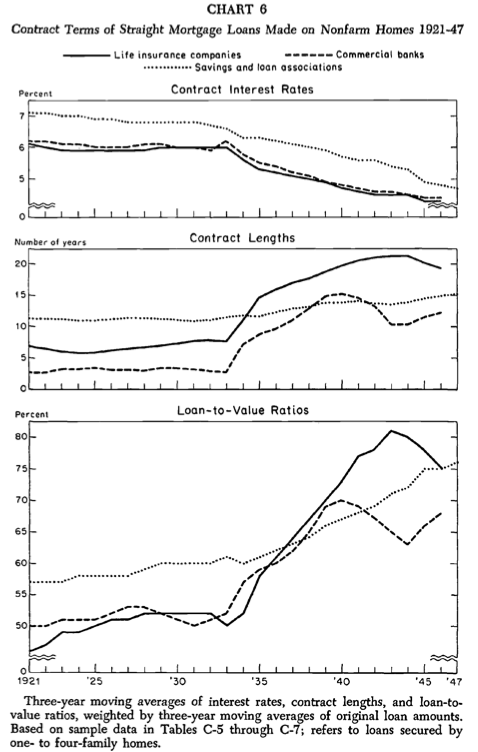

I have a friend who is a head chef at a decently popular bar and restaurant on Broadway in Capitol Hill, Seattle (very trendy part of town if you aren't familiar, steep commercial rent). He lives in a 400 sq ft studio and is barely, barely making it from one paycheck to the next. I am sitting on a 2.6% interest rate mortgage and my prices are set for the next 30 years. I probably work half as hard as he does, if not even less than half. I have a lot of cognitive dissonance associated with that.