What really puts all of this into perspective for me is I work in academia and one of my friends works for a defense contractor. He told me the maintenance cost per flight hour of F-35 was a bit more than $40k, which is significantly more than I make in a year as a grad student. It's crazy basic science is what's been the focus of so many cuts while it's so cheap.
I wouldn't assume that this is about cost cutting. If the goal were saving money, the cheapest option by far would be to leave the hardware in the water and just stop funding the monitoring. Instead the plan is an expensive operation to send ships out to extract 900+ instruments from under two miles of ocean.
It's clear that this is driven by performative climate denialism and a pro fossil fuel stance. The Trump administration made a billion dollar deal with an energy company to stop construction of offshore wind farms and redirect the investment into fossil fuel projects. Trump constantly talks about the "green new scam" and "climate alarmism". And on top of signaling to his base, Trump met with oil executives at Mar-a-Lago before the 2024 election and pitched them on rolling back climate regulation in exchange for $1B in campaign cash. Destroying the instruments that would document the consequences and might spark alarm and activism is one way to hold up his end of the deal.
But… why? Climate change is very much real and even stubborn deep-right voters like my father now ‘believe’ in it. Ok, some people make some cash. But wouldn’t they anyway? I don’t understand this need to keep pandering to a minority and to destroy ecosystems.
It's the very definition of a culture war and in addition sadly evidence of limited intelligence. Even the most red blooded oil man wouldn't do this because this data is also useful for petroleum drilling and logistics - it's a whole other kind of person driving this.
Science is antithetical to rule-by-decree or other forms of despotism, since it strives to disprove any and all claims. The powers that be simply don't like to be told "you're wrong", and that is the core of what science does. It's as simple as that.
The government knows it's real, these are generally well-educated people who went to decent schools. But, I would challenge that most right-wing voters know whether it is real. Where I live in rural America the vast majority are pro-fossil fuel, anti-EV. EVs are seen as "gay" or "feminine" by the folks out here. So the choice to use fossil fuels might just be some performative machismo, allowing their pick-ups to output black smoke, make a loud noise and look "tough."
Those are the majority of the Republican voters at this stage. To make them happy you do things like spend millions to tear up infrastructure which challenges their worldview. This should result in increased votes for the current administration at the mid-terms. So even if climate change is a real and current threat, you need to say it isn't to get re-elected.
I don't believe they do any of this for votes. I think somebody within the administration has a personal grudge against science, especially anything related to climate change.
> So the choice to use fossil fuels might just be some performative machismo, allowing their pick-ups to output black smoke, make a loud noise and look "tough."
Might be linked to petrol cars being cheaper to buy for the same amount of car? That seems like an easier explanation. There is a masculine element in that men want to be seen to own big things to show off, but I doubt it has anything to do with liking black smoke. If they wanted loud noises they'd go a motorbike or get an obnoxious horn.
No, it’s tribalism of sorts. For men they’ll often paint something they don’t understand with words like that. I grew up in a culture that did that and won’t go back. Many many humans lack basic curiosity about the world.
You have absolutely no idea what you're talking about if you don't know anything about rolling coal and you don't realize people like to drive loud cars.
I've had several friends tell me they just couldn't drive an EV because it just doesn't have a soul, meaning it doesn't have that roar for its performance. It being nearly silent as it accelerates hard is missing half the point. It's a common thing among car enthusiasts.
I can attest that a lot of “car culture” and “motorcycle culture” people want the car or motorcycle to be as loud as possible. Where I live they’re frequently interrupting conversations and waking children up. It’s a major nuisance.
1) I doubt the rolling coal people are a particularly large group. Sounds niche.
2) They could buy an EV then put some sort of smokestack on it. If they're going to convert their car to preformatively blow black black smoke and make extra noise sure, ok. But an close consideration that isn't actually a reason to prefer a petrol car over an EV. They'd get to exactly the same end point and probably annoy the people they're trying to annoy even more starting with an EV.
The major factor for people buying a petrol-powered car is almost certainly the cost. If electric cars were cheaper they'd mostly switch over to them and then rig them up to own the libs instead.
1) I see multiple people doing it every day and my commute is <5mi.
2) These people hate fake engine noises even more. Making it blow fake smoke and make fake noises would be even more of a turn off. Once again, not knowing that really shows you don't have a clue about what you're talking about.
> The major factor for people buying a petrol-powered car is almost certainly the cost.
If the main reason was the cost they wouldn't be spending almost $100k on SUVs and pickups that get like 14mpg to go get groceries and pickup the kids from school.
Because we have actual retards in office. People keep looking for a deeper explanation. There isn't one. They are actual stupid people. They do stupid things.
Eradicating species, destroying economies, and eliminating entire ways to enjoy nature's bounty here on earth –– a small price to pay to hurr hur hurrr... own the libs ;)
The DSM needs to be updated soon for this type of sociopathic cynicism. It can't be kept with the rest of society.
It all makes sense when you realize QAnon basically runs the white house now. There’s a very insulated type of American who lives in their own world, that unfortunately lots of voters are apparently sympathetic to. It’s probably seen as a victory against the climate change hoax or something along those lines.
It’s seen in Crusader terms. A bunch of things which are not Christian, for example controlling social order at all costs, are adornments on nationalism. The apocalyptic parts of QAnon slot into their belief system. So many other religious movements rely on salvation. Another commenter mentioned ancient China. Big political upheavals swept ancient China based on very slight new ideas about salvation.
I have seen some chatter where 2nd-term Trumpism has been (very imperfectly) compared to Mao's Cultural Revolution.
Obviously there are many differences, no question. But it's actions like this where a bit of the comparison seems apt -- fervent, nonsensical anti-intellectualism / anti-science actions done purely in the name of ideology.
Why else would one actually go out of the way to dismantle a working ocean observation system, which provides a rich amount of data for multiple purposes?
The only action that seems to make sense is that:
A) Some of that data can be used to observe climate change issues.
B) In Trumpism, it is not enough anymore to propagandize that climate change is not happening. One must also actively suppress anything that could suggest climate change is happening, no matter how much the cost, no matter how much it hurts other non-related things.
I don't believe Trump himself makes any of these decisions, and as for deals I don't think he remembers what happened yesterday let alone a deal made on the campaign trail. Parties in his administration are actively trying to destroy science and cripple any kind of climate research or green energy development, even if it costs nothing. Whoever they are, they make these plans and then get him to sign while he's awake.
The post boxes were more about crippling mail-in votes. In Washington Bill De Joy had at one point dismantled several of the sorting machines which dramatically slowed how fast mail gets dispatched. The result was that you could no longer mail your vote the day before election day and have it arrive on election day.
The crazy thing is that the oil companies confessed to a misinformation campaign and at least publicly talked about change/reform (of course, they're still oil exploration/refinement companies so not abandoning that). But they did discuss responsible use of fossil fuels in transition towards renewables.
But Trump was fooled and is more committed than ever to the since-abandoned misinformation campaign. It took on a bigger life than Exxon ever could've imagined.
The snowflakiest of them all - they can't handle unbiased readings from instruments that survey our planet.
The Mauna Loa CO2 data is still up.[1] Trump tried to kill off the CO2 measuring, but that doesn't seem to have happened. The Mauna Loa data goes back to 1958, measured at the same point, far from any CO2 sources. 315ppm in 1958, 441ppm today, and almost a noise free curve with mild seasonal variations. Clearest trend in global warming.
I don't think Trump was "fooled" by anything. His policy positions reflect what makes him and his cronies money, and what keeps him in power. That's it. He doesn't care about truth or correctness. Just money and power.
I submit that the "is malice or incompetence" heuristic can be broken by pathological inputs which result in an indefinite runtime, and that we've encountered some of them in the last decade.
The correct response when that happens is to say "both" until/unless the perpetrators want to plead just one or the other.
> The essential act of war is destruction, not necessarily of human lives, but of the products of human labour. War is a way of shattering to pieces, or pouring into the stratosphere, or sinking in the depths of the sea, materials which might otherwise be used to make the masses too comfortable, and hence, in the long run, too intelligent. Even when weapons of war are not actually destroyed, their manufacture is still a convenient way of expending labour power without producing anything that can be consumed. A Floating Fortress, for example, has locked up in it the labour that would build several hundred cargo-ships. Ultimately it is scrapped as obsolete, never having brought any material benefit to anybody, and with further enormous labours another Floating Fortress is built.
George Orwell, 1984.
The Republican project is one of making the population dumber while enriching military contractors and other private interests. This achieves it perfectly.
How many million graduate students do you need to give the US the military hegemony and political influence over allies and adversaries that the F-35 program provides ?
Looked at from a policy maker's viewpoint, things look very different.
Wouldn't take very many at all, we've now learned these past four years (and even the past 2 months). All you need are drones, that are pennies on the dollar cheaper than trillion-dollar militaries. Depending on the munition, a single bomb we drop on Iran could cost between $40,000 and a couple million dollars. Think of all the high-end drones you could buy instead.
In the Russian-Ukrainian war the GPS guided shells that the USA was sending to Ukraine cost about $40k a pop, where as you can get at least a dozen drones for that price.
Even the fanciest self propelled artillery is getting destroyed by these little cheap buggers.
> Wouldn't take very many at all, we've now learned these past four years (and even the past 2 months). All you need are drones, that are pennies on the dollar cheaper than trillion-dollar militaries.
You make an incorrect conclusion which is unfortunately both quite popular and incorrect among westerners who read two and half editorials about Russo-Ukrainian war in some NYT/WAPO/whatever and think they now understand modern warfare. The reality of the situation is that drones are a very useful tool, but any side achieving actual air supremacy would result their fighters and bombers cruising over frontline and enemy towns on low altitudes taking out any high-value targets at whim. The situation would be similar to boots-on-the-ground phase of The Iraq War, resulting one of the sides to rapidly gaining ground and winning the war. Keep in mind that the cited "40k per-hour" price is quite cheap compared to per-hour operation cost of any kind of big ground force.
In fact, last thing US wants is to be in Russia's shoes unable to meaningfully advance into the territory of by all measures much weaker enemy.
That isn't really accurate, small drones are enough to antagonize regional neighbors. They are far from being able to project influence, stabilize international trade, or even remotely protect a territory from an enemy that isn't concerned with civilian casualties.
> project influence, stabilize international trade, or even remotely protect a territory from an enemy that isn't concerned with civilian casualties.
We just failed to do all of those things quite visibly.
Iran made a choice not to escalate to destroying desalination capabilities and that's why a lot of Saudis and Emiratis are still alive. It's not because we protected them.
Because they didn’t want the retribution that would follow. That’s what protection looks like. Assured destruction when it’s not mutual is pretty motivating.
Not being able to stop random killings or destruction from small arms fire has nothing to do with military power projection.
Military power projection is the reason the US was able to destroy a significant portion of Iranian leadership, nuclear infrastructure, and weapons infrastructure with no retaliation from Iran back in the US nor any pushback from any of Irans allies.
Military hegemony has nothing to do with being a perfect police force that can stop anything from happening anywhere.
>but we still couldn't have stopped them with our vaunted carrier-based power projection, or with our exhausted ABM capabilities.
Who is “we”? Your account started posting nothing but anti-US stances and pro-China/Iran stances since this conflict began.
I'm American, also that's considered bad form. 2/3 of Americans were against this and think it was a failure.
Military hegemony in the gulf region would mean being able to force Iran to stop attacking gulf targets, rather than negotiating a ceasefire because both sides are hurting. What we have is a multipolar situation, it's not arguable, it's right on the scoreboard.
A hegemon would be able to unilaterally open the straits.
Best for everyone to recognize it and act accordingly. It's got nothing to do with cheerleading, that stuff is for rubes.
> Military power projection is the reason the US was able to destroy a significant portion of Iranian leadership, nuclear infrastructure, and weapons infrastructure with no retaliation from Iran back in the US nor any pushback from any of Irans allies.
First, Iran doesn't have allies, it has friends of convenience (Russia like the military cooperation but don't like the cheap oil competition, China love the cheap oil competition but don't care for the damage, etc).
Second, US bases and US allies (in the actual sense of the word) were attacked by Iran, successfully. US and all its allies were also impacted by the trivial closure of the Hormuz. US allies now will forever know that the US is not a reliable ally and can't protect them; stocks of crucial materiel were wasted on achieving nothing; and high oil prices will cost the US domestic politics dearly. US power projection whacked a few nutjobs from a regime full of them. Oh, and they're a theocracy that believes in martyrdom! And the new supreme leader is a strong proponent of nuclear weapons (unlike his predecessor and father), and saw half his family blown up in front of him.
> Military hegemony has nothing to do with being a perfect police force that can stop anything from happening anywhere.
Being unable to enforce your will on an enemy is not "hegemony". Iran will walk out of this conflict with their nuclear programme back on track, a revenge minded regime, and maybe even a toll on an international strait to fill up their coffers.
US military deterrence has been a paper tiger ever since Biden told Iran "don't" [1], and Iran did, and Biden did not respond. Now whoever the sitting US president would be - Trump or anybody else - must restore that deterrence. There is no nice or easy way to do that. The last time the US had to do that was during WW2 and the enemies were not floating heavy, extended media campaigns and funding US universities at the time.
The reason why Iran was even back in the nuclear game was because a moron pulled out of the JCPOA that was giving them concrete steps and carrots to get them to stop.
An agreement that had independent inspectors from several countries accessing utilities and leaving behind tamper resistant (and tamper revealing) instrumentation at regular intervals (along with the usual back and forth robust discussions).
The sort of gear that could count atoms from Fukushima drifting across the oceans to end up in HVAC filters in middle North America.
Not at all. Iran was rewarded with progressive sanction relief and progressive unblocking of their own money that was seized decades ago, as long as they continued cooperating.
Are you asking how the 2002 Millenium Challenge showing that the US Navy would lose any directy military engagement with Iran by a large margin is relevant to "The American navy was already a paper tiger ~20 years before your example with Biden"?
Iran didn't attack the desalination plants because that would amount to actual warcrimes - and they care about their public perception in the broader community of nations. Unlike, of course, Israel and the USA, who don't mind turning a few schools and hospitals to smithereens.
You might call this "assured non-mutual destruction", and of course it helps that the US is located away from Iran's immediate neighborhood, but destroying the lifelines of the GCC countries would assure an economic collapse globally that the world has never seen before. Imagine something on the lines of oil at $300 a barrel, zero fertilizer, zero semiconductors, zero plastics, the works. And Iran could just as easily turn Israel to glass, with a death by a thousand papercuts (or drones, whatever your flavor). Of course, all of this at a huge cost to itself.
It was more son that they have space to escalate. It was strategic decision. They did attacked those when their plants were attacked.
US does not have capability to destroy them. It can make lives of civilians hard, as it tried, but foreigners attacking civilians dont make regimes fall.
Protecting territory is pretty pointless for many countries, who would be facing neighbors they cannot remotely match in capability. Allowing civilians to be slaughtered is a cheaper and more effective method of warfare for these. Protecting civilians well is difficult even for very well armed countries with expensive defense systems, letting them die brings many martyrs and propaganda opportunities and breeds hatred for the enemy.
Something tells me a war with china isn’t going to be carriers duking it out but carriers filled to the brim with aviation and naval drones that seek and destroy enemy craft. As Iran has shown, you don’t need to attack the USA directly to destabilize its influence. The US market economical influence has been far more important for force projection and stabilizing trade than anything else and by all accounts Trump has pissed away allies on that front too. US force projection for trade stabilization is for minor things like protecting against pirates - you don’t need million dollar missiles for that.
> an enemy that isn't concerned with civilian casualties
You mean like when the Zionists openly stopped food from getting into Gaza, while the western governments were backing the Zuonists? Those people concerned with civilian casualties?
An enemy unconcerned with civilian casualties, give me a break.
If you mean Operation Spiderweb, the Ukrainian Osa drone only had a range of 5 miles/ 8km (one-way) and had to be launched from the roof of containers simultaneously transported unknowingly by Russian truckers and that was a covert operation that took 18 months to set up. So no that particular model couldn't attack even 10 miles away.
Ukraine has other long-range strike drones but haven't heard of more than a thousand miles range.
How not? Precision kills with 0 warning. You can just bring one on a plane to whatever country and have the thing charge with solar/powerlines until your target is getting coffee outside on a nice day. Or whatever.
Ok, I'm not even sure what to reply here, that makes no sense and doesn't accomplish any of the things I mentioned. It's also not even particularly feasible and just not at all how any sort of wartime operation is likely to work at scale.
But I am sure of who I wouldn't put in charge of critical military operations.
Drones are not a strategic weapon. When you talk to the Ukrainian military, with their actual expertise in drone warfare, the general consensus is that drones are an inferior replacement for artillery (note that ex-Soviet military systems are a lot heavier in artillery use than NATO military systems) that they use because they can't get the artillery shells that they need but they can get drones in sufficient quantities. It hasn't enabled any strategic breakthroughs in the Russo-Ukrainian War, it is merely served to lock in the grinding stalemate it's been in since October-ish 2022.
The US war on Iran also demonstrates the problems of drones too: the US is currently able to wage a war 6000 miles away from its shores, because of the use of an awful lot of weapons systems that aren't drones. Iran is unable to dislodge that military, or even meaningfully impact its ability to carry out said war, not 100 miles away from its shores, despite a heavy use of drones to attempt to do so.
The war also demonstrates another big issue... the continued delusion of many civilian and military leaders that strategic bombing alone is sufficient to win a war despite this failing literally every single time it's been attempted in the past 100 years.
> that they use because they can't get the artillery shells that they need
That used to be true, but I don't think that the case anymore. UA is now striking logistics ~150KM behind the contact line with drones. Regular artillery can't do that. Guided rockets maybe could, but they'd be more expensive and come in smaller quantities.
> US is currently able to wage a war 6000 miles away from its shores
For a rather restricted use of "wage a war". They did not stop Iranians from doing their thing. Bombing alone does not have a history of winning wars.
> How many million graduate students do you need to give the US the military hegemony and political influence over allies and adversaries that the F-35 program provides ?
Well, given that the Strait of Hormuz has been effectively closed for months despite Iran's military supposedly being decimated, and the President of the United States is now threatening to bomb one of our closest Mideast allies (Oman), a reasonable person might ask where this military hegemony and political influence you're referring to is.
Because it would require a boots on the ground invasion to occupy the entire portion of Iran overlooking the Strait.
The strait is physically open but no insurance company will cover massive oil carriers because they are so easy to hit with small weaponry from the ridges of Iran.
Why doesn't the US government just insure them itself then? A quarter of a billion dollars is a major risk to an insurance company with no internal capacity to mitigate the risk itself, but it's not even a rounding error in the federal budget and the US government would then be expressing confidence in the ability of its own military to ensure safe passage.
And even if they had to pay a claim, it would cost the population less than the higher gas prices, since increasing supply lowers the market price for all supply, not just the incremental units.
That would require an act of Congress. So implicitly, the majority party in the House and Senate don’t want to do this. Ask yourself, who is in power right now?
> Because it would require a boots on the ground invasion to occupy the entire portion of Iran overlooking the Strait.
Which even the morons who started this conflict know is suicidal because Iran has literally at least a million loyal fanatics (Basij, the same organisation doing unarmed meat waves against Iraq)!ready to die for the regime, and the terrain is in their favour.
After all has been said about the ages of Biden and Trump, it’s ironic that having presidents with experience living through Vietnam and the Soviet-Afghan war has been so useful for their two terms.
This maybe a bit of sarcasm, but it's actually accurate. The information was so contrived that multiple firms sent physical analysis to observe the strait in person. They all have said that the strait remains active with decreased but consistent transit. Regardless of who claimed the strait was open or closed. It's the reason oil markets are so hesitant to bid up futures contracts.
The US could/can, they're just not willing to undergo the mass casualties it would take to put boots on the ground and put those boots up the ass of the people controlling Hormuz. Which absolutely cannot be achieved purely by air.
I'm not interested in a lengthy semantic debate about what "can" means but I'd hope we could agree at least one possible interpretation includes things you're unwilling but able to do.
Is it the case that if someone doesn't do something some time then they can't do that thing? Like, if you were playing basketball and Lebron James walked by and you threw the ball to him and said "dunk this!' and Lebron said "no, I'm not willing to" does this mean Lebron can't dunk?
Because personally, I'd still take Lebron on a basketball team even if he wasn't willing to dunk the ball that one time.
> if you were playing basketball and Lebron James walked by and you threw the ball to him
Yes, this is a terrible analogy for the war in Iran. Hugely unpopular, costing Americans vast sums of money daily, headed for possible catastrophe. Very much not a low-stakes "Lebron walks by" situation.
Better analogy with Lebron would be: championship game with a title on the line. He gets possession as time runs down and the team needs him to score or make a play that scores. It's not okay for him to then say he's fully capable of scoring but doesn't want to at just that moment for reasons.
NB: this is not to say the US military couldn't cause untold damage on the region. This is obvious, anybody can look at recent history to see that the US military is more than capable of destroying a country in the region.
Rather, this is an object lesson that war is politics by other means, and here we tried to do war without any politics and it has not gone well for us.
I will remember from now on that you can compare war to Lebron playing in a championship game but not to him playing in a pickup game.
But to be clear, the comment I replied to was one in which you made an abstract point that it doesn't make a difference to someone if you can do something but in practice don't/aren't willing to and I think that this is obviously wrong (just because Lebron didn't dunk doesn't mean he can't or is a bad ball player). You don't like the Lebron analogy, that's fine. Let's use a war analogy: in 2025 Pakistan and India, two nuclear armed countries, exchanged significant fire. Neither was willing to use their nuclear arsenals. Should we now conclude from this that they can't use their nuclear arsenals and are therefore equivalent to being non-nuclear countries? I mean who cares if they have nuclear weapons which can (can't?) kill millions if this one time their political will wasn't there for them to use them in their defense?
> Rather, this is an object lesson that war is politics by other means, and here we tried to do war without any politics and it has not gone well for us.
Be careful not to trip over your rhetoric in an attempt do display profundity. If war is politics by other means, then doing war is always done with politics. This whole statement is word salad nonsense.
> I will remember from now on that you can compare war to Lebron playing in a championship game but not to him playing in a pickup game.
The stakes of a given situation matter to the disposition of the participants. Is this not obvious?
I'm really confused as to what your larger point is. Nobody disagrees that the US military can kill untold numbers of people and cause untold damage in Iran and the wider region. Was this the point you wanted to make? Yes, the US military is capable of killing everyone in the region, which would make the Strait "open" again.
> If war is politics by other means, then doing war is always done with politics.
The problem is doing so has not/does not appear to be on a path to achieve the stated political aims of the administration, inasmuch as they have been willing to articulate aims.
Anyway, you're being insulting and not making coherent points. Good evening/morning/afternoon.
If you cannot afford doing it, then you cannot do it. What's the purpose of having the capability to do something if you cannot afford the losses of doing it?
US military ain't some unstoppable force in all possible scenarios, it was stopped and won over quite a few times, last time I recall by taliban sheepherders. In some cases like first Iraq war yes, but they don't wage those wars anymore. And all mental limits re casualties are very real limits just like other.
Its like saying russia could/can conquer whole Europe, if only X, Y and Z. That effectively means they can't, as we see playing out right now despite them trying desperately to achieve this very thing.
Part of the reason that Americans prefer to lose that war is because the enemy is called "sheepherders", implying innocent civilians, when the military is winning. The blurring of when a militant is referred to as a civilian has proven to be a very effective tactic to reduce the American population's tolerance for war.
I'm confused, are you insinuating that the Taliban essentially ran a PR campaign to portray themselves as sheepherders to garner sympathy from the US population to reduce its appetite for fighting them?
> Forget US casualties. The US is concerned with minimizing Iranian casualties.
I can’t help but notice how closely this mirrors Russian talking points. According to them, the war is not finished only because the Russian military fights with their arms tied to avoid Ukrainian casualties. It is about as credible in Iran as it is in Ukraine.
Are you forgetting the bad neighbor that keeps attacking most of its other neighbors, even while under ceasefire agreements? And then moving onto the land and saying "this is ours, time to redraw the border again.".
You mean the bad neighbor whom Iran has constantly funded attacks on from those other neighbors? The bad neighbor who has IRGC Funded terrorist and militant cells along its very border? You mean the bad neighbor whom comes under rocket fire on a routine basis?
Are we forgetting that Iran is the one who has funded Hamas and Hezbollah and provided them safe haven?
Maybe that bad neighbor wouldn’t be a bad neighbor and be attacking the other neighbors. If the other neighbors did not provide shelter for those who wish to burn down the bad neighbors house?
Point is - Iran plays a SIGNIFICANT role in the destabilization of the region. That bad neighbor might be a good neighbor if Iran wasn’t attacking it via proxies.
But I suspect we’re not ready to have that nuanced conversation yet.
The people downvoting your comment should be aware of a few things:
1. The ceasefire with Lebanon specifically states that Hezbollah is to retreat to the Litany river, which they have not done. The ceasefire further states that military operations against Hezbollah are permitted so long as they remain south of the Litany, and so long as they attack Israel. They attack Israel daily - Israel is not breaking the ceasefire. That's why popular news use the term "Israel attacks despite ceasefire" instead saying "Israel breaks ceasefire" - because Israel is not the side breaking the ceasefire.
2. Hezbollah attacked Israel unprovoked on October 8th 2023, leading to the current conflict.
3. Hundreds of thousands of Israelis have been internally displaced since then. Popular media calls internally displaced Gazans refugees, yet I've never seen this term applied to the internally displaced Israelis.
I get it, but no, that's not leading to regional instability that actual hostile nations and leadership have been responsible for creating in the region.
> How many million graduate students do you need to give the US the military hegemony and political influence over allies and adversaries that the F-35 program provides ?
All good questions 3 years ago.
How many would rely on US weapons or their US relationship today?
And then there is the unimpressive show in the Middle East.
We haven't been able to produce a complete F-35 since Feb 2026 because we lack the necessary rare earths to do create their electronics.
Why? Because we stopped doing that work (and science) in the 90s and now China produces over 90% of rare earths on the planet and said the US can't have any for military purposes (its being negotiated).
There are zero under and post graduate programs that specialize in rare earth extraction and refining outside of China. None. And China has barred their scientists from collaborating with any colleagues from the US on the topic.
Sooooo, you're right, the F-35 program offers a lot, but can it do so "by itself" and does it provide that value in an economically viable way? Much less clear cut of an answer.
If policymakers genuinely cared they wouldn't have let things get so bad that allies are considering to have orders cancelled for the Saab JAS 39 Gripen
Yeah, 11 f35 lost to motor/software issues. Only modern war plane that have those issues.
Its minumum speed is worse than the f16, which make drone interception an issue (f16 are already a bit to fast for that according to Ukrainians), despite a pretty low takeoff speed. It should be capable of less, i'm pretty sure it's software limiters tbh, the wing design seems fine, even if the weight is a bit high (i mean, you don't need to be able to fly at 15 knot like a Rafale, but still).
It _still_ have cooling issues that brick it if you don't bring an external cooler after it landed (which is crazy to me, how did Lockeed not fix that? it's like half the reason why the availability rate is so low).
The availability rate is slow (as said earlier) but it is still more expensive than other jet yearly, despite 2/3rd of the flight hours.
F35 pilots now have less flight hours per year than recommended by NATO (a lot less) (which used to be below US standards btw), and while US f35 pilot still have more hours than their russian conterpart (~145 vs 120), it is very possible that smaller countries who made the mistake of buying them without an economy strong enough to bear the costs might fly their pilot less than 100 hours per year and complete the rest in sims (which, as demontrated by the russian, is a _very_ bad idea) (i'm afraid Greek pilots will suffer from this, which would be a shame)
On the "political influence", it's wrong. Selling the F35 cost the US influence in Norway (thank you wikileaks). In fact, each time the f35 lost a competition, political influence was expended to make the country still buy it. Imho, scientists and scientific conferences are a better way to get influence over allies and adversaries (Cas9 is probably the best example, without Doudna having an international recognition and the conference being hosted in the US, Charpentier might have gone to another RNA specialist)
[edit] to be clear, i think the f35 is a great plane for the US, and a good plane for rich countries who want to go on offensive wars, mainly due to its EW capacity that are second to none and its ability to penetrate enemy territory (which is second only to other US planes). I do also think that it still needs _massive_ improvements to be usable by regular, defensive armies, and the US expending political power to sell it to countries who don't want/need to attack their neighbors was a mistake. Also, not a good cold weather plane, which make it even worse for Norway and Canada.
Also i think its software impairs it, because the wing design seems almost perfect for its missions, and at least on paper, the reactor seems great too
After potus ordered massive degradation of F16 radars used by Ukraine on his emotional whim making them useless, which btw were gifted by other NATO countries (!!), nobody, absolutely nobody wants US jets anymore, F35 or not.
Every single European country that already ordered them had immediately afterwards long hard talks about completely cancelling those orders and most ended up at least loweing massively the ordered amount (I presume due to contractual requirements and some money already sent, nobody expected backstabbing crooks on the other side when they were signed).
At this point its trojan horse and much worse than having nothing - it gives illusion of certain (extremely expensive) capability, but only if you lick specific ass hard and frequently enough, peppered with a billion here and there flowing in the right hands. Even then, the other side may be licking harder and thats it. Its ridiculous, and intensively insulting to every decent human being.
Without those people being trained at the level of grad school in workforce, you would not have enough people to even maintain a good checklist for F35. The program will go down within a year.
Grad schools do more than research, they train people for these industries, for the shop floor.
Except they've traded it all away with idiotic chest thumping. There was a bargain on the table for the US, and we've just chucked it in the trash.
The military isn't some limitless resource, and lead by incompetence, it is useless. There are no policy makers in this administration, they go on vibes and bad ones at that.
Even a guy named mad dog said that diplomacy was cheaper than bullets.
> the military hegemony and political influence over allies and adversaries that the F-35 program provides
Hilarious to say this, given the very public and very significant failures of US foreign policy these past couple decades, not least of all the current special military operation.
Nah, I'd say that common "americans" (really: US citizens) are perhaps a bit on the dumber site. Not only confuse they constantly a continent (America) with a country (USA), they also have no idea about history. Or logics. You wrote "ALL of tech" ... no lets check.
Cars - Germany (Gottlieb Daimler, but he didn't patent it), Germany (Carl Benz which made the first patent).
Motorbikes - Germany (Gottlieb Daimler)
Train - invented in Germany
Radio transmission - UK (James Clark Maxwell described them theoretically), Germany (Heinrich Hertz created/used them first in experiments)
X-Ray - Germany (Gustav Röntgen)
Telephone - Germany (Philipp Reis, your Bell bought examples and reverse engineered them)
Bookpress with movable letters - Germany (Johannes Gensfleisch a.k.a. Gutenberg)
Lightbulb - Germany (Heinrich Göbel)
Periodic system of elements - Russia (Dimitri Mendelejew) and Germany (Justus Lothar Meyer)
Dynamo / Generator - Germany (Werner von Siemens)
Vaccination - UK (Edward Jenner)
Gliding plane - Germany (Otto Lilienthal)
Pain killer - Germany (Felix Hoffmann, Aspirin)
Relativity theory, Quantum theory - Albert Einstein, Planck,
TV - Germany (Manfred von Ardenne)
Cathod ray tube in TVs - Germany (Conrad Röntgen experimentally, Ferdinand Braun with horizontal and vertical directivity of the ray)
Computer - France (Charles Babbage, Ada Lovelace) for mechanical ones and Germany (Konrad Zuse) for electric ones
Atomic fissure, used in plants and bombs - Germany (Otto Hahn)
Chip cards - Germany (Jürgen Dethloff, Helmut Gröttrup)
MP3 music compression - Germany (Fraunhofer Institut)
Electricity - actually already in ancient greek they used electrostatic charging of amber. And one century before Christ they had actual batteries in Bagdad! But then a plethorary of european scientists brought the work forward: UK (William Gilbert, Francis Hauksbee, Joseph Priestley, Henry Cavendish, Humphry Davy, Michael Faraday), Germany (Otto von Guericke, Ewald Jürgen Georg von Kleist, Georg Simon Ohm, Carl Friedrich Gauß), Italy (Luigi Galvani, Allesandro Volta), France (Charles du Fay, Charles Augustin de Coulomb, André-Marie Ampère), Netherlands (Pieter van Musschenbroek), Denmark (Hans Christian Ørsted).
I actually terminate this electricity list here. I could go on and on.
Also note that physical units named after their discoverer indicate some kind of importance of the relevant invention. So we have e.g. Volt, Ampere, Coulomb, Farad, Gauss, Watt, Ørsted, Tesla, Weber as units. None of them is based on USA's academia.
If we look at unit names outside of electricity we also find outdated ones like Röntgen or Curie. And still used ones like Plack constant, Newton, Pascal, Kelvin, Becquerel, Gray, Sievert. So where are the USA american ones if "all" of technology is supposed to stem from their academia?
IF we want to trace the roots, then perhaps we need to go back to antique greek philisophers. Because western academia itself traces itself there. But then again ... something like that existed also in ancient India and maybe China.
Does the F35 do that? Wasn't Iran shooting those down recently? If there's anything Iran has taught us it's that airpower doesn't win wars, allies do. The US will leave the middle east with their tail between their legs. This is the beginning of the end of the American Empire.
For the privilege of spending enormous sums of treasure flying around dropping bombs on brown people what did we get?
I would have rather seen that spent on giving lunch to every school age child or paying graduate students a wage above poverty level. At least something useful would have been accomplished
I'm sorry, but this is like the most ignorant take ever. The world is essentially one life supported regime away from having a level of stability in the middle east that has quite literally never been achieved. Iran and their regional proxies have been almost the only source of middle eastern discontent in the last two decades. The stability of the region is already vastly improved from any time in the past and the dismantling of the IRGC will create a wave of vastly improved living conditions for hundreds of millions of people.
Iraq has for the first time ever entered in the high category of HDI.
Okay so Iran is responsible for the insurgency in Iraq, the Arab Spring, AQAP in Yemen, Islamic State, the ongoing situation in Syria, proxy wars between Saudi Arabia and the UAE and much more…
I think it’s extremely clear that the major contributor to instability in the Middle East over the past two decades has been the United States.
I think it's fair to say that pretty much no-one is a fan of the Iranian Regime. (And we'll ignore for the moment that the regime is a a direct by-product of previous US intervention.)
The regime is all kinds of bad, but you cannot change govts from without. Stability comes from people changing govts from within. Every time the US has changed a govt to support themselves it has ended badly.
This latest war has not unseated the IRGC, indeed it has entrenched it further. This is not surprising; they are the largest organised structure in the country. There are no other structures of comparable size or influence in the country.
Unfortunately the US military does not just project power. To justify its existence (far beyond the realm of self defence) it actively creates and enjoys conflicts. And increasingly those conflicts are showing the real limitations of military power projection.
By contrast the soft influence projected by technological leadership, USAid etc are much more influential. It's not surprising that support for these alternatives are the first target of a govt susceptible to being influenced. A trillion $ industry will not go quietly into the night.
Yes, of course, the US could deploy troops into Iran. They could topple the IRGC if desired. But it would be very expensive politically. (And I don't mean to the Republicans, but that also) but to the Military Industry. Because the electorate clearly indicated that after Afghanistan the appetite for foreign wars is dwindling. Another debacle in Iran (even more than the debacle it is now) would be disastrous.
I have no love for the Iranian regime. But no military intervention from outside has the ability to improve it. And the Iranian people will not support a US puppet govt - that influence was burned in 1956.
Govts change when people inside rise up to change them. Recent examples in Afghanistan, South Africa, Romania and even Iran (1979) show this over and over again.
Interestingly the Soviet Union fell because the satellite states broke away. Because the people in Poland, Hungary etc rose up. Not because of outside intervention.
This latest war in Iran follows a long tradition of US and UK meddling in the region, all of which is designed to get oil, not create stability. Indeed this latest foray has created instability in the supply of oil, and that is an unforgivable sin to the US public.
>The world is essentially one life supported regime away from having a level of stability in the middle east that has quite literally never been achieved.
Basic science is often cheap, I don't know where you're getting it's generally expensive. I've yet to meet someone whose equipment costs as much as any of the stuff my friends design for defense contractors. Even the head of the lab I'm in is making less than my friends are making as engineers and the lab equipment is pretty cheap compared to the stuff my friends are designing (we have a radar that cost maybe a couple hundred thousand but that's the majority of the equipment cost for the past decade).
Idk what your idea of budgets are for these sorts of labs but I think most engineers would be shocked at the shoestring budgets they run on (at least the ones I know are a fraction of the cost of a single engineering team).
The “whole thing” is never cheap. Running something like a university — providing the environment, infrastructure, administration, facilities, compliance systems, equipment, libraries, grants offices, laboratories, and institutional platform that allow professors and graduate students to do research — is itself extremely expensive.
After all, if you look at the fiscal budgets of major economies, public spending on education and research is often much larger than military spending.
The cuts that don't make much economical sense are ideological, its because they need to give something to that part of the coalition. Somewhere someone is having an erection when hears about these cuts and say something like despite everything supporting Trump was worth it after all.
Because it’s an excuse, the trump admin is lying. All the time, you should never take them at their words. They have never been about cutting costs. Just look at Trump deficit. They are very openly going after science because it goes against the fake reality they are selling to their cult members
I’m sure this has nothing to do with 3.1 million graduate students versus 500 F-35s.
For actual context, F-35 program receives $9B per year (amortized over lifetime), which is $3000 per year per graduate student. Erasing the F-35 program entirely would make something like a 10% difference in graduate wages, while destroying the US Air Force as a modern military.
So no — your request to fund graduate students is more expensive than the F-35 program and delivers at best marginal results.
When you math through per unit or per capita or per year, we already spend more on education and science than the military — and it’s unclear further science funding to the detriment of the military would improve things.
Where did you get that the number of federally funded graduate students is 3.1 million?
Note that many will have industry, international or self funded (for MS it is less common to have funding). The 9B figure for maintaining the F35 you just said is very close to the entire annual budget of the NSF. Which is the main funding source of most of non medical research.
Also we are not talking about military budget, just the F35 maintenance program here.
The $9B figure is total amortized to yearly: research, development, production, and maintenance across the near century of lifetime (1990s-2080s).
I took the total number of graduate students, to spread the money across them. We could also look at the same number as, eg, funding an increase from 3.1M to 3.3M or 3.4M graduate students.
I stand by my original claim:
A 10% increase in graduate salary or number of students doesn’t justify dismantling our air force.
$9B/yr is less than half of the Pentagon's more recent estimate of $2T through 2088 for the F-35 program (according to Wikipedia and its sources, which is all I have to go on).
And again, the F-35 is not synonymous with the entire air force.
You are both comparing stuff that is nonsensical to compare $ amounts on. Would you give up science for more F-35s or vice versa? probably not or not by much.
The poster said they work in academia, not the part that has to do with science, so it seems unfair to compare the F35 to all of academia when they were complaining about science being cut.
Later, after the math showing that graduate students as a whole are more expensive than the F35 program, you claim that the U.S already spends more on education and science than the military.
The claim is of course somewhat unclear, because what comprises science spending. Is Darpa science and not military. Does Nasa count as science in this claim? If Nasa does then it might be that you throw all the budgets of NOAA and the EPA and other similar organizations into the Science pile. I say it just because I am unsure how you are calculating one part of your budget. Actually the education part I am going to suggest that is just higher education.
Higher education is around 100 billion a year, without student loans which doubles that.
The U.S government spends also approximately a couple hundred billion for Science, if I am reading this correctly
https://ncses.nsf.gov/pubs/nsf26314
which does a lot of work putting government and business spending together which gives you a number essentially what the government spends on the military.
I can easily construct something that shows the U.S does pay more for science and education than it does for military, but only by being IMHO somewhat misleading, for example by throwing K-12 spending together with the higher education payments and mixing federal and state monies, so to clarify what I mean when I say the U.S in these kinds of conversations and what I think most people mean is "the federal government"
I suppose that the original poster also meant the federal government or it wouldn't make any sense to mention F-35s either.
Under this limitation I believe that the combined ratio of science and higher education is at best 0.8% of GDP and military is 2.8%.
Although it is not really possible to trust very much the data one receives from the American government any more so I am uncertain.
for example this document - I am just having a hard time to trust what data goes into these various parts as federal spending in that area.
At any rate the military 2.8% I am quoting based on looking around is historically low. I would expect, especially given Iran, that it would be more in line with the historical 4.1%.
other issues - Veterans Administration budget is always not calculated as part of defense spending, because they are separate agencies. So when people say military budget they may be keeping that separate, however putting them together of course increases the amount spent
I happen to believe this document on money more than others, because publication controlled by congress and not the executive.
> I can easily construct something that shows the U.S does pay more for science and education than it does for military, but only by being IMHO somewhat misleading, for example by throwing K-12 spending together with the higher education payments and mixing federal and state monies, so to clarify what I mean when I say the U.S in these kinds of conversations and what I think most people mean is "the federal government"
I disagree: total tax burden and allocation is the relevant aspect, regardless of pointless semantics about which government unit disbursed the funds.
You admit the fact:
US governments spend more on education and science than the military, as measured by total funds allocated to purpose.
I think you’re the one being misleading by quibbling semantics about who dispersed the money: US taxpayers give more of their tax money to science and education than the military.
You focus on the federal government rather than totals is precisely to obscure that fact — which you know to be true, but find inconvenient for your politics. Hence the semantic quibbles.
>You focus on the federal government rather than totals is precisely to obscure that fact — which you know to be true, but find inconvenient for your politics.
Or scientists know how to count and see that one number is larger than another; and understand that that's an important factor in many political systems.
The republicans can have 1 senator in the senate and they somehow shuck and jive to get their way. They never fucking lose in implementing their outright evil. Break some rules, use strategy, set up some game pieces. Do something, anything. The democrats couldn’t even get a Supreme Court justice seated with 6 months to go for the next election.
The last time Democrats had a full majority they passed the most consequential climate legislation ever. The time before that, health care reform. Republicans couldn’t do anything to stop it. It’s how the system works. It’s not some movie script.
Oh, please, that’s not true. But yeah, you need 60 seats there in order to just ram things through. Right now Democrats don’t even have a plurality of the voting public so it’s not surprising that they are completely powerless.
> Democrats couldn’t even get a SC Justice…
On this one though I’ll fully agree with you, they were 100% ratfucked on Garland’s nomination. In no universe was that more than 0% ethically justified. That was a craven and cowardly scheme.
I wish I could find it but Simon Clark, someone who specialized in climate science, had put out a video about how we were only recently able to model the AMOC and it's shifting patterns thanks to this measurement we were doing
Yrah probably someone at doge or the dept of war watched that and suggested dismantling it. What's next, closing down the NOAA because it's a "con job" and climate change is "a hoax"?
The GOP rigs elections in their favor and it's well known, but they don't have the power to throw out an additional 87 million votes if they don't go in their favor.
The logical conclusion then if despite everyone voting D then getting their votes tossed out is either violent revolution or liberation with the aid of another nuclear-armed state.
In our modern democracies, we are highly dependent on our information economies to build consensus.
Those economies have essentially ceased functioning as competitive markets for ideas, globally.
In general, newsrooms don’t make enough money to independently cover local news, and are consolidated under political/private parties. Journalism isn’t dead, but it is definitely on life support.
America though, has a further metastasized issue, in that there exists market capture. Republicans and their media apparatus have effective agenda setting power over a large enough section of the populace.
The short version of it is that in the right leaning media sphere, the rules of journalism have changed. A common through line for headline stories begins with a fringe theory on the internet. This fringe theory shows up on some podcast, which then gets repeated by a guest on a channel like Fox. This in turn gets alluded to by the White House, and then it can be reported on as a position that the Executive is considering, making it fact.
The GOP didn’t need to throw out votes, provided it could muddy the waters effectively enough.
The research by Roberts, Faris and Benkler, is what this is based on.
Reality always wins in the end, so now with the increase in oil prices, the limits of information dominance are visible, and they will need to leverage their strength in other domains to gain advantage for the upcoming elections.
It was a scheduled Trump win, from how demotivating Harris was. Sure Trump demotivated a little over a million or two from bothering to show up to the polls for him, Harris was five to ten times that number (depending on whose numbers you use).
Somehow you blame these who not voted for the rapist and a cheat?
(but I agree with you, Kamala wasn't a good candidate, at least in this moment, and the DNCs response to Israel genocide in Gaza might as well sink it alone).
That makes no sense whatsoever. Voting for Trump (or anyone with an R by their name) is wrong; sitting out a vote is wrong. Why save all the blame for the side that actually put up resistance, however ineptly?
I don’t think blue team good, red team bad is a very mature take on US politics. When it comes to substantive policy, voters do not get a choice. The same wars will be fought. The same lobbies will have their way. Just because one side will make tactless, self-deifying inaugural speeches about how the sea levels will cease to rise and the Earth will start to heal, that does not make it so.
I think that if these sensors were providing useful, actionable information more valuable than their maintenance cost is not well supported.
The only sensible take is blue team good cop, red team bad cop; they're still both cops, working for the system and against you. You can see from the voting record that there's always just enough dems to defect to pass through any laws that the GOP wants through. The Democrats in congress are still guilty of treason against the Constitution, the number of exceptions to that rule remains in the single digits.
The only non-violent way to save your country is to primary all current incumbents and convict both party leadership for treason.
I hate divisive language like this, but Trump's only major concrete "policy" (if you can call it that) during his 2024 campaign was that he was going to somehow lower grocery prices by instituting tariffs, so basically "I'm going to lower prices by raising prices".
That kind of idiotic quasi-doublespeak should have been a disqualifier for anyone with at least a two-digit IQ, but apparently it's not. The only scenarios that I can see for this:
1) People actually believed the idiotic notion that "other countries" pay the tariffs.
This is so idiotic because even if that were true, which it's not, those costs would still be ruled into the price. "No such thing as a free lunch" is very literally the first thing I learned in high school economics.
If people are that stupid then they can be blamed for their idiotic decisions to vote for a despot.
2) They didn't believe in the tariff rhetoric, and wanted to vote for Trump based on a nebulous "personality".
This is stupid. If you really are voting for people because you think you'd "like to have a beer with them", then you should be blamed when bad things happen from that idiotic decision.
----
Kamala wasn't a great candidate, but I really hate this sort of "both sides"-ing people do to try and engage in apologetics for people's ridiculous decision to vote for the guy who, as far as I can tell, has literally no expertise in anything.
> People actually believed the idiotic notion that "other countries" pay the tariffs.
Many believed this, think about how many Americans do not understand the Progressive Tax system. I believe it has been intentional for many years to keep up some of these misunderstanding of basic governance.
Average IQ in US hovers around 100. It means half of population is lower, from what I've found online it seems like a standard bell curve distribution.
You can't talk about higher concepts with people on the low part of the scale, I mean come on we are adults and experienced this in our lives 1000x over. It can easily end up insulting to them or make them feel (even more) sidelined. trump's campaign aimed very effectively in that below-100 crowd, for the second time. Easy to understand statements even if completely incorrect, appeal to negative emotions instead of rational facts.
At the end, everybody knew what kind of POS they are dealing with and everybody voted accordingly. Talks about strong/weak candidate are beyond useless and pathetic excuse and attempt to shift blame - even if you have a choice between strong leader hitler and weaker freedom-liking candidate its ridiculous to state 'but the other person was weak so I went against all my moral values'. If one actually has them - maybe thats core of the issue, many people like to pretend but deep inside are not that nice or caring.
All the tariffs were stupid, Trump is mostly stupid and completely corrupt, but voters felt a justifiable need to punish the Democrats for a presidency where they were gaslit every day. Inflation? What inflation? And the economy is great, actually! Biden’s mind is sharp as a tack! etc. That’s before you get into culture war social issues topics, where the Democrats were miles away from the average non-blue-haired voter. And not only that, Dems ran another campaign with a tone of “Everyone who disagrees with me is an evil and/or stupid bigot” - H. Clinton’s winning strategy.
I was glad to see Harris lose, as I thought losing to Trump would sufficiently humiliate all those responsible for pushing the asinine platform and unlikeable candidate on us into changing their ways. Sadly, Dems still learned absolutely nothing and changed nothing. “A perfect campaign.”
I'll let you in on a secret. The main reason why nobody is catering to you isn't because what you want goes against the money, the status quo, or whatever big bad you imagine. It is because if you don't vote then you are about as good for them as nipples on a Breast Plate. There is a reason seniors get everything that they want: it is because they always show up to vote!
The will of the plurality you mean? He didn’t win a majority of the votes. He is the legitimately elected office holder; but it was not the will of the people, it was the outcome of this particularly electoral process. Many American electoral processes require a run off without a majority for this reason, and it’s an intensely weak platform to claim a mandate from - not only did more people not vote for you than half the voters, if you add in the people who could vote but didn’t, it’s by far not “the will of the people”.
let's not forget that orange retard would have never got reelected if the preceding retards had not cranked their clown world antics up to eleven. the senile grandpa was awakened and paraded around when it was strictly necessary, but for the most part, it was lunatics running the asylum. just look at this for example https://xcancel.com/USDOL/status/1795879796599111997 and try to imagine the kind of people who wrote and/or approved that message.
I am fully aware that the person I've referred to as orange retard is, in fact, retarded. what I'm saying is that the other side did everything they could to antagonize normal people and deservingly lose.
they will of course double down the next time they are in power, and you will have President Hegseth sometime next decade.
Oh he made his point. He hates the fact that another human being would acknowledge the existence of trans people. The group mandating specific word choices is comprised of people absolutely livid that anyone has the right to choose any descriptive word they would like from “woman”, “cisgender”, “transgender”, “penis-haver”, “penisist” (my personal choice, as a cispenisist pianist myself), “menstruator”, “ballbreaker,” “cocksucker”, “vagiqueen”, “menstrually-leaning” to many, many more.
We have a slew of Englishian slop we can yeet to make communication more interesting and dynamic, if not hauntingly vulgar, and darn me to heck if I’m to be judged for engaging in a lil’ bit of fun while I got me this few decades to see how things play out with these daily consciousness experiences.
Get your hands off my words, I say.
Because one day in the not too distant future, that consciousness will run out the clock, and it’s game over, man! Game over!
That is correct. The person who brought the tweet up has previously made racist comments on HN. You are interacting with people who prefer Donald because of the bigotry.
This adds nothing; it is a very common problem on the left -- taking the words literally and out of context. Watch his entire comment: https://www.youtube.com/watch?v=aN1eptTaWVM
His point was that many countries were not reporting cases accurately and that, at the time, the US had the most advanced testing so of course we were going to have more cases. He made the "very few cases" comment as an aside and a comparison. Grow up.
The problem for the left is that middle-of-the-road folks objectively notice all this. The article highlighted at the top also illustrates this, masquerading as "news" without giving any discussion about the other side's view. It's not news. It's opinion.
To address the actual substance though: He was wrong about the facts as well. He's always wrong, that's why we jump on him. Not because he's bad at saying it, because what he's saying is almost always a giant lie based on his ostrich modeled positive thinking attitude.
If we ignore just the number of tests and instead look at number of tests per positive test during that time period guess what? The US was still in the top 20%. Meaning we actually had more cases, and it had nothing to do with the amount of testing we were doing. It had to do with us opening up faster and taking fewer precautions than other nations as a whole. Simply put, we had more as a percentage but that didn't align with his spin.
Below is a link to the actual data. Use the slider to set it to June 15th, 2020 (when he said this). The US had 25 tests per positive case, which left us ranked alongside nations like Bosnia and Mozambique while nations that took it more seriously like New Zealand had over 8,000 tests per positive result.
Sure, I'll grow up and listen to riffs about how inhaling bleach fumes "gets in the lungs and does a tremendous number" or being exposed to a "very powerful light" are thought by same man above as a potential remedy for same disease with 100% seriousness.
He did not tell anyone to do these things nor do I claim he did. He did ask his staff to "look into" whether either of these sanitation methods "could be used inside the human body", which is a bit like if I asked my doctor if I could eat laundry soap and shampoo instead of showering and doing laundry.
The very fact that these ideas exist inside a US president's skull is VERY SAD. THANK YOU FOR YOUR ATTENTION TO THIS MATTER.
Again, no quotes. But even as-is the idea of using ultraviolet to disinfect internal surfaces is not bonkers to any degree. Like I could see it working for nasal disinfection.
In fact that's so obvious, that given you get very sad that someone else could even consider that tells me that you don't really know what you are talking about. Ironically, unlike Trump.
Won't comment on the bleach one without a quote though.
I mean, they keep defending him and bending over backwards to behave as if he doesn't REALLY mean the things he says. Then a few weeks or months later, just as a giant catastrophe is looming, he cuts of our only means to track the disaster. This isn't a fluke, and it's not a series of unrelated coincidences. It's literally his world view. Trump is a huge fan of Norman Peale, who wrote a famous book about the power of positive thinking.
The book is self help garbage that isn't based in fact, and offers terrible advice that basically boils down to "ignore your problems, pretend they aren't real, and imagine that you're better at everything than you actually are." Sound like the ruling principles of anyone you know?
“make a true estimate of your own ability, then raise it 10 per cent.” [0] - Peale
“I still remember [Peale’s] sermons,” Trump told the Iowa Family Leadership Summit in July. “You could listen to him all day long. And when you left the church, you were disappointed it was over. He was the greatest guy.” [0] - Trump
I'm not sure people realize just how dire this is. The politics of the largest, most powerful country on Earth are dominated by people who truly believe in dispensational premillenialism [2]. For these people their time on Earth is limited. Wrecking the Earth doesn't matter. The afterlife is forever. Senior government officials take seriously bringing on the apocalypse through a red heifer [3]. In fact, it's the cornerstone of Christian Zionism [4].
And what began this political movement? Racism [5], specifically a ruling that schools in the South couldn't be both tax-exempt and segregationist.
It's important to note that thousands of people are giving their time every day for climate change work, doing thankless jobs for very little pay. The fact that the US chose a corrupt man over these people, the fact that millions of people sat out the vote, is a real slap in the face of the people who try to fight this, day after day after day. And many young people seem to have just given up. It's your future, others are fighting for it, join them.
"Bad voting" has consequences that excede the scope of the term: Re-installing them will be more difficult and expensive than simply dismantling them. These kind of objectively-destructive things should be far more difficult to execute.
I'm guessing you need permission to go deploy a bunch of buoys off the coast of Oregon, and that permission may be difficult to obtain for foreign research projects in the current US political climate.
I think you may have a hard time monitoring the Atlantic current if your sensors are all deployed off the coast of Oregon so it seems to me that this administration would jump at the opportunity to deploy those sensors off of the Oregon coast. Then they could tell the people that they are carefully monitoring the situation and can't find a problem. Nothing to see here, literally.
But the US is already doing it, it’s already there. It benefits the entire world to have this data. It’s not expensive.
Why reinvent the wheel? More, why not let another country take it over?
The reason is because there are those with ties to the American government’s current administration that have decided they will benefit tremendously from climate change and don’t care about its consequences.
In a great many cases when it came to academic measurement regarding any geological event or phenomenon, the US has historically been at the forefront and shared data with its allies. Very few of those countries have their own measurement systems set up because the US already has them ready to go anyway.
When the second wave of Trump idiocy hit academic institutions by forcing foreign institutions to sign a document indicating they "do not support DEI", this caused some major trouble. Public institutions gave in to the Americans' demands because there was no way to gather the information necessary to finish research in a reasonable time frame.
I think it's time Europe treated the USA the way they want to be treated, as an outsider and a potential threat, and that it's time to stop seeing them as a partner when it comes to science. We need our own measurements, our own instruments, our own satellites, our own databases, and we need to invest now.
Unfortunately, anti-intellectualism isn't just on the rise in the USA. Plus, now now that many countries are struggling with the increased fuel prices thanks to the USA's invasion of Iran, it's hard to find money to invest in science that a worrying amount of people choose to ignore/pretend doesn't exist because it doesn't suit their personal interests.
A time honored practice of dysfunctional institutions when confronted with a problem is to stop paying any attention to it. Problem gone. It's one of the derivatives of quality control.
Most scientists don’t expect a full collapse this century, but even a significant slowdown would have major climate consequences particularly for Europe and Africa.
Just one more thing that is being destroyed. There are thousands more that you aren't hearing about. If it exists then it must be destroyed. The intention is nothing less than to make rebuilding impossible. If you still have illusions that the US government has not been taken over by a death cult yearning for the apocalypse then you need to put down your phone and look at the scale of what is happening. Legality means nothing; they are doing everything they can to ensure that there will be no institutions left to hold them accountable.
1. The ocean observation system began operating in 2016 and was expected to continue for 25 years.
2. It cost $48 million annually to operate the network. The Trump administration repeatedly tried to shutter it, proposing to cut its funding by 80 percent in both 2025 and again in 2026. Congress pushed back, restoring the money.
3. “One of the real tragedies here is that collecting data effectively at this site was a huge engineering challenge, and it’s not the kind of thing where you can just leave your notes for the next person who comes in,” Dr. Palevsky said. “There’s a lot of expertise that has the potential to be lost.”
The administration is, as I understand it, in violation of the constitution by shutting this down. It was funded by Congress, twice. The executive branch cannot just legally not spend that money.
Climate Activist: The oceans are getting warmer & global currents are threatened by imminent collapse - we must do something!
Big Oil: Prove it!
Climate Activist: Data gathered between 2016 and 2026 shows ...
Big Oil: That's old news! Do you have more recent data?
Climate Activist: Well, no, because Trump2 dismantled the ocean observation system in 2026 ...
Big Oil: So you have no data to back up your claims?
Climate Activist: Not recent data, no, but ...
Big Oil: Case dismissed! Why should anyone take action based on subjective opinion, not backed up by hard data? For all we know the oceans could have miraculously cooled & the currents are fine!
It's mostly just about getting the data out of the news cycle. If you don't have new data on the oceans warming then there's no news story, so less pressure on Big Oil to greenwash their industry.
Your premise here is i think incorrect. so I’m not claiming any links between nation state actors, and our current administration, but the nation of Russia plans to benefit greatly from climate change, and the opening of trade routes in the Arctic. Having control over Greenland directly or indirectly through intermediaries also benefits them to this end coincidentally. Having another country, also be the scapegoat for the cause of any negative consequences also greatly benefits them. If this is the light you shine on vents, everything seems to make a great deal of sense actually.
None will. But hide them in a box, away from where others can see, and they will happily sign a piece of paper that says they do. One so called a ballot.
That wasn't arbitrary, and it wasn't for no benefit. It was so that landowners along the coast could continue to use faulty sea level studies to justify state road and infrastructure investments.
> ... “removal of all in-water infrastructure” belonging to the Ocean Observatories Initiative at sites along the coasts of Oregon, Washington, Alaska, and North Carolina, and in the waters between Greenland and Iceland.
...Why is Europe reliant on the US for monitoring oceans between Greenland & Iceland, i.e within European territory & therefore European monitoring? Shouldn't they have their own infra to work from?
Then stop using the roads and everything else that tax money paid for. If you keep using things that's been paid for using taxes the government will only feel more entitled to collect it.
This strikes me as one of the recent moves by our political/capital class where they think that if they just remove the information that’s inconvenient for them, people will stop caring and let them do what they want. You only need to listen to the bosses who so many of us work for to know that they think climate change is just an inconvenience in the way of progress. Only time will tell if this strategy will work or not.
It's arguably not particularly inconvenient for the us political class? the us has been on a tear reducing per capita ghg emissions (also trade corrected ghg emissions). this has been going on for five decades now (consistently 2.5) independent of whether administrations or congress have been red or blue
iiuc us per capita emissions are not far from 1910s levels
I don't trust the trade corrected numbers, China uses a ton of coal still and is ever increasing in their manufacturing of good sent to the US. The number for the US has mostly gone down due to switching to natural gas from coal.
I’m more referencing the narrative that climate change is being used as a political point to enforce a global political state which stifles innovation (for example read the Project 2025 document around page 417 https://static.heritage.org/project2025/2025_MandateForLeade...). They do make some fair points in there but the primary change to the EPA that is being proposed is focusing on decentralizing the response to climate change to the states. In a vacuum where climate change is a matter of air quality this isn’t a crazy idea but the reality is that this is a global issue which is inconvenient if you want to prioritize growth/innovation over all else and the general idea behind climate conservationism is a powerful political force which the whole world is trying to shape right now for their benefit. There is right wing conservation which largely focuses on local, narrow issues (such as whale habitats being used as a reason to cancel offshore wind). There is also left wing conservation which pushes the more global climate change view and more large scale changes such as carbon taxes, increased stimulus for renewable energy, and often more regulation. Multiple things are true here though: 1. A lot of our regulation is pointless and serves to just increase cost and lock-in existing players as dominant forces in markets. This definitely stifles innovation so there is pushback against climate related changes for fear this will continue or worsen. 2. Climate change is a powerful force in modern politics which serves as a binding force for many disparate factions and is creating many grassroots movements. The impact of these on innovation isn’t clear (nor is it the point) but increased climate awareness is certainly increasing pushback against greenhouse gas emission intensive industries such as datacenters (in their current forms until renewable capacity can catch up) 3. Climate change is very real and is already increasing the cost of doing business and being less aware of it isn’t going to help. This will also stifle innovation as costs mount in the coming years.
I see this move as an attempt to stifle 2 by hiding 3. It seems like a bet that if we don’t focus on the global issues (like a collapsing current) then much of the political power behind climate change disappears since we are frankly quite lucky in the US to have a beautiful, and largely clean environment/air. Grassroots movements and politically powerful messages are likely an annoyance for those who want to keep doing business as usual since it benefits them to do so. Not trying to make a strong claim that our current response to climate change or what anyone in particular is doing is right or wrong but it seems clear that climate change is a powerful message that pushes for much grander scale changes than most people are comfortable with especially those with strong private interests in ignoring it.
Assuming the interlocutor is stupid, at any scale, 1-1 to the whole of american politics probably just highlight that you don't fully grasp their point of view, because then it wouldn't be stupid. You'd be able to explain it to them and get them to see the matter from your perspective. If you can't do that, then you don't know you're right, you might be, but there's no way for you to know, truly.
No, this is specious. I've tried to have conversations with reactionaries on topics that we both are even aligned on. It would always be crickets the moment I deviated from the reactionary talking points. The elusive point of view that is "not grasped" is merely some combination of religious fundamentalism and spiteful destruction. Which are both ultimately just rooted in stupidity.
Terrible. The infrastructure installed in the oceans was meant to last 25 years. Instead after 10 years (or less for some), we are going to spend 1.5 years removing it all.
It’s not surprising though. Manipulating data and availability data is a regular government practice now. And it’s not just a Trump or Republican thing either. For example crime stats in blue cities often tell a misleading story, and can be influenced by rule changes on what gets counted.
This doesn't really seem relevant, nor does it seem credible that only Democrats are ever tempted to use trickery to make crime rates seem better than they are.
It’s directly relevant. You change data collection to present a false narrative and there are many ways to do it. Shutting down the ocean data infrastructure is one example. It presents a false narrative on climate change.
The same is possible in other contexts like crime stats. You can avoid crime data collection by creating friction in reporting crimes. Or change incentives to report crime by not doing anything with reports. Or not submit data to places that collect it. And so on.
I’m not saying “only democrats” either - they aren’t - but it’s a common issue in blue cities that have obvious crime issues despite government PR about crime rates.
> And it’s not just a Trump or Republican thing either. For example crime stats in blue cities ...
Trying to "both sides" dismantling oceanographic science by equivocating it with "blue cities often tell a misleading story" is disingenuous at best and can easily be interpreted as deceitful by a reasonable person.
Where I work we research some environmental data like ocean temperature (at depth and at surface), currents, acidity, salinity, and oxygen content. Most of this occurs at the surface, but a lot occurs via CTD (many depths) and autonomous drones along the continental shelf in BC, Canada.
You'd think this stuff isn't worth monitoring, but it paints a very interesting picture of where things were, where they are now, and where they're going.
We also do experiments on key species of the food web, analyze environmental DNA to see what's present and where, and generally try to figure out what this data says about living things and how they will handle these changes.
The bottom line is that something as significant as ocean currents will have massive implications for crucial things like transport, food, agriculture, and more.
This stuff is integral to the stability of everything you care about.
And it's not looking great. Acidity is increasing, temperature is increasing, oxygen is decreasing, food webs are transforming; we need to know what this means ASAP, and we need to figure out how to adapt. This isn't your kids' kid's problems alone. You will likely experience impacts in your lifetime.
A simple example: fat, nutrient-rich foundational species of the BC Coast's food web are gradually decreasing in population and presence, being replaced by less nutrient-dense species from warmer climates. Countless juvenile fish which underpin our commercial fishery stocks depend on the richer, more nutritious species to thrive. This could impact their populations and lead to even more expensive fish; and we're talking about species which were plentiful and affordable in my lifetime. As those species decrease in quantity, the higher trophic levels suffer as well. This will be reflected in countless ways.
We need to measure this stuff because it's the beating heart of our planet, and it's changing for the worse (as far as our well-being is concerned).
If it's economically valuable wouldn't the evil capitalist bastards squeeze their reserves or peasants a little drier to create their little money printing weather trend predictor? Or you mean it's economically valuable but negative or low ROI?
It’s so economically valuable that smarter people than you decided it should be provided as a public good, to give everyone access to it regardless of ability to pay. We should do a lot more of this.
Are you not aware of any instances where "evil capitalist bastards" fail to act in their own long term interest? If not, then you might want to pay more attention.
Surely you're not proposing it is uncapturable economic value. That's not economics. As for the mechanics, first we have to hear what they were thinking about the substance of that value was. That's not my assertion, but rather the question posed by the persons I was replying too -- but virtually by definition economics involves the topic of capturable valuable. If it is not capturable value then I don't see how it's economic value.
But lets say, for the hell of it, we take a wild guess and presume that to be economically valuable it has to be if not easily tradeable at least actionable, but for whatever reason the hypothetical here is it's only useful in the US if the government does it. I would presume, though not propose, they could sell it to US enemies, such as China. Now I am not promoting treasonous activities, but I'm quite sure, some capitalists would happily do them.
If it's actually usable economically then the government will partially recover (capture value) it via taxation. If US suppliers fail to match the predicted effects, then Chinese or other suppliers can. This yields tax receipts in China and elsewhere. So if it's actually 'distributable' then it is worth at least some non-zero capturable amount as sales to foreign governments if the US government will not be participating, even if you suppose no private entities will buy the information.
You'd think that but the evil capitalist bastards generally think one financial quarter at a time and will absolutely dismantle the long-term prospects of just about anything if it gets them some shiny nickels.
Because it would be really nice to know if some of the currents collapse when it happens rather than months later.
Even beyond that immediate need, the oceans are incredibly poorly studied and are of massive economic and military value to the United States. Baseline statistics on currents could be very useful for all kinds of as yet unknown science and applications. Countries that run a big navy do ocean science. It’s a form of dual purpose funding that benefits both civilian and military ships.
Because the other responses are incredulously focused at why someone would ask such a dumb question, the answer is that oceans affect everyone's lives.
Ocean currents and temperatures are major factors in storms, economic activity like trade, and ecosystems across the country. Monitoring them costs virtually nothing, and the benefits are huge.
The system cost like $350 million to build, and $40m/year to operate+maintain. Sending ships to remove 900+ pieces of hardware under 2 miles of ocean won't be cheap either.
Buoys with sensors, CTDs, and satellite data cost mere millions and are often supported by NGOs, indigenous communities, and even schools. They're a good deal, so to speak. We learn tremendous amounts from them, they provide learning opportunities for new scientists, they provide useful data to the transport industry, and so on. These are not things that are too expensive to maintain. These are things you decommission because you're ideologically opposed to them.
I would pull a wild number out of my ass and estimate that all the "not very expensive endeavors" with approximately similar scope / usefulness to these current trackers add up to, maybe $20B in the budget? which is a microscopic rounding error compared to the amount of money that goes to bribes, fraud, and grift in the DoD budget.
The cheapest option would be to leave them in place and stop monitoring. Removing them is costly, but prevents anyone from ever re-initiating the buoys. Like when they told NASA to burn up a weather satellite they did not like.
the US spends AT LEAST $1T/year on military—and a lot of that is used to murder a lot of innocent people just minding their own business. Cut the military budget in half to start and then complain about reckless
spending.
I’ll also add: abruptly killing programs costs more than it saves. The DOGE fiasco at USAID for example—the unruly unwinding of their finances incurred huge financial penalties. (I listened to an interview with a USAID whistleblower. It may have been interest payments?)
These ignorant and greedy billionaires destroying the people’s government based on vibes… a sick joke.
So the currents will continue to be tracked, no? :) Seriously, we should find out why this system was desired and created in the first place to answer this question. Good question...
The answer in general is we monitor things to understand them, so we know how they will affect us. Same thing we do for all the metrics that allow us to forecast the weather every week.
Because the information could sensibly inform public policy, potentially has serious effects on everyone, and doesn't obviously lend itself to private actors paying for its collection because there's no great way to monetize it. Though I wonder how genuine the question really is.
Because if they suddenly stop, it will quite likely have devastating repercussions for the entire globe. Weather patterns (which also effects food growing), sea life (more food), and probably some other non-food related things too!
Won’t markets adjust to that though. Market needs will lead to just-in-time innovation! If not, then victims can sue after damages incurred to recover their losses.
First of all, science is good in and of itself. Second of all, this science in particular seems helpful to predict the impact of potentially disastrous climate change.
Yes, it might be like watching Trump (or really all the news). If you keep at it 24x7 you ll feel that the sky will fall down in a couple of days.
But if you stop watching him for like a month, nothing of consequence happens (mostly).
Maybe these current watching is like that. If you keep looking at it,too closely and because we don't know all the variables, may be we keep making wrong "doomsday" predictions every time something moves. I have observed that this shows up in many places where we don't really know how things work..
I would much prefer if someone closely monitor the level of poisons and pesticides in the food and water we consume. For example, every store should be visited by a government agencey to collect samples and test them for poison levels...
Article seems a bit biased. Similarly like some other ones where he cut research funding to then later resume it, with almost no significant loss, but the Democrats cried about it all over like if funding was completely stopped. They always tell one side of the story that fits the narrative.
Just to be clear I am against this as well, just the journalism is so filthy now.
Cutting and/or other randomizing activities makes planning for everyone involved very, very hard.
Congrats, the funding came back that time; but jobs were already cut, people already got deported whose college time depended on it, the professor got axed because the college couldn’t afford it anymore, etc.
Stability is worth its weight in gold in some areas. This isn’t that.
This was the most one-sided article I’ve seen in a while.
I didn’t see one word describing why the administration felt this was the correct decision.
All I saw was moral judgment and condemnation, as if describing the actual motivations of the actors would have been a pointless exercise.
I’m not defending the administration. I know nothing about Atlantic currents or this particular monitoring project or the groups that operated it. But I do know that there are two sides to every conflict.
This article failed on any level to help me make an informed decision. And the one-sided presentation makes me much more suspicious of the motives of the publisher and therefore of the validity of their position.
> Michael England, a spokesman for the National Science Foundation, said the decision to dismantle the network, known as the Ocean Observatories Initiative, “aligns with N.S.F.’s wider strategy to have a nimbler approach to prioritizing support for evolving scientific priorities and emerging technologies as well as a deliberate approach to smart life cycle management within its portfolio of research infrastructure.”
1) it's not hard to do your own research. If you're here, I assume you know how.
2) does that answer satisfy you? The bullshitty word salad doesn't surprise me. With this administration I expect incompetence and double speak and am rarely disappointed. I wonder why at this point in time you choose to give them so much leeway.
> 1) it's not hard to do your own research. If you're here, I assume you know how.
What an awful take. The point of news shouldn't be "assume I'm right and the readership takes my word for it". It should help the reader come to a conclusion, because it's news and not opinion. If you have to go do your own research not to dig deeper but because the article failed to even cover the basic arguments, it has utterly and completely failed.
> 1) it's not hard to do your own research. If you're here, I assume you know how.
Assume the opposite direction. If you don't bring the data, then you're not doing your part to convince others on your position. Assumption of "default data" is a significant contributor in the breakdown of communications.
> 2) does that answer satisfy you?
No, in fact it leaves open more questions than before. From the article provided (https://archive.is/fZ9CN):
>> The $48 million annual budget for the observation network was small compared with the value of the data it collected for understanding the oceans and the climate, Dr. McLean said.
- Why didn't aligned charities step in to plug the gap? Billions flow through charities each year, and yet none have stepped in? One or 2 stepping in and still not being able to plug the gap, I can accept. None at all?
- If the data is that important, then there should be multiple efforts in collecting it, not just one. Why did everything get lumped into a single basket?
The administration wanted to eliminate everything ocean-related, seems like they are doing it program by program and this is yet another. Probably explains the lack of context, this is like article 20 about program closures (and maybe 200+ more to go)
You're correct that, generally speaking, policy debates should not appear one-sided (https://www.lesswrong.com/posts/PeSzc9JTBxhaYRp9b/policy-deb...). We should put very little prior weight on the hypothesis that one side is actual cartoon villains, from a children's TV show, with the simple goal of looting the system and no concern for how much of the future they destroy while doing so.
However, to be effective reasoners, we can't assign that hypothesis 0 prior probability; and once sufficient evidence has come in, our posterior distribution must shift.
I don't think there's any reasonable case for shutting down an early warning system which costs around the price of the new white house thunderdome every decade, and instead waiting to find out AMOC has collapsed when Scotland is hemmed in by year-round ocean ice and agriculture is impossible in Western Europe.
Stranded assets alone, in the latter case, will easily run to hundreds of billions. Knowing when to change crop profiles, reinsuance schedules, etc., would save much more.
A point that can be made is that just throwing money at something that doesn't produce meaningful results can be good to cut. having a bunch of data for data sake doesn't make it useful.
> I know nothing about Atlantic currents or this particular monitoring project
That's the problem.
> This article failed on any level to help me make an informed decision.
You shouldn't rely on just one article to make an "informed decision."
Indeed, anyone who genuinely wants to make "informed decisions" must cultivate the habit of actively seeking out to be better informed rather than passively relying on a single article.
There's an entire chain of events that the links in this article lead to...
...The NSF is descoping.
...It's descoping because of federal funding cuts to science projects
...Federal funding cuts are due to the pro-fossil-fuel biases and climate change skepticism of the rightwing Trump admin and its backers. Their ideological strategy to redesign American society, Project 2025, specifically mentions disbanding this very monitoring project.
I was able to find that all out in about 15 minutes though I'm neither American nor reside there or anywhere close to it.
A performative pretense of informed decision making is not the same as genuinely making informed decisions.
Every type of content will have some restrictions. Structural, ideological, financial.
Just about every type of written content on a platform has word limits imposed by its editors. Word limits restrict how much context can be provided in any single article.
Style guides, personal beliefs, management directives, and legal risks impose ideological and political restrictions. Even if an author is candid in the draft copy, reviewers and editors make them tone it down or tone it down themselves without asking the author.
Also doubtful whether a reputed university for elites like Yale will directly point fingers at the rightwing in power or at an elites' blueprint like Project 2025.
Personally, I think all these criticisms of this article are actually a form of centrist deflection and pretense. Centrists support rightwing policies but also don't want to come across as morally bad in such fora. So, to justify their centrism, they criticize the messengers through bikeshedding.


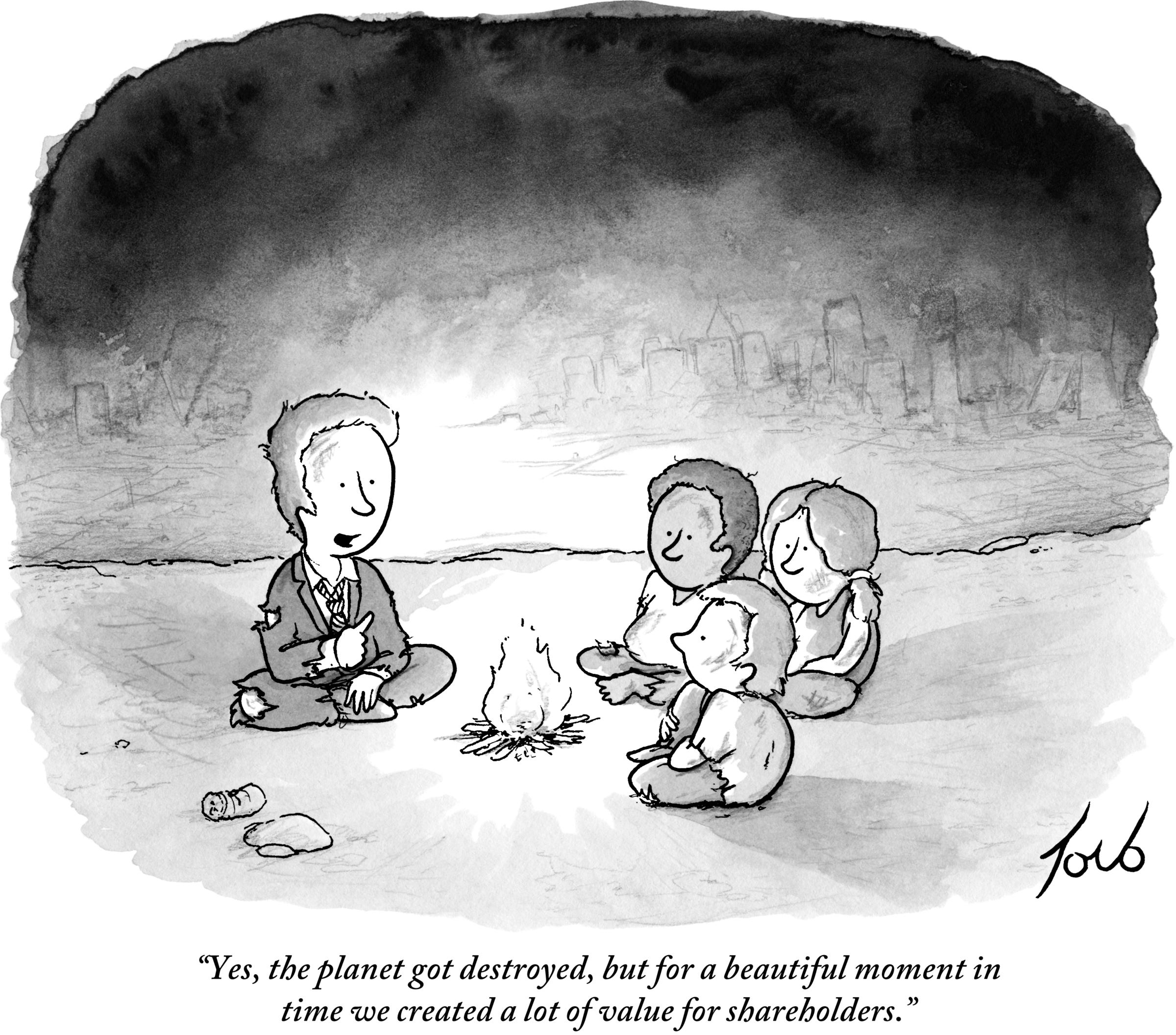
reply